
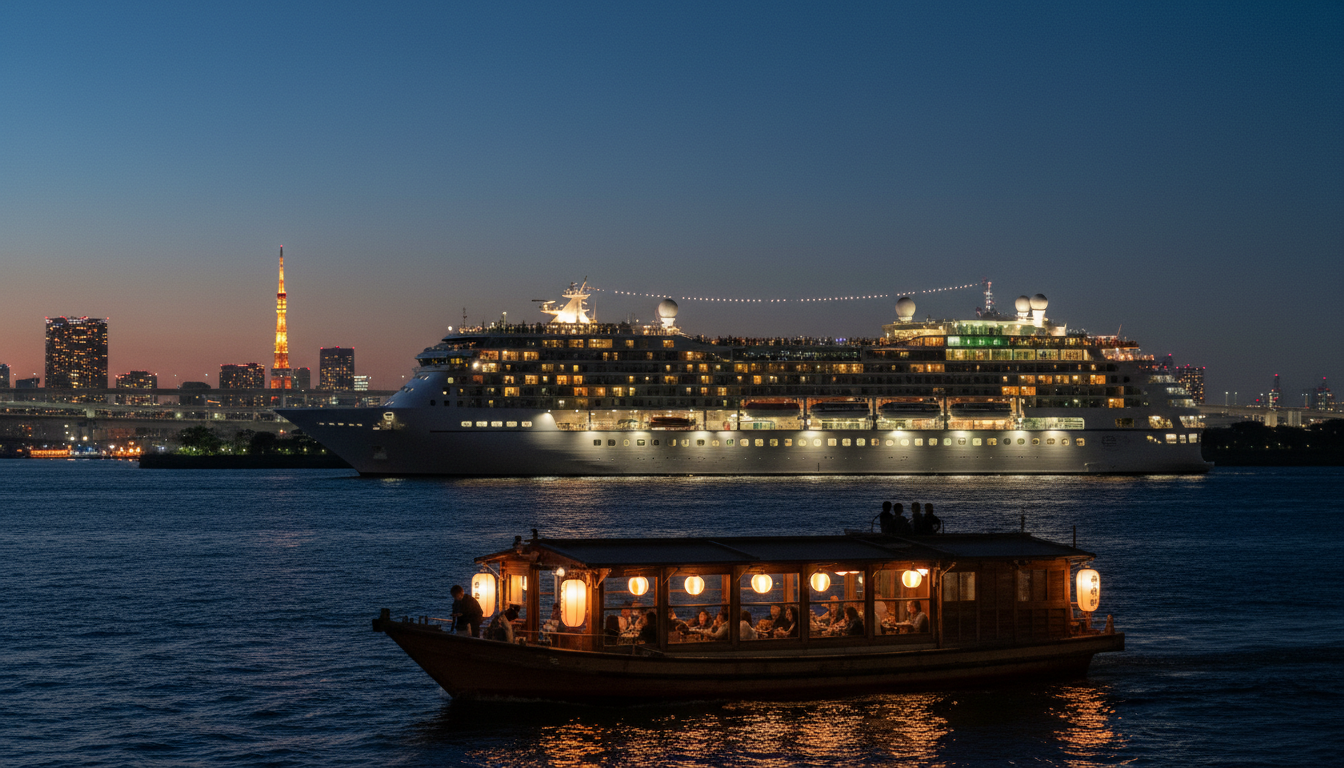
Tokyo dinner cruises: expert guide to Yakatabune, Symphony, Lady Crystal and Kawasaki night tours
Discover the best Tokyo dinner cruises on Tokyo Bay, from traditional yakatabune dining to modern liners and neon-lit factory tours, with costs, routes and booking tips.
Tokyo’s skyline is often seen from street level or from high observation decks, but the city’s maritime heritage is best experienced on Tokyo dinner cruises that ply Tokyo Bay. These cruises range from low-slung, lantern-lit yakatabune serving monjayaki to full-scale liners offering multi-course meals and panoramic views of Rainbow Bridge and Tokyo Skytree. This guide summarizes the leading options, typical prices, and practical advice for travelers seeking an evening on the water.
Yakatabune tradition anchors Tokyo dinner-cruise scene
Yakatabune are traditional, low-profile boats festooned with red lanterns that have hosted gatherings on Tokyo’s waterways for centuries. Onboard dining usually centers on communal dishes such as monjayaki, okonomiyaki’s savory cousin, as well as more formal kaiseki, tempura or sukiyaki options depending on the operator. Typical packages pair a two-hour cruise with a multi-course meal and an all-you-can-drink option, with many voyages priced from around ¥7,900 to ¥14,000 per person. Passengers can expect a nostalgic atmosphere, occasional shamisen performances, and close-up views of illuminated waterfronts as the boat glides past artificial islands and bridge spans.
One of the better-known operators started as a budget option and remains popular for its value proposition, offering evening departures priced from roughly ¥7,900 for earlier sailings and incremental increases for later departures. These cruises generally include ship fare, unlimited monjayaki or equivalent communal dishes, and beverage packages that often include alcoholic drinks. Reservations through official sites or reputable booking platforms are common and recommended, since popular time slots—especially at sunset—fill quickly during holidays and peak tourist seasons.
Yakatabune cruises are particularly well suited to groups, parties and diners who enjoy shared plates and a convivial setting. Seating tends to be low and communal, and many boats are designed for socializing rather than formal, private dining. Travelers with mobility concerns should check boarding arrangements in advance, as transfer between dock and hull can require steps or gangplanks that vary by company.
Lady Crystal offers Western-style dining at value prices
The Lady Crystal presents an alternative for passengers seeking a Western-style dining experience without a premium price tag. Departing from Sea Fort Square in the Shinagawa area, this vessel combines a modern dining room with open decks that permit unobstructed views of the bay and the cityscape. The basic one-hour sightseeing cruise typically includes a single drink and is priced from about ¥5,000, offering an economical option for short evening outings. For diners seeking a more formal meal, a two-hour dinner cruise with a French-style five-course menu and two drinks is commonly offered from approximately ¥18,000 per person.
Service on the Lady Crystal is pitched at visitors who want a restaurant-standard meal while taking in bay views rather than a communal, festival atmosphere. The ship’s dining room follows a plated-service model, with a set menu that can include seafood and seasonal produce depending on the itinerary. Because seating is limited for the dinner service, bookings should be made in advance—especially on weekends and during seasonal events such as fireworks displays and holiday illuminations.
Dress codes aboard the Lady Crystal are usually smart casual, reflecting the ship’s restaurant orientation. Passengers with dietary restrictions are advised to notify the operator at booking; while some cruises can accommodate special requests, substitutions are not always guaranteed on short notice. Check cancellation and refund policies before purchasing tickets to avoid unexpected fees when plans change.
Symphony liners combine sightseeing and fine dining
Symphony-class liners operate longer, restaurant-style dinner cruises that emphasize sightseeing alongside a higher-end culinary program. These vessels typically offer a 2.5-hour itinerary and multiple dining options—French, Italian or Japanese steak sets—allowing passengers to select a cuisine that best suits their tastes. Prices for this tier of cruise commonly start from around ¥14,000 per person and rise with menu selection and seating category. Onboard, service is comparable to an urban fine-dining restaurant, with plated courses presented during extended passages that take in key waterfront landmarks.
The route for Symphony cruises often includes close passes of Rainbow Bridge, Tokyo Gate Bridge and views toward Tokyo Skytree, delivering a comprehensive visual tour of the bay and adjacent city. Because these ships are larger and more stable than smaller pleasure boats, they are well suited to travelers who prefer a seated dining experience with uninterrupted vistas. Photography opportunities are plentiful, particularly from the outer decks when the ship passes illuminated bridges and shoreline architecture after dark.
Booking windows for Symphony cruises can vary by operator and season, with themed or special-event cruises commanding higher fares. Many lines publish menus and seating plans in advance, enabling diners to make informed choices, and some offer premium decks or private tables for groups. Travelers should confirm boarding locations and embarkation times, as larger terminals used by these liners may be farther from central transit hubs.
Kawasaki factory night cruise creates cyberpunk photo opportunity
Not all compelling evening voyages are focused on dining; the Kawasaki factory night cruise offers a distinctly different attraction for photographers and design-minded visitors. These tours navigate the neon-lit industrial corridors of Kawasaki’s waterfront, where refinery stacks, conveyor systems and illuminated tanks create dramatic nightscapes. The experience—often referred to as a “factory night cruise”—is prized for its cinematic, retro-futuristic aesthetics and is regularly recommended to photographers seeking moody, high-contrast urban imagery.
This tour is not typically sold as a dinner cruise, but passengers are usually permitted to bring their own food and non-alcoholic beverages, which makes it a more casual and affordable option. Standard fares for the trip are generally lower than full-service dinner liners, with prices starting around ¥4,600 to ¥4,900 depending on route length and operator. Tours last roughly between 90 minutes and three hours, with sunset departures common to maximize the contrast between industrial lighting and the fading sky.
Safety and decorum differ from restaurant-oriented cruises: seating may be bench-style, and public announcements or guiding commentary are often provided in Japanese with limited English-language support. Photographers should bring tripods that are allowed by the operator and be prepared for variable lighting conditions and vessel motion. Because these cruises traverse active industrial waterways, passengers should follow crew instructions and remain within designated areas for the duration of the voyage.
How to choose, book and time a Tokyo dinner cruise
Selecting the right cruise depends on priorities such as cuisine, atmosphere, budget and itinerary. Travelers seeking a cultural or traditional experience are best matched with yakatabune, while those who prioritize plated service and longer dining will prefer Symphony-style liners. Budget-conscious passengers can opt for short Lady Crystal sightseeing sails or daytime departures that offer lower fares. Cross-check menu descriptions, included beverages and the length of the cruise when comparing prices to ensure you understand what is and is not covered by the ticket.
Advance booking is strongly recommended for evening departures, particularly for sunset sailings and weekends when demand spikes. Many operators allow online reservations through their official portals or established third-party platforms; in all cases, confirm boarding location, recommended arrival time and identification requirements at the time of booking. Group bookings may require deposit payments and specific meal selections in advance, so parties should coordinate dietary needs and seating arrangements early to avoid last-minute complications.
Timing your cruise around sunset can deliver a dramatic sequence—from golden-hour cityscapes to fully illuminated bridges and towers—but this also coincides with peak pricing. Daytime cruises are usually cheaper and are a practical choice for families or travelers who prefer clearer views for sightseeing rather than nighttime illuminations. For multi-course dinner cruises, budget time for pre-boarding check-in and potential delays in embarkation during busy periods.
Practical considerations: accessibility, language and safety at sea
Accessibility varies widely between operators and vessels, so passengers with mobility limitations should ask operators about boarding ramps, restroom accessibility and seat configuration before booking. Larger liners and modern ships are more likely to offer wheelchair access and onboard restrooms that meet accessibility standards, while traditional yakatabune often have low seating and narrow gangways that can present challenges. If medical assistance or specialized accommodations are required, notify the cruise company at least 48 hours in advance whenever possible.
Language support is another practical factor to consider. Many dinner cruise operators cater primarily to Japanese-speaking clientele and may provide limited English menus or announcements. Operators that routinely serve international tourists will often publish English-language menu options and offer bilingual staff for key services. For travelers dependent on translation, downloading menu translations or carrying basic phrase cards can improve the onboard experience.
Sea conditions and personal susceptibility to motion sickness should inform your choice of vessel. Larger ships provide greater stability but may offer a less intimate atmosphere than smaller boats. If you are prone to motion sickness, consider larger liners or seats amidships where motion is minimized, and bring medication or acupressure aids as needed. Operators maintain safety equipment and briefings; familiarize yourself with lifejacket locations and emergency procedures on boarding.
Environmental and community impacts of bay cruises
As demand for maritime tourism increases, environmental and local-community impacts are receiving greater attention from operators and regulators. Cruise companies are gradually adopting measures to reduce emissions, control waste and limit noise during nighttime operations to minimize disruption for coastal residents and wildlife. Passengers can support sustainable practices by choosing operators that publish environmental policies, minimize single-use plastics, and adhere to local waste-management rules.
Factory-night cruises pose specific considerations: while they offer unique visual appeal, guests pass close to active industrial complexes where emissions and operational noise are unavoidable. Operators generally work within regulatory frameworks governing navigable waterways and industrial safety, but passengers concerned with environmental issues should research company practices and consider daytime alternatives. Coastal municipalities also manage scheduling and licensing for night cruises, so operators must comply with municipal ordinances that can affect departure times and frequencies.
Community relations are a live issue in some waterfront districts where cruise activity concentrates. Respectful behavior, adherence to onboard rules, and discretion in the handling of trash and noise contribute to maintaining good relations between operators, local residents and authorities. Travelers who prioritize low-impact tourism will find smaller, responsibly run operators and daytime sailings to be more aligned with sustainability-minded travel.
Experiencing Tokyo from the water provides an immediate reminder of the city’s maritime roots and evolving urban fabric. Whether choosing a lantern-lit yakatabune for traditional shared dining, a refined Symphony liner for a full-course meal and sightseeing, a Lady Crystal outing for a short Western-style repast, or a Kawasaki factory cruise for dramatic photography, each option delivers a distinct view of Tokyo Bay and its skyline. Plan ahead, book the cruise that matches your priorities, and arrive early to enjoy the full experience as the city unfolds from the water.

