
Tokyo nighttime cherry blossom light-ups: where to see yozakura in the city
Discover Tokyo’s best nighttime cherry blossom light-ups and yozakura spots, from Chidorigafuchi’s illuminated moat to lantern-lit riverside walks, with practical tips for visitors.
Tokyo’s yozakura season: what to expect this spring
Tokyo’s nighttime cherry blossom light-ups—known locally as yozakura—return each spring as lanterns and spotlights transform parks, rivers, and garden paths into atmospheric evening scenes.
Across the city, venues stage illuminations during the main bloom period, offering a different way to enjoy Somei-yoshino and weeping varieties after dusk.
These illuminations are often scheduled to coincide with peak flowering, but exact dates and times vary year-to-year with the weather.
Visitors should plan around broad windows—typically mid-March through early April—and check each venue’s current schedule before heading out for an evening hanami.
Chidorigafuchi Moat: illuminated trees and boat access
Chidorigafuchi, beside the Imperial Palace moat, is one of Tokyo’s most iconic yozakura locations thanks to hundreds of riverside cherry trees that arch over the water.
In the evening the trees are lit and visitors can rent rowboats to paddle beneath the blossom canopy, creating one of the city’s most photographed night scenes.
The atmosphere along the stone embankments is festive yet orderly; lighting schedules are set for the main flowering window and the boat rental area usually operates to early evening.
Crowds can be intense on clear evenings, so arriving before dusk or choosing a weekday night will improve the experience and photo opportunities.
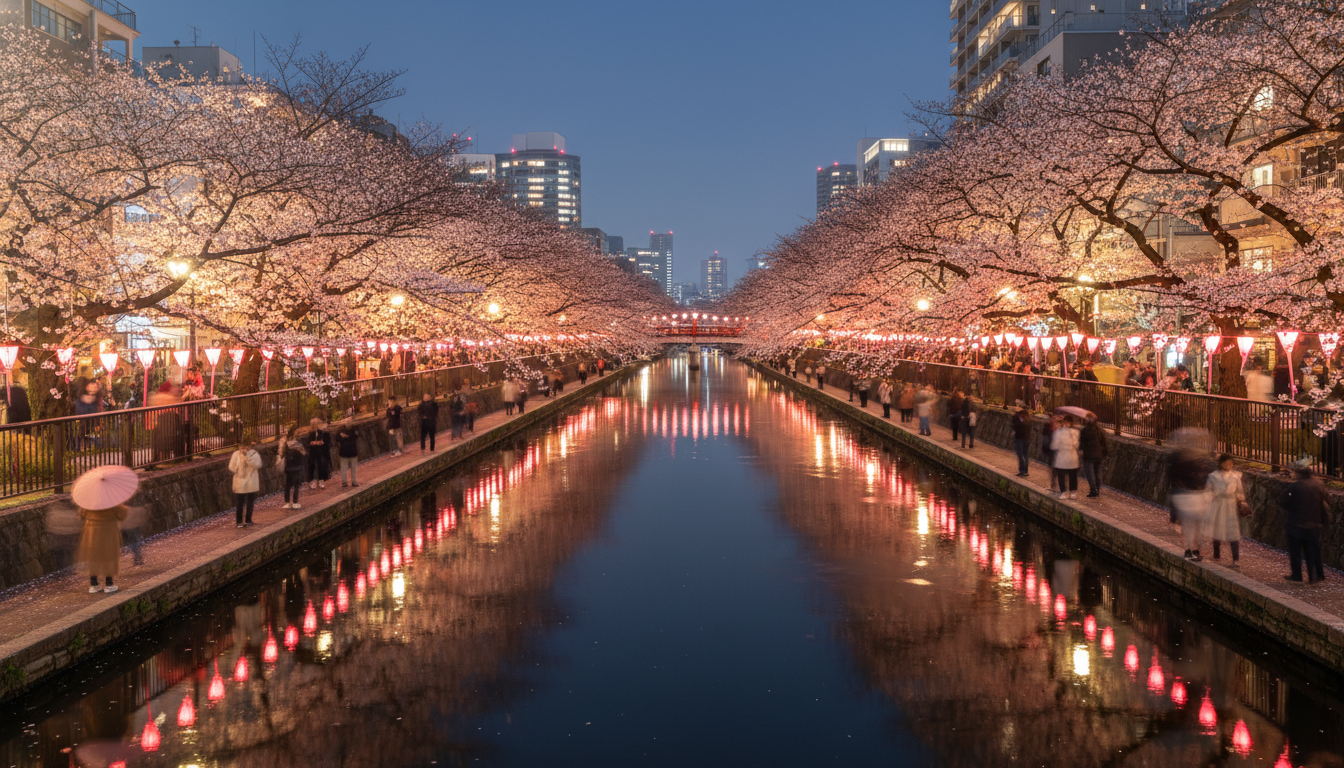
Meguro River and Nakameguro: lanterns and narrow canal strolls
The Meguro River corridor through Nakameguro hosts a long stretch of cherry trees and the densely-packed setting lends itself to dramatic evening lighting.
Paper lanterns and string lights are placed along a one-kilometer section around Nakameguro, creating a ribbon of soft color reflected in the water that is particularly popular with couples and photographers.
Because the riverside paths are narrow, pedestrian flow is often single-file at peak times; visitors should expect to walk slowly and be prepared for crowding.
Many people combine a stroll with dinner at nearby izakaya and cafés, or time their visit to enjoy the lights once the main daytime crowds have thinned.
Rikugien and private-garden illuminations: focused night viewing
Several traditional gardens stage special nighttime openings to showcase specimen trees under controlled lighting, and Rikugien is among the most notable for its illuminated weeping cherry.
Rikugien’s evening display concentrates attention on an ancient shidare-zakura whose cascading branches appear to glow against the night sky.
Garden illuminations typically require an evening ticket separate from daytime admission, and the experience is curated to limit crowding and preserve the landscaping.
For visitors seeking a quieter, contemplative yozakura outing, a paid garden illumination offers atmosphere and close-up views rare at larger free festivals.
Ueno Park and Sumida’s river parks: wide lawns and festival atmospheres
Ueno Park remains one of Tokyo’s most popular hanami locations and its evening lighting makes it possible to extend picnics into the night in many areas.
Although the light-up is by comparison less theatrical than some garden illuminations, the park’s open space, long alleys of trees, and park-side food stalls make it a practical choice for groups and families.
Downriver at Sumida Park, illuminated trees frame views of Tokyo Skytree and provide a riverside backdrop that combines traditional festival stalls with modern skyline vistas.
Sumida’s riverbanks contain several hundred trees and are well-suited to casual picnic-style hanami after dusk, though visitors should be mindful of local rules about setting out large mats in heavily trafficked areas.
Roppongi, Ark Hills and Spain-zaka: city-center strolls and designer displays
In central Tokyo, sites such as Roppongi Hills, Tokyo Midtown, Ark Hills and the Spain-zaka slope stage urban illuminations that cater to evening shoppers, diners and office workers.
These locations pair cherry-tree lighting with architectural backdrops, making them convenient for those who want an evening hanami without leaving the city center.
Roppongi’s Mohri Garden and nearby Sakura-zaka feature both standard Somei-yoshino trees and ornamental weeping varieties, while Midtown places installations in Hinokichō Park and around its plaza.
Because these sites are easily combined with dining and nightlife options, they attract visitors who make a night of shopping, eating and viewing the blossoms.
Shibuya, Shinjuku rivers and quieter neighborhood spots
Shibuya’s Sakura Stage and other commercial complexes install lanterns and program live performances during peak bloom, drawing younger crowds and social-media attention.
Shinjuku is home to several rivers and canals—such as sections of the Kanda River and smaller streams—where cherry trees are lit and form pleasant, walkable routes away from the busiest tourist corridors.
Neighborhoods like Monzen-Nakachō in Fukagawa and the Shakujii River in the north offer low-key evening illuminations and community festivals that feel more local than the high-profile city-center events.
These quieter spots often include weekend food stalls and, in some districts, the chance to view blossoms from traditional boats or to combine the outing with a nearby shrine or temple visit.
Practical planning, public transport and crowd management
Yozakura evenings draw heavy foot traffic on trains and in station precincts; visitors should plan travel outside peak commuter times where possible.
Major sites are accessible by multiple subway and rail lines, but the last trains and station exits can become crowded immediately after lighting hours, so allow extra time for return journeys.
Many venues have posted rules about food stalls, open fires and large picnic mats; following posted guidance helps keep spaces safe and enjoyable for everyone.
Carrying a compact rain jacket, a small flashlight and comfortable shoes will make it easier to navigate riverside paths and uneven garden walkways after dark.
Etiquette and safety: respectful hanami at night
Enjoying blossoms at night carries the same unwritten rules as daytime hanami: be mindful of litter, keep noise reasonable, and leave communal spaces as you found them.
Do not climb trees or barriers for photos, and avoid obstructing paths—lanes along rivers and in parks are shared between picnickers, walkers and service staff.
Use designated smoking areas where provided and dispose of waste in official bins or carry it away if receptacles are full.
When taking photographs, be considerate of other visitors; avoid bright, constant flashes and step aside to let others look or pass.
Tips for making the most of an evening hanami
Arrive ahead of dusk to secure a spot for photography or a short picnic, and consider visiting on weekday evenings to avoid weekend peaks.
Mix a major illumination with a quieter garden or neighborhood spot in the same evening to experience both scale and intimacy—Tokyo’s transit network makes it possible to combine attractions quickly.
Pack small snacks or pick up seasonal street food near festival zones, and bring a compact mat and a portable trash bag to keep your area tidy.
If traveling with children or large groups, choose locations with open lawns and restroom facilities to reduce logistical headaches after dark.
Visiting Tokyo’s cherry blossom illuminations offers a different perspective on a familiar spring ritual, with light and water transforming familiar trees into cinematic scenes.
Whether seeking the curated hush of a garden, the romantic glow along a canal, or the convenience of an urban plaza, the city’s yozakura spots present nightly opportunities to celebrate the season.
Plan ahead, follow local guidance, and allow time to move between sites so you can enjoy the blossoms without rushing.
With a little preparation, Tokyo’s nighttime cherry blossom light-ups reward visitors with memorable views and a distinctly seasonal atmosphere.
For an evening hanami, pick one or two linked spots and build the night around them to get the best mix of light, food and access.

