
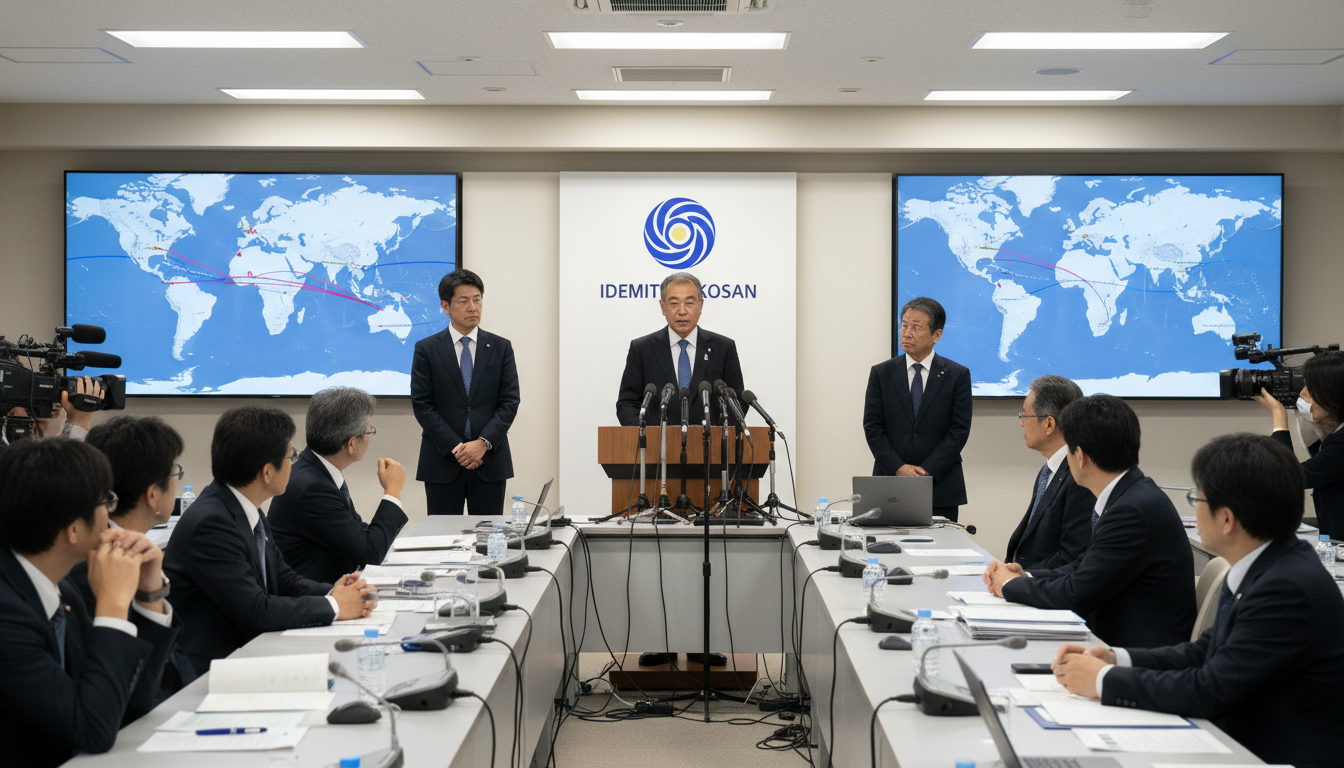
Idemitsu says Hormuz crisis will ease by July as it secures non‑Middle East oil supplies
Idemitsu Kosan says the Hormuz crisis will ease by July and that oil prices could revert to pre‑crisis levels early next year, while moving to secure supplies outside the Middle East.
Idemitsu Kosan, one of Japan’s largest petroleum companies, told market contacts it expects heightened tensions around the Strait of Hormuz to begin subsiding in July, and anticipates oil markets will normalize into next year. The company also confirmed it is pursuing new sources of crude outside the Middle East to reduce reliance on the region amid ongoing geopolitical uncertainty. Idemitsu’s forecast reflects both short‑term operational adjustments and longer‑term strategy shifts by refiners facing elevated shipping and insurance costs.
Idemitsu forecasts easing of Hormuz crisis by July
Idemitsu officials said the operational disruptions that followed recent military actions in the Gulf have crested and that shipping corridors may gradually reopen to routine traffic. The company’s timetable assumes de‑escalation of direct military threats and stabilization of regional deterrence measures. Management noted that even a partial reduction in escort and re‑routing requirements would materially lower transport times and costs.
Idemitsu framed its July estimate as conditional and dependent on diplomatic and security developments. The company emphasized contingency planning will continue even if the crisis appears to abate as scheduled. This cautious approach aims to prevent sudden supply shocks if tensions flare again.
Oil price outlook: return to pre‑crisis levels early next year
Idemitsu projected that benchmark crude prices, which rose on risk premia and shipping disruptions, will drift back toward pre‑crisis ranges in the early months of next year if flows normalize. The firm expects market sentiment to ease as insurers lower premiums and shippers resume regular routes through the Strait of Hormuz. Reduced logistical constraints should ease short‑term tightness in spot crude and refined product markets.
Analysts say the pace of decline in oil prices will hinge on global demand recovery and inventory levels in consuming economies. Idemitsu’s forecast carries the implicit assumption that major producers will not implement significant additional cuts and that consumer demand will remain stable.
Idemitsu moves to diversify crude suppliers beyond the Middle East
As part of a risk‑mitigation strategy, Idemitsu has stepped up efforts to secure crude from non‑Middle East sources, company representatives said. Those efforts include negotiating longer‑term supply contracts, expanding relationships with alternative exporters, and increasing flexibility in cargo scheduling. The company highlighted the need to balance cost considerations with supply security when selecting new suppliers.
Idemitsu also plans to enhance its procurement playbook to allow quicker switching between spot purchases and term contracts. Fuel sourcing from farther afield can raise transportation costs, but company executives argued such trade‑offs are justified by the premium placed on uninterrupted refinery throughput.
Limited transits through the Strait of Hormuz continue under high risk
Despite the heightened danger since recent strikes in the region, Idemitsu has been among a small number of operators able to move tonnage through the Strait under tightly managed conditions. The firm said specialized security measures, close coordination with insurers and careful voyage planning helped several shipments complete transits safely. Still, each passage carries elevated costs and operational complexity compared with peacetime conditions.
Shipping industry observers caution that sporadic successful transits do not equate to a sustained return to normalcy. Even where vessels can pass, the added expenses from armed escorts, longer insurance declarations and occasional re‑routing weigh on margins for refiners and traders.
Market reactions and implications for Japanese refiners
Japanese refiners have adjusted hedging strategies and inventory buffers in response to the Hormuz crisis, industry sources say. Companies with diversified feedstock options and wider access to global spot cargoes have shown greater resilience to price swings and logistical disruptions. For firms still heavily dependent on Middle Eastern crude, the crisis has prompted accelerated talks with alternative suppliers and increased use of floating storage.
Traders are monitoring freight rates and insurance market moves closely, as those elements feed directly into landed crude costs. A sustained easing of security risks would likely see a rebound in freight availability and downward pressure on premiums, benefiting importers that relied on expensive short‑term cargoes during the peak of the crisis.
Policy and energy‑security implications for Japan
The developments have renewed official attention on Japan’s energy security framework and the strategic petroleum reserve system. Government agencies and industry are discussing ways to enhance supply resilience, including more flexible stock release mechanisms and incentives for diversifying import sources. Policymakers face the challenge of balancing cost efficiency with preparedness against geopolitical shocks.
Industry and officials say bolstering liquefied natural gas and renewable investments remains essential but will not eliminate the immediate need for diversified oil supply chains. For now, securing a steady flow of crude at predictable costs remains a priority for refiners and for national energy planners alike.
Idemitsu’s outlook and its moves to broaden supplier options underscore how private sector risk assessments are shifting in response to instability around the Strait of Hormuz, and how these adjustments may influence Japan’s energy markets in the months ahead.

