
Japan orders urgent cybersecurity measures after concerns over AI "Claude Mutos"
Japan moves to strengthen cyber defenses after high-performance AI "Claude Mutos" raised fears it could expose weaknesses in critical infrastructure. Prime Minister Sanae Takaichi instructed ministers to coordinate measures and seek access to the AI for defensive testing. The government plans a cross-ministerial meeting to finalize responses to the emerging threat.
Prime minister directs immediate action
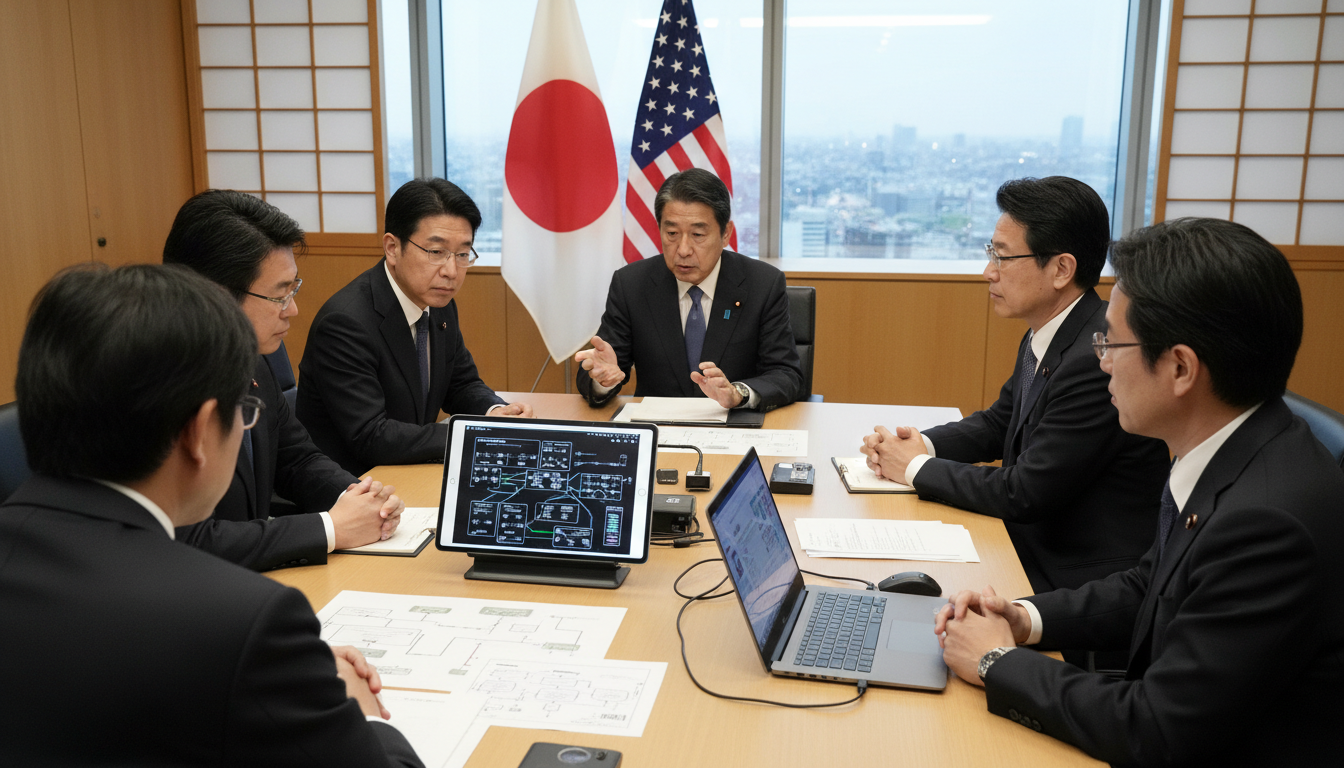
Prime Minister Sanae Takaichi told ministers on May 12 to prioritize countermeasures against cyberattacks linked to advanced generative AI such as Claude Mutos. She instructed the relevant cabinet members to prepare an integrated response and report back with options for protecting critical infrastructure. The directive signals government concern that powerful AI tools could dramatically increase the speed and scale at which system vulnerabilities are found and exploited.
The prime minister’s remarks followed assessments that high-capacity models could be repurposed by malicious actors to probe networks, design exploit code, or automate reconnaissance at unprecedented speed. Officials emphasized that the order covers not only public agencies but also private operators of essential services, from finance to energy and communications.
Anthropic’s decision and government access requests
Anthropic, the U.S. developer of Claude Mutos, has suspended public access to the model amid worries about misuse, a move that has complicated Tokyo’s efforts to evaluate the risk directly. Japanese officials have requested cooperation from Anthropic to allow controlled access for government and infrastructure operators, according to multiple sources close to the discussions. Access would enable defensive testing—simulating how the AI might be used to identify software flaws so they can be fixed proactively.
Government sources warn that any cooperation is uncertain and likely to be conditional, while Anthropic has cited safety considerations in limiting availability. Tokyo officials say they must plan defenses both with and without direct access, and are preparing layered measures that do not rely solely on obtaining the AI.
National Cyber Coordination and ministry roles
Chief among the ministries tapped for the response is the Cabinet Secretariat’s National Cyber Coordination Office (NCO), which will lead interagency work on technical guidance and incident readiness. Cybersecurity Minister Hisao Matsumoto (松本尚) said the NCO will coordinate efforts across ministries and with private operators to ensure rapid, cohesive action. The government expects participation from the Ministry of Finance, the Ministry of Economy, Trade and Industry, and the Ministry of Defense, among others.
The upcoming inter-ministerial meeting will aim to define responsibilities, set information-sharing protocols, and produce concrete guidance for operators of critical infrastructure. Officials will also assess whether regulatory or voluntary measures are needed to compel or incentivize timely remediation of discovered vulnerabilities.
Financial sector mobilization and industry working group
Ahead of the cross-ministerial talks, the Financial Services Agency announced it will convene a working group on May 14 to help banks, insurers and securities firms strengthen defences against AI-enabled threats. The group will bring together more than 30 industry associations and firms, including Japan’s financial institutions and Anthropic’s local entity, to discuss practical measures for rapid patching and incident response. Real-time services such as online banking are a focus, with plans to prepare systems to receive and safely implement emergency software updates.
The working group will be chaired by an information security executive from a major bank and is expected to develop sector-specific guidance that complements government-led measures. Lawmakers’ cyber policy arms have also drafted proposals urging the government to press foreign partners for controlled AI access and to prioritize the financial sector for defensive actions.
Practical limits and contingency planning
Despite the focus on Claude Mutos, officials caution there is no single cure for the broader risks posed by advanced AI models. Government sources stressed that the inability to obtain immediate access to the model means defensive strategies cannot assume perfect intelligence about every exploit the AI might uncover. Accordingly, contingency planning will emphasize basic resilience: rapid patching procedures, stricter access controls, network segmentation, and enhanced monitoring to detect automated reconnaissance or novel exploit attempts.
Authorities are also weighing measures aimed at software developers, urging or requiring them to prioritize fixes for vulnerabilities that could be efficiently exploited by AI tools. Discussions will include whether to mandate faster disclosure timelines and to strengthen cooperation between vendors and infrastructure operators.
Japan must also consider international coordination, since many AI models and the software they could exploit are developed and maintained overseas. Officials are exploring diplomatic and industry channels to secure cooperation from foreign developers and to share intelligence with allied governments.
Parliamentary and political responses
Ruling and opposition lawmakers have expressed heightened concern and urged quick, concrete policy steps. A party cybersecurity panel has already drafted recommendations calling for stronger government engagement with foreign AI developers and more proactive measures for critical sectors. Some legislators have emphasized that the finance sector requires immediate prioritization, while others urged a broader regulatory framework for AI safety and national security.
The political debate is likely to shape Tokyo’s next steps, including whether to adopt binding requirements for infrastructure operators and software vendors. For now, the government is preparing operational guidance while it seeks technical cooperation from Anthropic and readies a cross-government plan.
Public-private coordination and expedited technical work will determine how effectively Japan can mitigate the emerging risk posed by high-performance AI like Claude Mutos.

