
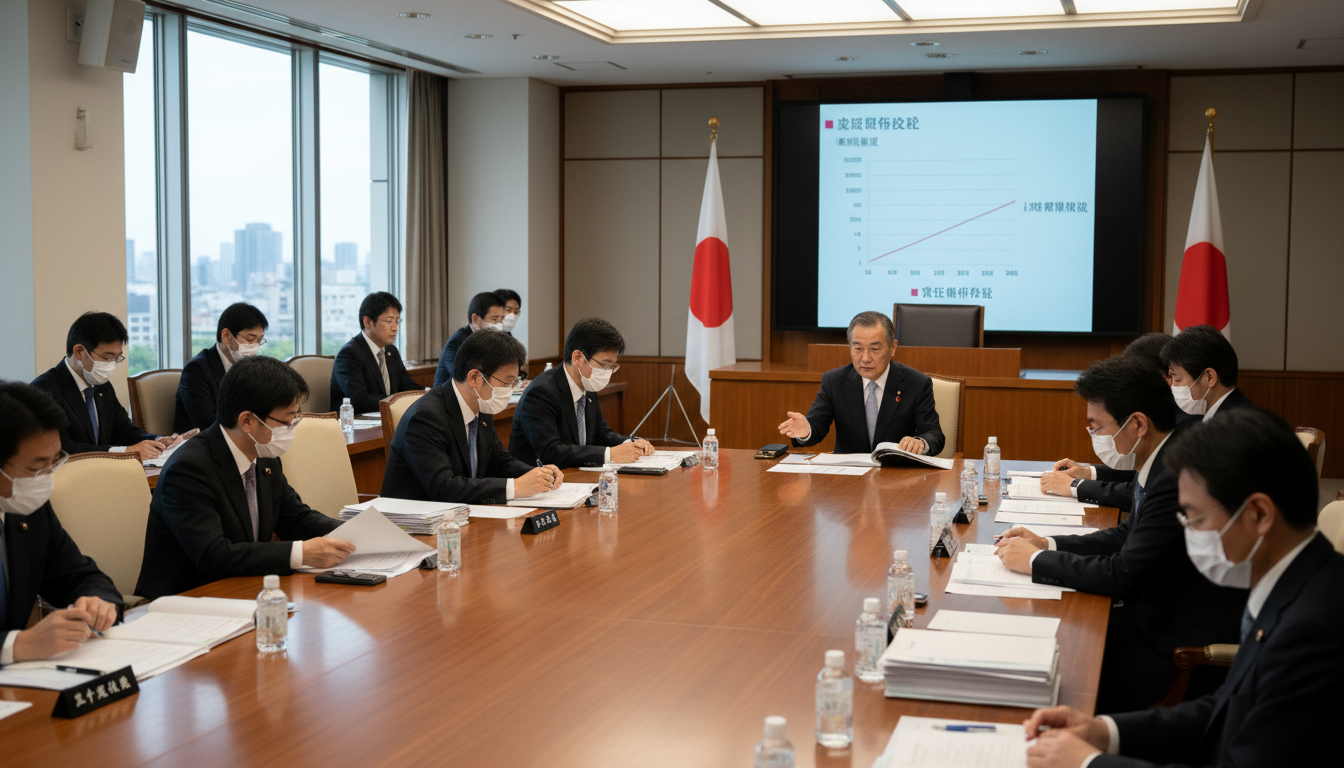
House Commission Debates Draft Emergency Provisions to Allow Diet Term Extensions
May 14, 2026 — The Lower House commission debated draft emergency provisions allowing Diet term extensions and authorizing Cabinet emergency ordinances at the Diet.
The House of Representatives’ Commission on the Constitution began formal deliberations Thursday on draft emergency provisions that would permit extensions of Diet members’ terms under narrowly defined circumstances, a measure linked to ongoing constitutional amendment discussions. The Legislative Bureau of the lower house and the commission secretariat prepared the proposals and presented them this week, triggering exchanges among ruling and opposition members over scope and safeguards. The draft outlines also include provisions to empower the Cabinet to issue emergency ordinances when waiting for ordinary Diet legislation is judged impossible.
Commission Presents Draft Outlines
The Legislative Bureau officially presented the draft outlines at the commission’s Thursday session after an initial briefing to commission directors earlier in the week. The package is intended to set out a legal framework for exceptional measures that might be needed if an extraordinary crisis compromised the normal electoral timetable. Lawmakers emphasized that the outlines are preliminary and meant to prompt detailed debate rather than to serve as final text for amendment or legislation.
Five Scenarios Defined as Emergencies
The draft identifies five specific scenarios that would qualify as emergencies: a large-scale natural disaster, a major outbreak of infectious disease, civil unrest that disrupts social order, an armed attack, and other situations of comparable impact. By naming these categories, drafters aim to create clear triggers for extraordinary measures while limiting open-ended executive discretion. Officials say the language is designed to balance the need for swift response with constitutional protections for democratic processes.
Mechanism to Extend Diet Terms
Under the proposal, if the Cabinet determines that a situation falls into one of the defined categories and certifies it as “making an election difficult,” the Diet could grant approval enabling the extension of lower house terms. The current constitution requires a general election within 40 days of dissolution of the lower house and mandates that the Diet convene within 30 days after that election. The draft contemplates delaying a snap election if it would occur past the 40-day window but still within a period described as “not significantly extended,” while allowing the House of Councillors to convene an emergency session to maintain parliamentary functions.
Cabinet Emergency Ordinances Explained
The proposals would also authorize the Cabinet to issue emergency ordinances with the force of law “under special circumstances when it is deemed to be impossible to wait for legislative action by the Diet,” according to the draft language. Such ordinances would be intended as temporary tools to preserve governmental operations and public order until the Diet can legislate in full session. Legislators at the session pressed for clearer boundaries on the duration, oversight and post-facto review mechanisms for any ordinances issued under the scheme.
Reactions from Ruling and Opposition Figures
Ruling party officials expressed cautious support for the outlines, saying the measures provide necessary flexibility for national continuity in worst-case scenarios while including parliamentary checks. Yoshitaka Shindo, the ruling Liberal Democratic Party’s chief director on the commission, described the draft as seeking an “appropriate balance” by coupling limited term extensions with an upper-house emergency convening mechanism. Opposition figures welcomed the greater clarity in the proposals but stressed they do not represent cross-party agreement, with Toru Kunishige of the Centrist Reform Alliance noting the draft “visualizes much of what has been discussed so far” without settling outstanding disputes.
Outstanding Questions and Legal Safeguards
Debate at the session centered on safeguards to prevent abuse, including the timing and scope of Diet approval for any Cabinet designation and the precise meaning of phrases such as “making an election difficult” and “significantly extended period of time.” Legal experts and lawmakers signaled the need for explicit limits on the reach of emergency ordinances, mandatory reporting to the Diet, and sunset provisions to ensure temporary measures do not become permanent. The commission is expected to solicit further input from constitutional scholars, legal ministries and other stakeholders as it refines the draft.
The commission will continue deliberations in the coming weeks, with lawmakers indicating that any final language would require broader consultation and, ultimately, a formal amendment process if the changes touch the Constitution itself. Observers say the session marks a significant step in structuring contingency powers but that detailed drafting and political agreement remain essential before any measures could be enacted.

