
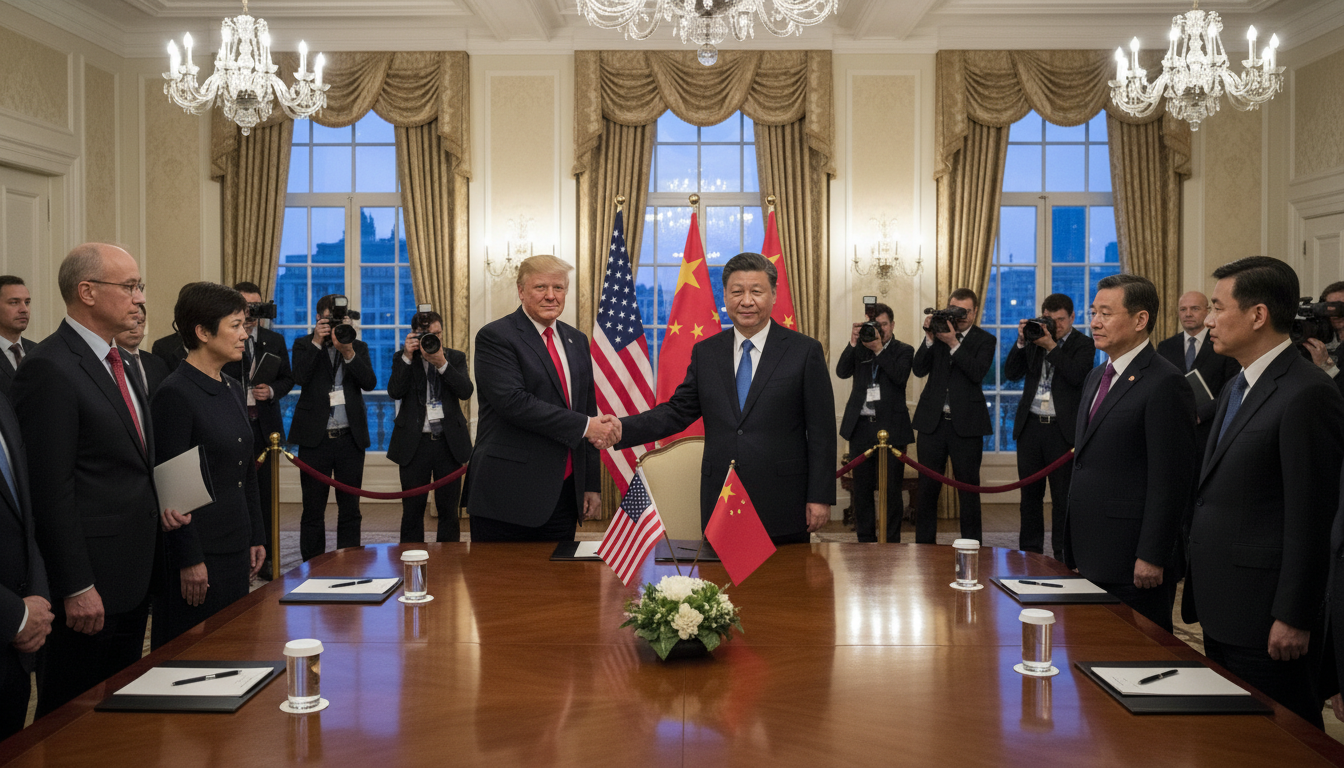
Trump-Xi summit leaves Taiwan cautiously relieved as leaders stick to script
Trump-Xi summit ended May 15, 2026, with scripted public remarks and no major breakthroughs. Taiwan reacted with cautious relief amid lingering uncertainty.
Taipei breathed slightly easier after the Trump-Xi summit, which concluded on May 15, 2026, as public statements from both capitals followed carefully choreographed talking points. The meeting between U.S. President Donald Trump and Chinese President Xi Jinping did not produce dramatic new declarations, and officials in Taipei described the outcome as the best realistic option under current tensions. The summit’s restraint was read by many in Taiwan as a temporary easing rather than a lasting shift in cross-strait risk.
Taipei’s Initial Reaction
Local security officials in Taipei emphasized that the summit’s public tone was preferable to an escalation of rhetoric, but they warned that substantive policy differences remain unresolved. Former Taiwanese officials and analysts noted that while calmer public messaging lowers near-term political risk, it does not alter military balances or China’s long-term posture toward the island.
Opposition and ruling party figures in Taiwan issued measured statements calling for vigilance and continued diplomatic outreach to allies. The consensus in Taipei was pragmatic: welcome the reduced public tension while preparing for sustained diplomatic and defense readiness.
Public Messages from Beijing and Washington
Both Beijing and Washington delivered tightly scripted messages after the meeting, focusing on stability and dialogue rather than bold policy shifts. Official communiqués and media appearances emphasized the importance of managing differences, but steered clear of binding commitments or detailed plans that would signal a change in strategic approaches.
President Trump spoke briefly to reporters aboard Air Force One on May 15 while en route back to the United States, reflecting the carefully controlled nature of public communications from both sides. Chinese state media highlighted themes of mutual respect and economic cooperation, underscoring a deliberate effort to project steadiness.
Implications for Taiwan’s Security Calculus
Analysts caution that the Trump-Xi summit’s symbolic calm does not remove the security pressures facing Taiwan, where military modernization and cross-strait tensions continue to shape defense planning. Taipei’s defense posture will likely emphasize deterrence and closer military cooperation with partners while monitoring Beijing’s activities in the region.
Experts say the summit could, at best, buy time for diplomatic and defense measures, but it does not substitute for concrete guarantees or binding security arrangements. Taiwan’s officials are expected to press allies for clearer support and to accelerate measures that enhance resilience and readiness.
Economic and Trade Signals
Despite the summit’s geopolitical focus, economic messaging featured prominently, with both sides endorsing the idea that stable economic ties serve mutual interests. Business leaders in the region reacted cautiously positive, noting that reduced public tensions can ease market volatility and support cross-border trade and investment sentiment.
However, no significant new trade agreements were announced publicly, and corporate officials signaled that underlying issues such as supply-chain security and export controls remain unresolved. Companies with operations spanning the Taiwan Strait and the wider Indo-Pacific said they would continue contingency planning even as they welcome calmer diplomatic signals.
Signals to Allies and the Region
Allies across the Indo-Pacific watched the summit closely for signs of changes to security commitments and regional strategy. Governments in Tokyo, Seoul, Canberra and Washington’s European partners called for continued clarity on defense assurances and for steps that would reinforce stability in the Taiwan Strait.
Regional diplomats underscored that words delivered at a summit must be followed by policy and action if they are to reassure neighbors. Many officials asked for concrete follow-up mechanisms to ensure that the public tone translates into predictable conduct on maritime and airspace activities.
Next Steps in U.S.-China Diplomacy
Officials in both capitals signaled willingness to continue dialogue, with diplomats expected to engage on narrower, technical issues such as trade regulation, climate cooperation and consular arrangements. Bilateral working groups and lower-level talks are likely to resume as leaders seek to operationalize the summit’s calls for engagement.
Yet the broader strategic competition—marked by disputes over technology, military posture and influence—remains the central challenge. Observers say the Trump-Xi summit should be viewed as a pause in public confrontation, not a resolution of the strategic rivalry.
The summit’s immediate legacy is a softer public tone and a brief easing of visible tensions, but the deeper determinants of U.S.-China relations remain intact. For Taipei, that means balancing cautious relief with sustained diplomatic outreach and defense preparedness as the region watches whether public words translate into lasting stability.

