
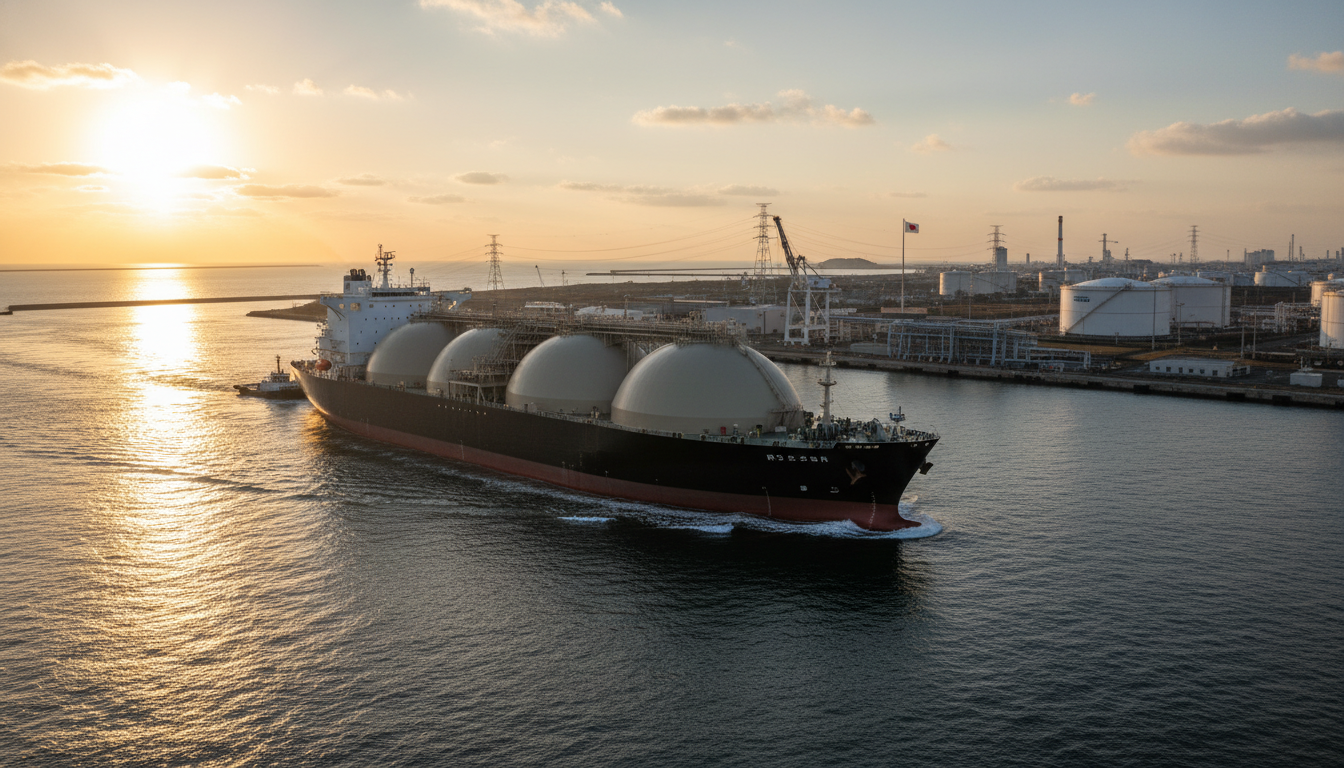
LNG shipment to reach Futtsu on May 18, 2026, first since Strait of Hormuz closure
An LNG shipment from the Middle East is due at Futtsu on May 18, 2026 — the first to reach Japan since the Strait of Hormuz was effectively closed by the Iran conflict, offering limited but welcome supply relief.
Shipment to arrive at Futtsu on May 18, 2026
A liquefied natural gas (LNG) shipment that transited the Strait of Hormuz is scheduled to berth at the port of Futtsu, Chiba, on Monday, May 18, 2026. Industry notices indicate this cargo is the first to arrive to Japan after the waterway was effectively closed amid the Iran conflict, marking a notable development for import logistics. The ship’s arrival is being closely watched by utilities and traders for signals about the resumption of direct routes from the Middle East.
JERA, the power producer that operates major LNG facilities at Futtsu, is preparing to receive the cargo and manage offloading into its terminal. Company representatives have previously described Futtsu as a strategic hub for supplying gas-fired power plants that support the Tokyo metropolitan grid. The terminal’s role in stabilizing regional supply is now in focus as the vessel approaches.
Market reaction: relief but limited immediate impact
Traders and market analysts say the single cargo is unlikely to move global LNG prices materially, but it provides psychological relief to buyers facing tight supplies. Market sentiment has been fragile since shipping through the Strait of Hormuz became unsafe, and any return of direct deliveries eases immediate anxiety among importers. Analysts caution that one cargo cannot substitute for a sustained flow of shipments necessary to rebalance regional inventories.
Physical gas markets are affected by a mix of factors, including inventories, alternative supply routes and seasonal demand in Asia. Observers note that even if prices respond modestly, the broader dynamics — including contract structures and shipping costs — will determine whether the arrival translates into lower prices for end-users. For now, the shipment is seen mainly as a signal rather than a turning point.
Significance of the Strait of Hormuz route for LNG logistics
The Strait of Hormuz has long been a key choke point for energy shipments from the Middle East to Asia, and its closure disrupted established shipping patterns. With the transit effectively halted during heightened tensions, many operators rerouted cargoes around Africa or sought alternative suppliers, lengthening voyages and raising freight costs. Resumption of a direct transit for this tanker reduces voyage time and operational complexity for that single voyage.
Shipping companies and insurers have adjusted risk assessments since the conflict began, and changes to chartering patterns followed. A return to the Strait of Hormuz for any vessel is therefore being watched as an indicator of whether shipping lines will gradually re-embrace the shorter route. Nonetheless, firms remain cautious and will monitor security conditions before reverting to pre-conflict routing at scale.
Role of JERA’s Futtsu terminal in supply handling
JERA’s terminal at Futtsu is one of Japan’s major LNG receiving and regasification facilities, and it will handle the incoming cargo on arrival. The terminal supplies nearby power generation units and supports the wider regional grid, making its operations critical during supply interruptions. Operational staff and logistics teams typically coordinate closely with port authorities to ensure swift mooring and safe transfer.
Terminal operators also balance commercial contracts and national energy needs, allocating volumes according to supply agreements and system requirements. In scenarios of constrained supply, terminals like Futtsu play a central role in prioritizing deliveries and maintaining system stability for industrial and residential customers alike.
Government and industry monitoring of energy security
Japanese authorities have intensified monitoring of energy shipments and shipping lanes since the Strait of Hormuz disruption began, with officials emphasizing contingency planning. Energy ministries and utilities maintain emergency reserves and contingency measures to cope with intermittent import interruptions. Officials also stress the importance of supplier diversification and storage enhancements to mitigate future risks.
The government has signaled that it will continue dialogues with industry stakeholders to ensure stable LNG procurement and to review policies that strengthen resilience. Any sustained restoration of direct routes would factor into broader assessments of supply reliability and could influence near-term procurement strategies.
Outlook: symbolic arrival with conditional implications
While the incoming cargo is a tangible sign that a direct route has been used, market participants underline that a single shipment does not guarantee a sustained reopening of the Strait of Hormuz to commercial LNG traffic. Continued security improvements and confidence among shipowners and insurers will be necessary before traffic normalizes. If more vessels follow, the cumulative effect could ease regional tightness and modestly temper price volatility.
For now, the arrival at Futtsu will serve as a practical test of port handling and supply-chain coordination under tense geopolitical conditions. Traders, utilities and policymakers will use the event to reassess operational assumptions and to plan for either an incremental restoration of routes or prolonged disruption depending on subsequent developments.
The shipment’s arrival on May 18 will be monitored closely across markets and in government briefings, but industry sources emphasize that durable relief depends on a consistent pattern of follow-on cargoes rather than a single delivery.

