
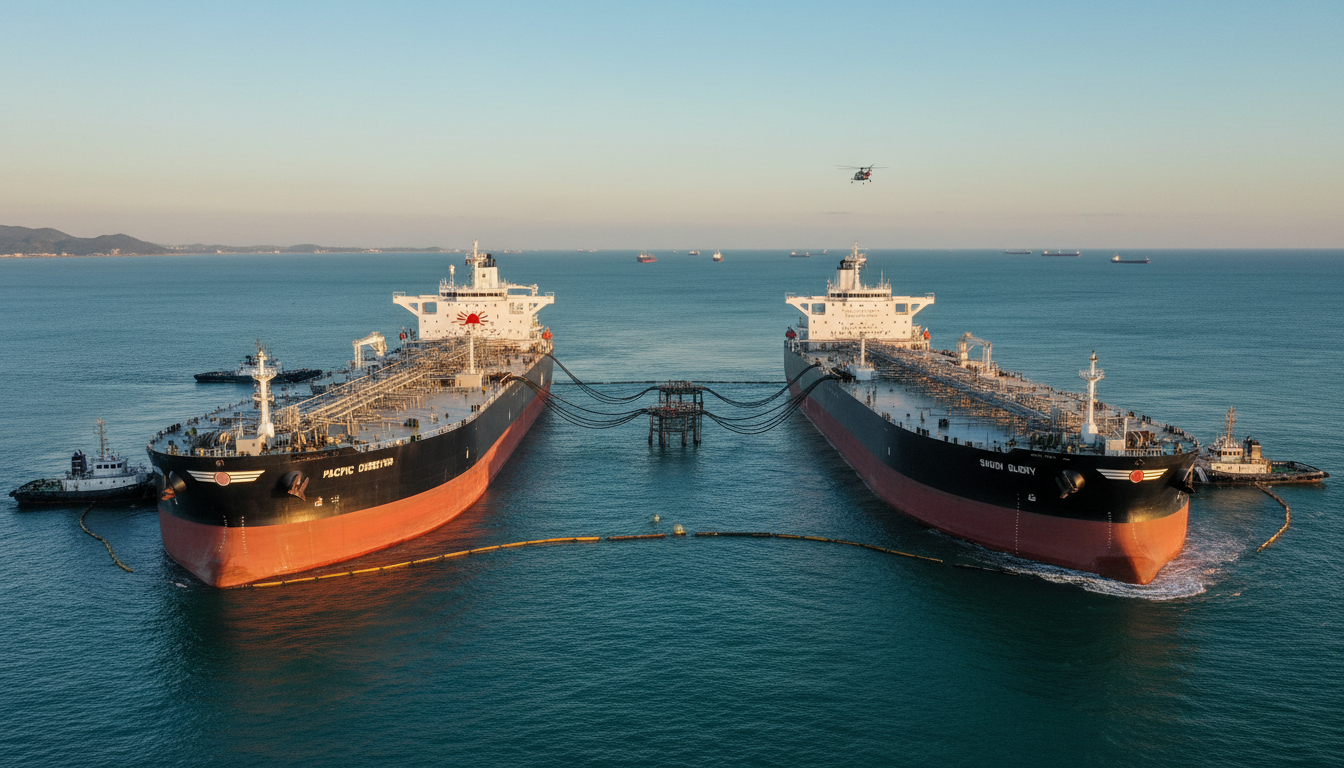
Half of Japan’s Middle Eastern Crude Arrives via Ship-to-Ship Transfers, Analysis Shows
Analysis finds about half of tankers bringing Middle Eastern crude to Japan from March–May used ship-to-ship transfers off Malaysia and India, incurring fees.
A Japanese analysis of tanker-tracking data shows that roughly half of the oil shipments from the Middle East to Japan between March and May were acquired through ship-to-ship transfers at sea. The practice took place predominantly off the coasts of Malaysia and India and involved foreign-operated vessels charging substantial fees. A domestic tanker that arrived in Japan in March is cited as an example after taking on cargo in those waters.
Analysis finds widespread use of ship-to-ship transfers
A review of shipping movements and AIS (Automatic Identification System) data indicates that a significant portion of crude destined for Japan did not travel directly from Middle Eastern load ports to Japanese terminals. Instead, cargoes were moved between vessels at sea before continuing to Japan’s refineries. The analysis covered the March–May window and identified a consistent pattern of mid-sea transfers.
The dataset shows transfers often occurred beyond immediate territorial waters, in established transshipment zones in the eastern Indian Ocean and near the Strait of Malacca. Vessels involved included tankers chartered by various trading houses and operated by foreign shipowners. The volume moved this way represents a material share of Japan’s imports from the region during the period.
Concentration of operations off Malaysia and India
The ship-to-ship activity clustered in two maritime areas: off Peninsular Malaysia and in waters off India’s southern coast. These locations are regularly used for commercial transshipment because of navigational depth, traffic separation schemes, and established shipping services. Observers note that vessels can meet there with relative ease while remaining outside busier port approaches.
Transfers in those corridors were typically arranged so that one vessel loaded the crude from Middle Eastern terminals and then transferred the product to a different tanker at sea. The receiving vessel would then proceed to Japan, often under different commercial terms or flags. Such patterns reduce the need for a direct port call at the original load point.
Foreign operators and fee structures
The analysis found that many of the mid-sea transfers were handled by foreign operators, who acted as intermediaries in the movement of crude. These operators provide the technical capability and seagoing crews needed to conduct ship-to-ship operations safely and efficiently. In return, they charged significant fees for the service, which added to the overall cost of the cargo delivered to Japan.
Shipping industry sources indicate that fees for seasoned crew, specialized equipment and the operational complexity of night or offshore transfers can be substantial. Those costs are passed along the commercial chain, ultimately affecting fuel economics for buyers. The involvement of third-party operators also introduced an additional commercial layer between producers and end buyers.
Operational and regulatory considerations
Ship-to-ship transfers are a long-standing practice in crude logistics and are governed by international safety and environmental regulations when conducted legally. Companies engaged in these operations are required to follow procedures related to ballast management, spill response capability and notification to maritime authorities if transfers occur within particular jurisdictions. Compliance obligations vary depending on the exact location and national laws.
At the same time, transfers at sea raise questions about transparency in tracking cargo ownership and routing. Officials and market analysts say that while the practice can be legitimate, it complicates external monitoring of crude flows and may obscure the commercial chain for regulators and insurers. Maritime insurers and flag states typically demand strict adherence to safety protocols to underwrite such voyages.
Implications for Japan’s energy security and markets
The finding that a large share of Middle Eastern crude reached Japan via ship-to-ship transfer underscores the flexibility — and complexity — of global oil logistics. For import-dependent countries like Japan, diversified sourcing and creative maritime arrangements help maintain supply continuity in times of market stress. However, reliance on mid-sea transshipment increases dependence on foreign operators and offshore service infrastructure.
Market participants caution that added fees and logistical complexity can influence refining margins and procurement strategies. Traders and refiners may need to factor the extra costs and operational risk into contract negotiations. The pattern also highlights the need for robust tracking systems to maintain visibility over cargo origins and movements.
Industry and government reactions
Representatives of major shipping companies and trading houses reached for comment emphasized that ship-to-ship transfers are a routine and lawful part of maritime oil logistics when conducted under proper oversight. They stressed that safety, environmental compliance and communication with relevant authorities remain priority considerations for any transfer operation. Several firms noted that commercial confidentiality often prevents disclosure of granular voyage details.
Government agencies and industry regulators did not immediately provide public statements about the analysis. Officials typically monitor crude imports, shipping activity and insurance markets to assess risks to supply chains. Any regulatory response would likely focus on ensuring safety standards and maintaining transparency for import statistics and market oversight.
The concentration of mid-sea transfers and the fees involved have prompted market-watchers to call for continued scrutiny of offshore transshipment practices and for greater information-sharing among shippers, insurers and regulators to safeguard Japan’s energy supply chain.

