
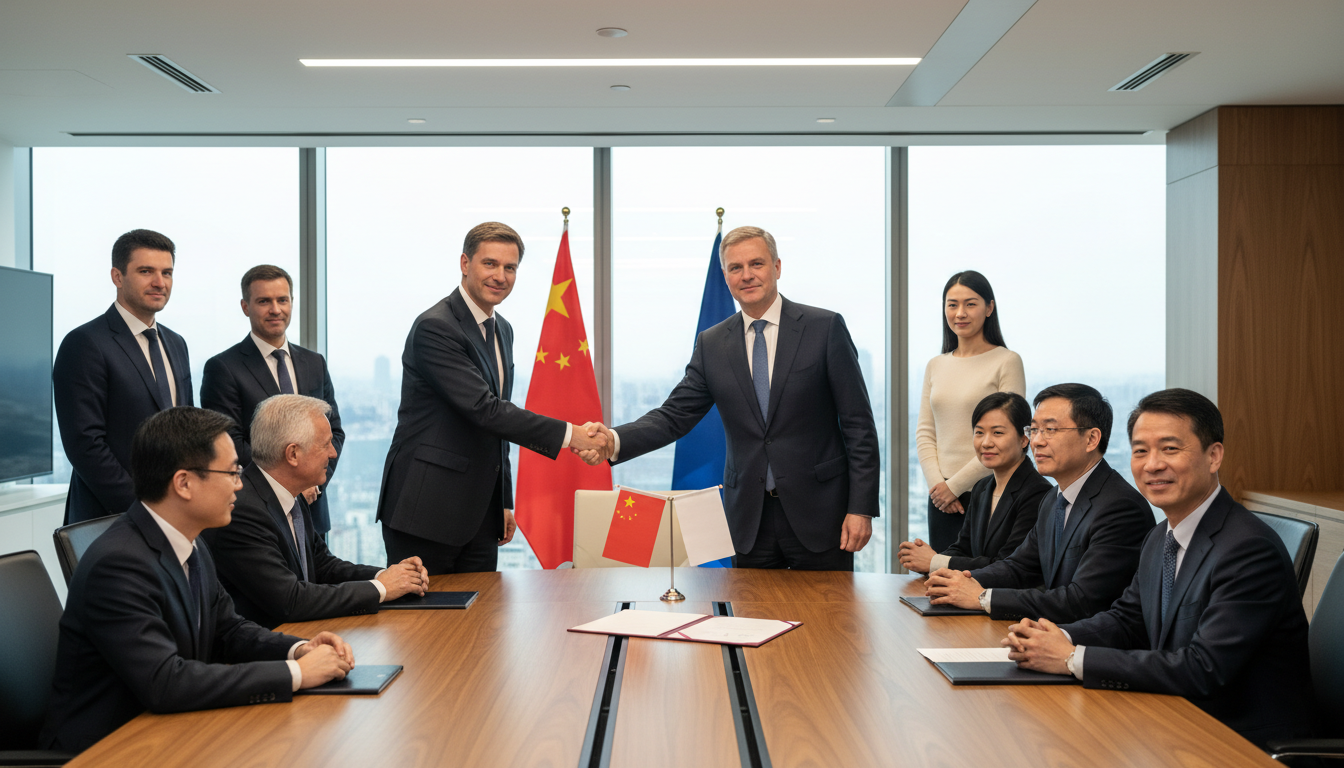
Huixing backing gives Mayer & Cie new lease of life amid pressure from Chinese rivals
Huixing’s backing revitalizes Mayer & Cie, the German circular knitting-machine maker used by H&M and Uniqlo, amid mounting competition from Chinese rivals.
Family-owned Mayer & Cie has secured fresh backing from Chinese investor Huixing, a move that industry observers say could stabilise the historic maker of circular knitting machines. Mayer & Cie produces more than 80,000 machines that are used globally by major apparel brands and smaller manufacturers alike. The investment comes as European textile machinery makers confront intensifying competition from lower-cost Chinese rivals and shifting demand patterns.
Huixing investment and its immediate impact
The infusion of capital from Huixing is expected to shore up Mayer & Cie’s short-term finances and protect manufacturing capacity at its Hamburg operations. Company insiders indicate the support will enable continued production of the firm’s circular knitting lines and preserve engineering know-how accumulated over decades. For a family-run business with deep export links, the backing reduces the immediate risk of factory closures or large-scale layoffs.
The deal also signals strategic interest by Chinese industrial groups in European machinery makers, reflecting a desire to combine advanced German engineering with access to global distribution networks. While details of the transaction remain limited, the appointment of new board-level advisers and planned investments in tooling and spare-parts logistics were among measures discussed by management.
Mayer & Cie’s global footprint and product range
Mayer & Cie is a long-established name in circular knitting, and its machines are widely used to produce hats, socks, collars and other knitwear components. More than 80,000 of its machines operate around the world, supplying production lines for international brands such as H&M, Uniqlo and Decathlon. The company’s machines are known for durability and precision, attributes valued in contract and brand-driven manufacturing.
Beyond finished apparel, the company serves niche industrial markets that require specialised circular knit structures, including technical textiles. That product diversity has helped Mayer & Cie maintain export revenues even as tariff and sourcing patterns have shifted in recent years.
Competitive pressures from Chinese rivals
European machinery makers face two principal challenges from China: lower capital costs and rapidly scaling local supply chains that can deliver machines and parts at competitive price points. Chinese manufacturers have expanded production capacity and improved quality, narrowing the performance gap on commodity machine types. At the same time, global apparel brands increasingly locate production in regions served by those suppliers, reinforcing a cycle of demand concentration.
These dynamics have compressed margins for historic European firms and increased the importance of after-sales services, custom engineering and lifecycle maintenance. Mayer & Cie’s established spare-parts network and reputation for repairability are advantages, but they must now be leveraged alongside fresh investment to compete on cost and lead times.
Workforce and technology implications in Germany
Management has emphasised that the Huixing backing is intended to sustain local expertise rather than to dismantle it. Preserving skilled roles in engineering, calibration and quality control is central to maintaining the brand’s technical edge. Company representatives have outlined plans to prioritise training and to protect key production lines while assessing efficiency improvements across the factory footprint.
At the same time, the investment is likely to accelerate selective adoption of automation, digital monitoring and predictive maintenance tools that can reduce operating expenses. Balancing modernisation with the retention of artisanal skills will be an operational focus as Mayer & Cie adjusts to a more competitive global market.
Market outlook and strategic options
Industry analysts say the period ahead will test whether historic makers can transition from niche excellence into commercially sustainable operators against a backdrop of Chinese scale and integration. For Mayer & Cie, the options range from deepening partnerships with global brands to expanding aftermarket services and licensing proprietary technologies. The Huixing backing opens possibilities for joint development or access to new distribution channels in Asia, but it also raises questions about long-term governance and strategic autonomy.
Circular knitting remains a critical link in apparel value chains, and companies that can combine product reliability with cost-effective service will find opportunities. Mayer & Cie’s brand recognition and installed base give it a platform to pursue those paths, provided investment is matched by execution in manufacturing, after-sales and market development.
Mayer & Cie’s renewed capital and the broader industry shifts underscore a pivotal moment for European textile machinery makers, balancing tradition and innovation while responding to evolving global competition.

