
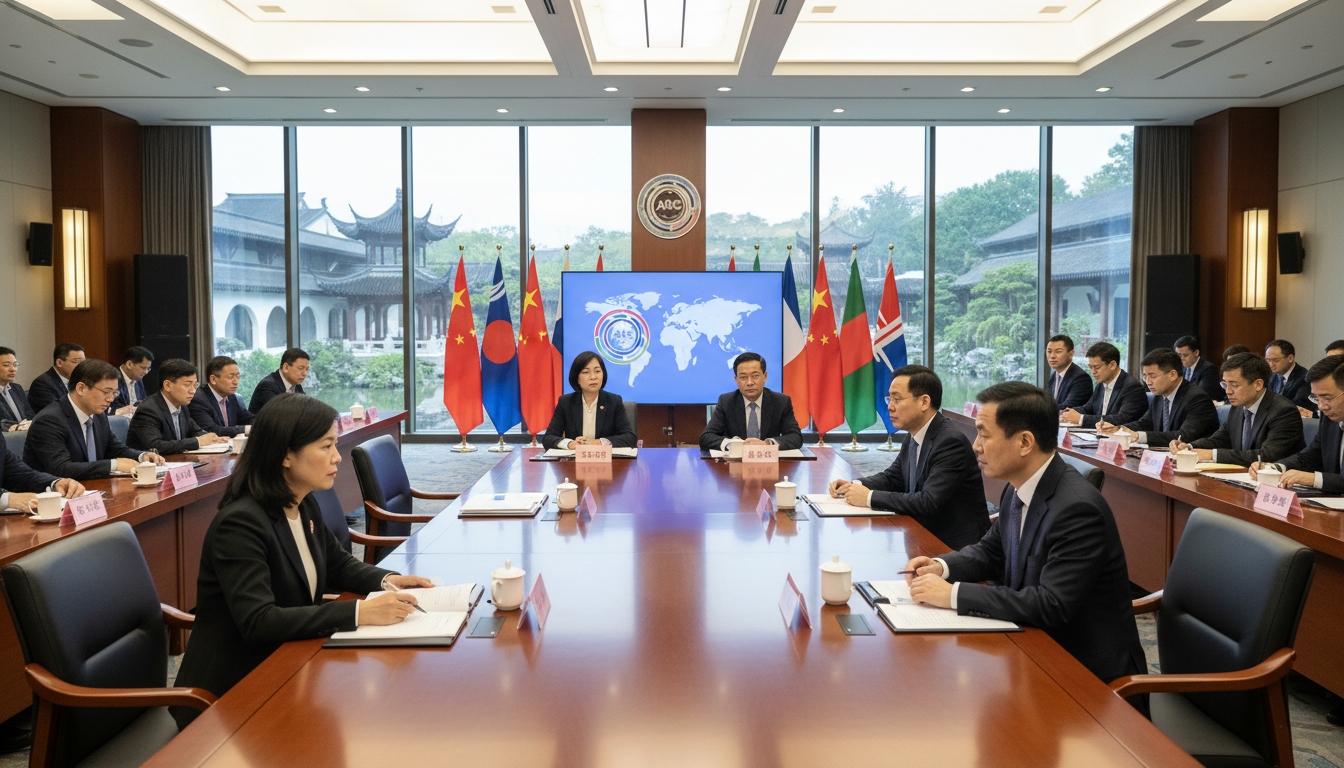
APEC Trade Ministers Convene in Suzhou a Week After Trump‑Xi Summit
APEC trade ministers meet in Suzhou to discuss tariffs, supply chains and digital trade a week after the Trump‑Xi summit, highlighting U.S.-China engagement.
Strong opening: ministers gather amid U.S.-China focus
A week after President Donald Trump’s visit to Beijing, APEC trade ministers met in Suzhou, eastern China, putting U.S.-China engagement at the center of regional economic discussions. The gathering of trade officials from economies across the Asia-Pacific comes as governments seek to manage lingering tensions from recent bilateral talks and broader trade frictions. Delegates are expected to exchange views on tariffs, supply-chain resilience and digital trade rules as they search for practical steps to stabilize commerce. The Suzhou meeting also provides a forum for smaller economies to press their priorities in negotiations shaped by the two largest economies.
Timing and political backdrop
The timing of the Suzhou session is widely seen as significant because it follows closely on high-level diplomacy between Washington and Beijing. Ministers arrive with the political backdrop of renewed engagement between the United States and China, which raises expectations for clearer trade channels but does not eliminate longstanding disputes. Many attendees are balancing domestic pressures with the need to signal cooperation that supports regional growth. Observers say the meeting will test whether the momentum from leader-level talks can translate into coordinated ministerial action.
Agenda priorities: tariffs, supply chains and digital trade
Trade ministers are focusing on a compact agenda that reflects pressures on cross-border commerce: remaining tariffs, supply-chain diversification, and rules for digital trade and data flows. Officials are expected to discuss mechanisms to reduce disruption in critical sectors such as semiconductors, agriculture and shipping logistics. Proposals on digital trade aim to harmonize rules for e-commerce, cross-border data transfers and digital services, which are increasingly important to regional growth. Ministers will debate how to balance policy autonomy with the benefits of interoperability and common standards.
U.S.-China engagement shapes discussions
Delegates say the recent Trump‑Xi summit has made U.S.-China engagement an unavoidable theme at the talks, influencing both tone and substance. While some economies welcomed the prospect of eased tensions, others cautioned that concrete policy shifts are required to change business sentiment. Ministers from smaller APEC members have signaled a desire for clarity on how U.S.-China decisions will affect regional supply chains and investment flows. The Suzhou meeting offers a testing ground for whether bilateral diplomacy can be translated into multilateral measures that reduce trade frictions.
Regional concerns and smaller economies’ priorities
For many APEC members, the immediate priorities are practical: reducing transaction costs, ensuring market access for agricultural and manufactured goods, and protecting critical industries from sudden disruption. Smaller economies are pressing for technical assistance to upgrade customs procedures and for capacity-building initiatives that help domestic firms compete in digital markets. Fisheries, agriculture and small and medium-sized enterprises figure prominently in side meetings and technical briefings. Delegates are seeking assurances that broader U.S.-China moves will not leave less-resourced economies exposed to sudden market shifts.
Economic backdrop highlighted by port activity
The meeting’s location near Shanghai underscores the economic stakes; major ports and logistics hubs in the region remain vital to global trade. Shipping and port activity in the Yangtze Delta region have been cited by officials as indicators of supply‑chain health and bottlenecks. Ministers will likely review how port congestion, freight costs and container availability intersect with tariff policies and trade agreements. Infrastructure and logistics improvements are being discussed as necessary complements to policy measures if trade flows are to be stabilized.
Expected outcomes and follow-up measures
While ministers are unlikely to produce sweeping new agreements at the Suzhou session, they are expected to agree on targeted initiatives and a workplan for future cooperation. Proposed outcomes include technical roadmaps for customs harmonization, commitments to deepen dialogue on digital trade frameworks, and exploratory groups to study resilience in critical supply chains. Delegates aim to produce language that keeps channels open between economies and that can be translated into concrete actions at subsequent meetings. Observers will be watching for signs that leader-level diplomacy is feeding practical cooperation at the ministerial level.
The Suzhou meeting serves both as a barometer of immediate political will and as a forum for shaping the next phase of regional economic policy. Ministers must balance national priorities with the shared interest in minimizing disruption to trade and investment across the Asia-Pacific. Success in Suzhou will be measured less by headlines than by whether the gathering produces actionable steps that improve predictability for businesses and protect the economic recovery across the region.

