
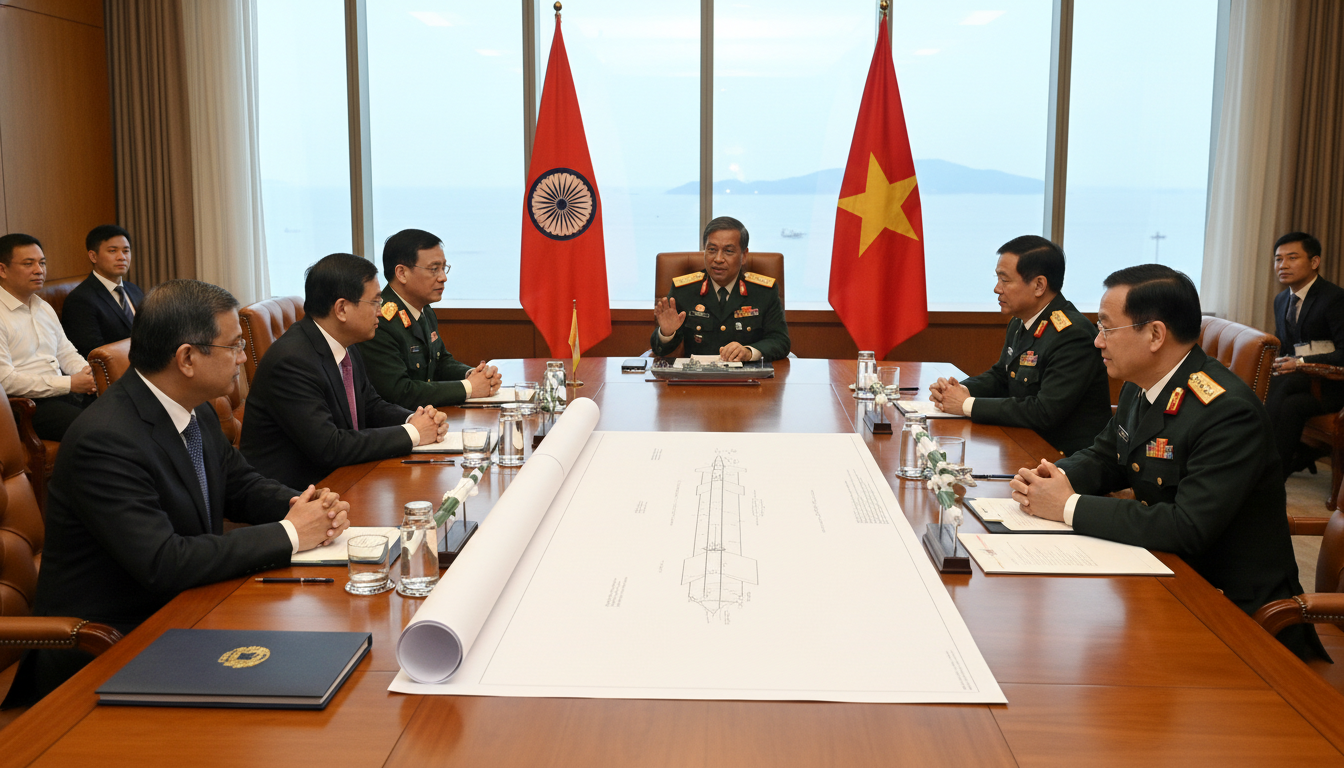
Vietnam Moves to Acquire BrahMos Cruise Missile from India amid South China Sea Tensions
Vietnam appears set to buy the BrahMos cruise missile from India as Beijing’s assertiveness in the South China Sea intensifies, a development that could alter regional deterrence dynamics.
NEW DELHI — Vietnam appears to be on course to procure the BrahMos cruise missile system from India, according to diplomatic and defence contacts familiar with the discussions. The potential acquisition comes as Hanoi deepens defence ties in response to mounting pressure from China over maritime claims in the South China Sea.
Hanoi’s Strategic Calculus
Vietnam’s interest in the BrahMos cruise missile reflects a broader effort to modernize its armed forces and strengthen maritime deterrence. Officials in Hanoi have increasingly prioritized systems that can deny adversary access to disputed waters and protect sea lines of communication.
The move is widely viewed within the region as part of a pattern in which Southeast Asian states seek advanced strike capabilities to counterbalance China’s growing naval presence. Any agreement would mark a significant step in defence cooperation between India and Vietnam.
Technical Appeal of the BrahMos
The BrahMos cruise missile, developed by a joint venture between India and Russia, is prized for its combination of speed, precision and adaptability across land, sea and air platforms. Military planners see it as suited to anti-ship and land-attack roles that are central to maritime defence strategies.
Indian defence analysts note that the system’s high survivability against air defences and its precision strike capability make it attractive for countries seeking to complicate an opponent’s operational calculus in contested waters. Export versions and deployment options have expanded as New Delhi has moved to make the missile available to partner nations.
Regional Procurement Pattern
India has already supplied or negotiated similar transfers with other Southeast Asian states, and New Delhi is reportedly watching whether Vietnam joins the Philippines and Indonesia in moving to acquire the weapon. Those earlier deals helped establish a precedent for cross-border defence sales involving Indian-produced systems.
Procurements in the region are being shaped by a mixture of strategic necessity and diplomatic outreach, with suppliers like India positioning themselves as alternatives to traditional arms exporters. For buyers, the combination of political alignment and the technical fit of the platform has driven momentum toward such purchases.
Diplomatic Ripples and Beijing’s Response
Any formal sale to Vietnam would likely prompt careful responses from Beijing, which has objected to external military support for claimants in the South China Sea. Chinese officials have historically criticized arms transfers to countries embroiled in maritime disputes with China.
At the same time, India and Vietnam have cultivated a deepening strategic partnership that includes regular naval exercises and intelligence cooperation, and Delhi has framed defence ties as part of a rules-based regional order. The transaction would therefore be as much diplomatic as it is military, carrying signals about alignments and deterrence postures.
Impact on Regional Security and Deterrence
Defence commentators say that the addition of a supersonic, precision strike capability like the BrahMos could materially raise the costs of coercive action in contested maritime zones. For Vietnam, such systems would strengthen coastal defence and complicate any adversary’s calculus for seizing or dominating maritime features.
Analysts caution, however, that hardware alone does not guarantee stability. Effective use of complex strike systems requires integration into broader command-and-control networks, logistics and maritime domain awareness, all of which Hanoi would need to develop alongside any missile acquisition.
Procurement Process and Timeline
Negotiations over major defence purchases typically cover pricing, transfer of technology, local production offsets and training, and those elements are expected to be part of Hanoi’s talks with New Delhi. Officials familiar with the matter say timelines for delivery, if a deal is reached, could span several years given production schedules and regulatory clearances.
India’s export policies and the joint-venture structure with Russia add layers of diplomatic coordination to any final agreement. Observers expect both governments to weigh the strategic benefits against potential diplomatic costs before moving to signature and implementation.
Vietnam’s apparent interest in the BrahMos underscores how shifting maritime tensions in the South China Sea are reshaping procurement decisions across the region. The outcome of the negotiations will be watched closely by capitals from Tokyo to Washington, and by Beijing, as states reassess how best to defend territorial claims and maritime rights.
The coming months may clarify whether Hanoi formalizes a purchase and how New Delhi balances regional security objectives with its broader diplomatic engagements.

