
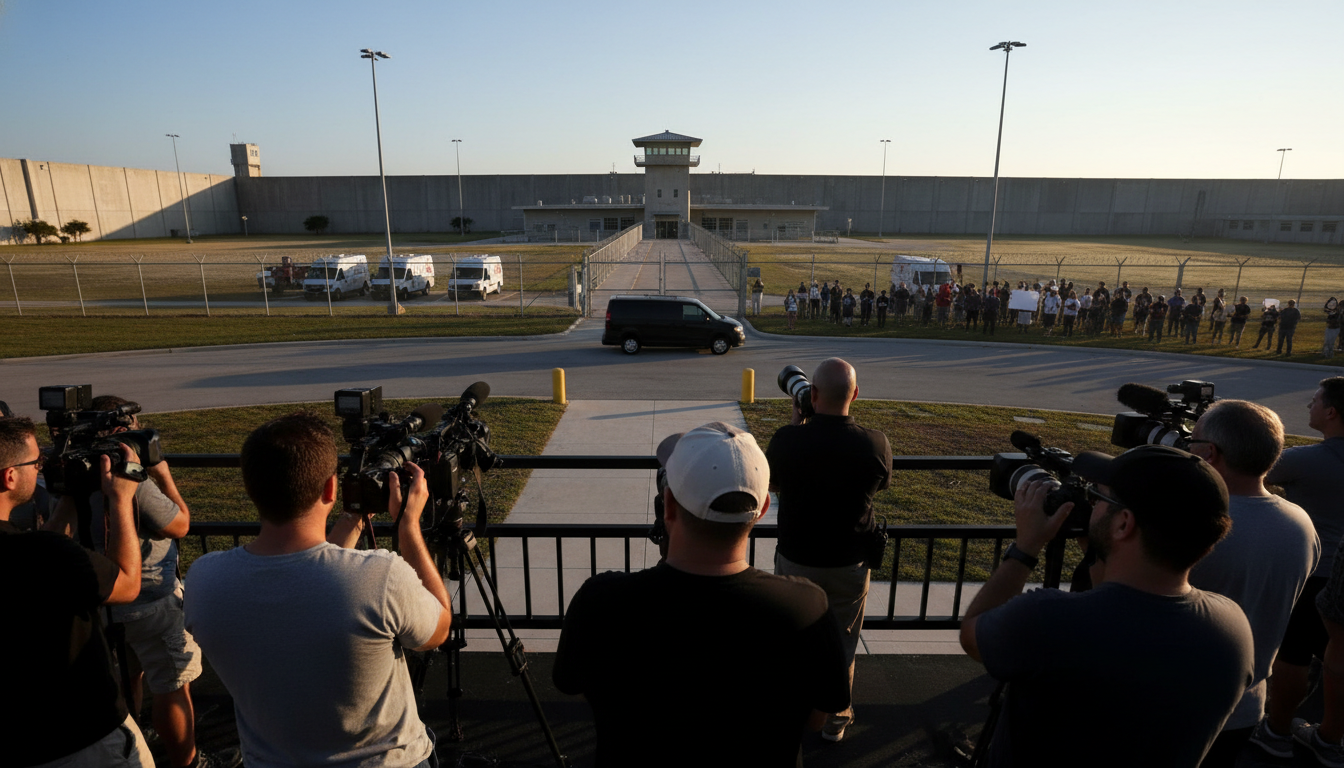
U.S. executions rise as Florida carries out lethal injection amid protests
A scheduled lethal injection in Florida on Feb. 24 drew protesters and attention to rising U.S. executions, including 47 in the past 15 years sparking debate.
Florida state corrections officials said they carried out the execution of Melvin Trotter, 65, on the evening of Feb. 24. The execution, by lethal injection, was confirmed about an hour after the scheduled time and followed a public notice issued by the governor’s office. The case dates to a 1986 killing of a shop owner, for which Trotter had been convicted and sentenced to death.
Execution carried out at Florida state prison
An hour or so after the scheduled time, the state corrections department announced that the execution had been completed as planned. Officials released only limited details about the procedure and the timing in keeping with state practice. The announcement ended a long legal and administrative process that had returned the case to the scheduled date.
Protesters gather opposite the execution site
Roughly 60 people assembled in a field across the road from the prison before the execution, carrying signs that read messages such as “Death is torture” and “Oppose this week’s execution.” Organizers of the gathering included a local group that calls itself Floridians for Alternatives to the Death Penalty. Participants observed a moment of silence when the announced execution hour passed and waited for official confirmation.
State procedure and public notice practices
In Florida, execution schedules are typically made public in advance through the governor’s directives and corrections announcements. Visitors from countries where executions are not pre-announced described the notice as a striking contrast to practices elsewhere. The public timetable allows for visible protest and media attention in the hours leading up to an execution.
Details of the inmate and conviction
Authorities identified the inmate as Melvin Trotter, who was 65 at the time of execution and had been convicted in the 1986 slaying of a store proprietor. The state’s corrections bureau said the legal requirements for carrying out the sentence had been met. Defense attorneys and advocacy groups had pursued appeals and clemency petitions in previous years, without success.
Rise in executions and numerical context
Recent tallies show a marked increase in executions in the United States, with official counts indicating 47 carried out in the most recent 15-year span that drew attention from advocates and legal observers. That rise has renewed scrutiny of the death penalty at both the state and federal levels. Experts and campaigners say the numbers reflect shifting policies, legal outcomes, and administrative decisions that vary widely by state.
Advocacy, public reaction and legal debate
Opponents of capital punishment say the rise in executions and the visible scheduling in states like Florida deepen concerns about due process, humane treatment and the possibility of wrongful convictions. Supporters of execution policies point to verdicts and sentences affirmed by courts and to the views of victims’ families seeking closure. The debate plays out in court filings, legislative hearings and public demonstrations, with advocacy groups on both sides stepping up outreach.
Executions in the United States remain geographically uneven, with a handful of states carrying out the majority of sentences. Florida’s practices and the publicity around scheduled executions have put the state at the center of national conversations about capital punishment policy. As legal challenges and public debate continue, observers say the discrepancy between state procedures and international norms will keep the issue prominent in news coverage.

