
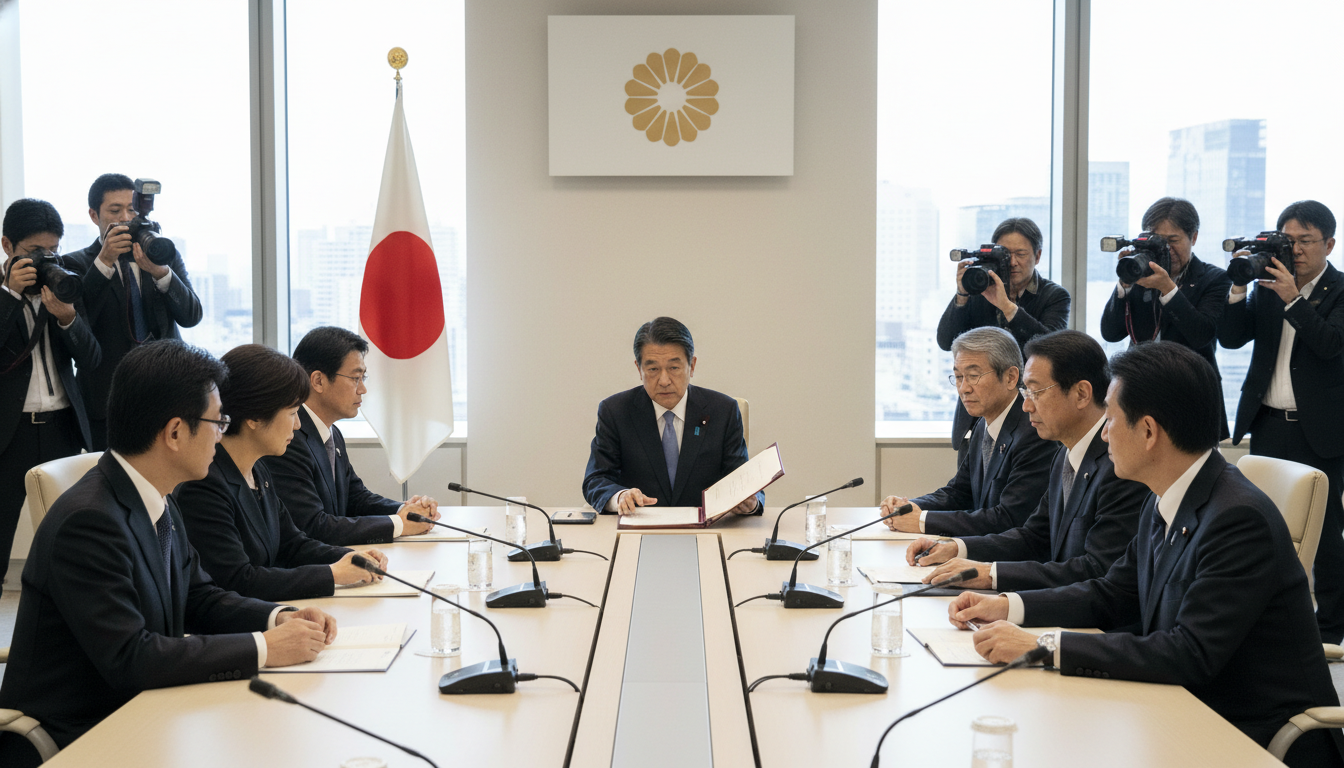
Japan Moves to Establish National Intelligence Council as Upper House Passes Bill
Japan’s upper house approved legislation on May 27, 2026 to create the National Intelligence Council, centralizing intelligence functions amid rising regional security challenges.
Japan has taken a decisive step toward creating a centralized intelligence body with the upper house passage of a bill on May 27, 2026 to establish the National Intelligence Council. The measure, which follows lower house approval in April 2026, is intended to coordinate intelligence collection and analysis across government agencies. Officials describe the new body as a means to sharpen Japan’s strategic decision-making in an increasingly complex security environment.
Parliament Clears Final Legislative Hurdle
The upper house vote on May 27, 2026 followed months of debate in both chambers of the Diet and marks the final parliamentary approval needed to bring the bill closer to enactment. Lawmakers from the ruling coalition argued the legislation addresses long-standing fragmentation in Japan’s intelligence apparatus and will improve timeliness and accuracy in assessments. Opposition figures raised concerns about safeguards and transparency during committee deliberations but could not muster enough votes to block the measure.
The bill’s passage in April by the lower house set the legislative trajectory, and the upper house’s approval formalizes parliamentary consensus on the broad framework. With parliamentary approval secured, the government must now prepare implementing regulations, staff appointments and budget allocations to put the council into operation. Officials say that timetable and resource plans will be announced in the weeks ahead.
Intended Structure and Mission of the Council
Under the legislation, the National Intelligence Council is designed to aggregate information from existing ministries, the Self-Defense Forces and external partners to produce national-level intelligence assessments. The council will be tasked with strategic analysis, threat forecasting and coordinating the flow of classified information to senior policymakers. Proponents say centralization will reduce duplication and close gaps that have hindered rapid policy responses in the past.
The precise authorities, chain of command and internal organization will be defined in implementing rules, which remain under development by the Cabinet Office. The bill outlines core functions but leaves operational details to administrative guidance and future regulations. That approach gives the government flexibility but also raises questions among civil society groups about how oversight and accountability will be structured.
Prime Minister Takaichi Frames Security Rationale
Prime Minister Sanae Takaichi and senior ministers framed the council as a necessary modernization step amid shifting regional dynamics. They cited North Korea’s expanding missile capabilities and intensified military activity around Japan as drivers for improved intelligence coordination. Government statements emphasize the council’s role in protecting national security and informing crisis-level decision-making.
The administration has also linked the proposal to Japan’s broader efforts to strengthen deterrence and deepen cooperation with allies on information sharing. Officials have said the council will facilitate more effective collaboration with partner agencies overseas while preserving Japan’s legal and operational independence. Those diplomatic ties are expected to shape both the council’s priorities and its information-sharing protocols.
Debate Over Oversight and Civil Liberties
Civil society organizations, legal scholars and some opposition politicians have urged stronger statutory safeguards to prevent overreach by an empowered intelligence body. Critics warn that expanded secrecy and broad information-gathering powers can risk encroaching on civil liberties without clear checks on collection, retention and use of personal data. They are calling for a robust parliamentary oversight committee and independent review mechanisms.
Government backers counter that the bill includes provisions for review and accountability and that operational secrecy is unavoidable in effective intelligence work. Nonetheless, the debate over balancing secrecy with democratic oversight is likely to persist as implementing regulations are drafted. Public hearings and watchdog engagement may shape the final oversight architecture in the months ahead.
Regional Implications and International Cooperation
Analysts say the creation of a National Intelligence Council signals Japan’s intent to professionalize its intelligence capabilities and to play a more assertive role in regional security. The council could streamline intelligence-sharing with key partners, notably the United States, while also enhancing Tokyo’s ability to assess threats from North Korea, China and transnational risks. Observers note that improved analytic capacity could reinforce deterrence and crisis response options.
At the same time, neighboring countries may closely monitor how Japan balances expanded intelligence functions with transparency and legal safeguards. Tokyo has emphasized that the council will operate within the bounds of Japanese law and that cooperation with allies will be based on mutual legal and policy frameworks. Diplomatic engagement will likely accompany the council’s early operational planning.
Implementation Challenges and Next Steps
Practical challenges remain before the National Intelligence Council becomes a functioning entity, including recruitment of experienced analysts, secure information systems and an annual budget allocation. The government must also reconcile existing agency roles to prevent turf conflicts while ensuring timely information flow. Senior appointments and a clear timeline for standing up the council will be watched closely by lawmakers and the public.
The Cabinet is expected to publish implementing guidelines and a phased plan for staffing and facilities in the coming weeks. Parliamentary oversight mechanisms and any statutory clarifications emerging from that process will shape the council’s authority and public acceptability. How Tokyo manages these implementation steps will determine whether the new body can meet its stated goals of improved intelligence and national resilience.
Japan’s move to establish the National Intelligence Council is a landmark shift in postwar intelligence organization, reflecting evolving security pressures and a governmental push for centralized analysis. The coming months of regulatory design, appointments and oversight debate will test the government’s ability to deliver a capable and accountable intelligence framework that aligns with democratic norms and international partnerships.

