
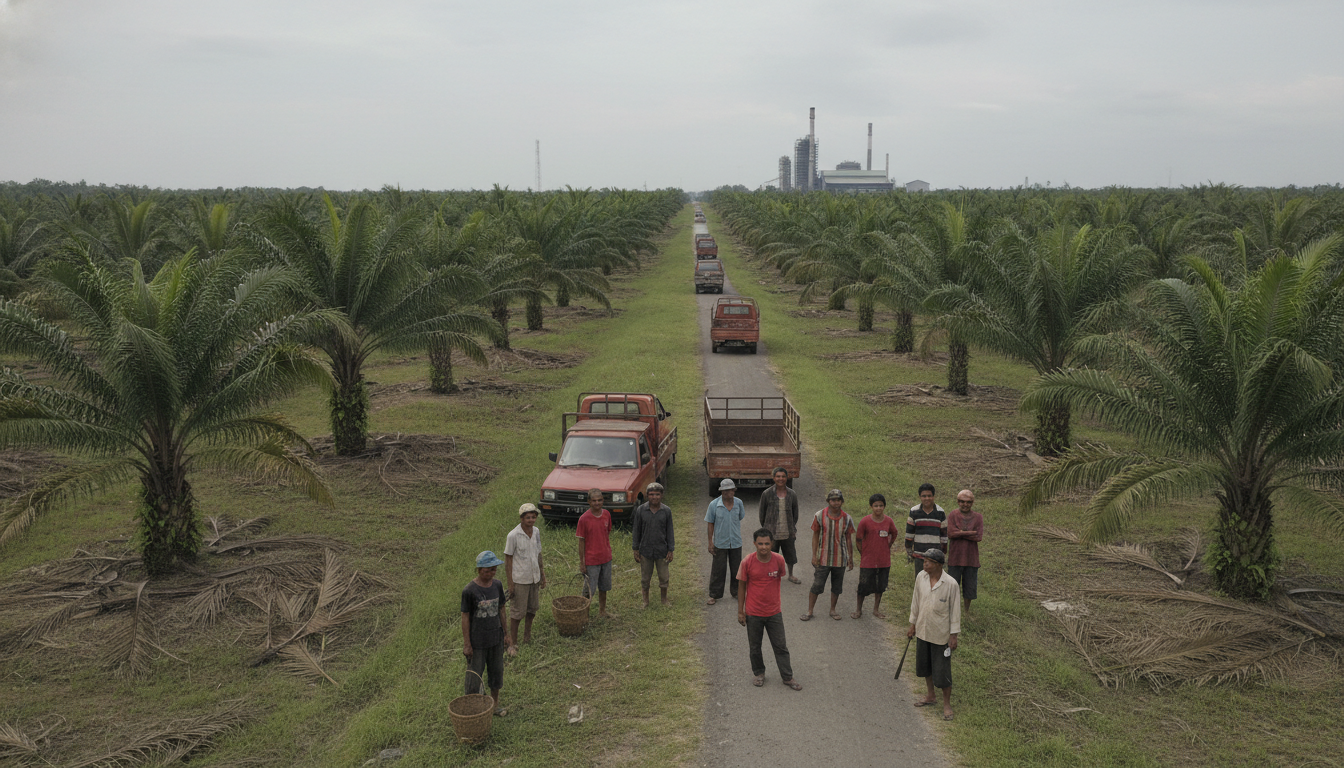
Palm oil prices plunge as Prabowo’s export policy and fertilizer shock squeeze Indonesian smallholders
Indonesia’s palm oil sector reels after a sudden export policy change and soaring fertilizer costs, forcing farmers in Bengkulu to sell at collapsed prices and cut production.
Sharp rise in fertilizer costs hits smallholders
Dayatri, an oil palm smallholder in Bengkulu province, recalculated his costs after the price of a 50-kilogram sack of urea rose from 400,000 rupiah to 700,000 rupiah in late April. The jump has eroded margins for small-scale producers who rely on regular fertilizer applications to sustain yields.
Higher input costs have come at a moment of acute price weakness for palm oil. Farmers said they were unable to pass on costs because local buying prices have fallen sharply since the government announced a new export policy, prompting many to delay replanting and maintenance.
New export policy triggers market uncertainty
Traders and mill operators reported a sudden change in domestic demand patterns after the government unveiled an export measure that market participants described as abrupt. The policy shift led buyers to recalibrate purchasing, contributing to a nationwide collapse in palm oil prices and a scramble to offload fresh fruit bunches.
Industry sources said the lack of clarity around quotas and documentation requirements intensified the shock. The resulting uncertainty has reduced throughput at processing mills and left growers selling at steep discounts to avoid losses from fruit spoilage.
Processing plants and mills scale back intake
Several regional mills have temporarily cut intake or offered lower prices to manage excess inventory, according to growers and local traders in Bengkulu. Reduced mill intake has rippled back to estates and smallholders, accelerating the pace at which fresh fruit bunches are sold at fire-sale rates.
Lower processing volumes also limit the ability of the supply chain to stabilise prices, driving a feedback loop of falling demand and shrinking production. With mills operating below normal capacity, some contractors and labourers face reduced hours and delayed payments.
Farmers face immediate cashflow strain
The combined effect of higher fertilizer bills and collapsing palm oil prices has pushed many smallholders toward short-term liquidity problems. Growers reported selling their harvests quickly to cover immediate expenses, but the depressed prices mean receipts no longer match rising input and household costs.
Local co-operatives and village leaders described a surge in requests for emergency credit and assistance. Analysts warn that prolonged strain could force cutbacks in maintenance and replanting, undermining medium-term yields and household incomes across major producing regions.
Industry groups press for clearer rules and support
Farmer associations and trade groups have called on Jakarta to provide clearer guidance on the export policy and to consider support measures for distressed smallholders. Representatives said rapid clarification is essential to restore market functioning and prevent a deeper contraction in production.
Some regional officials have signalled the need for temporary relief measures, including targeted subsidies or deferred payments for inputs, though details remain in flux. Market participants say a prompt, transparent response will be critical to calming buyers and stabilising local buying prices.
Global vegetable oil markets watch Indonesian developments
Indonesia, the world’s largest producer of palm oil, plays an outsized role in global vegetable oil supplies and price formation. Policy shifts and production changes within the country often reverberate through international markets, influencing edible oil and commodity inflation elsewhere.
Analysts noted that while a domestic price collapse hurts growers, restricted or uncertain exports can tighten global supplies and push international prices higher. The current mix of falling domestic prices and export uncertainty creates conflicting signals for traders and consumers around the world.
The coming weeks will be pivotal for growers and processors attempting to navigate the fallout and for policymakers seeking to balance domestic affordability, export revenue and long-term sector health.

