
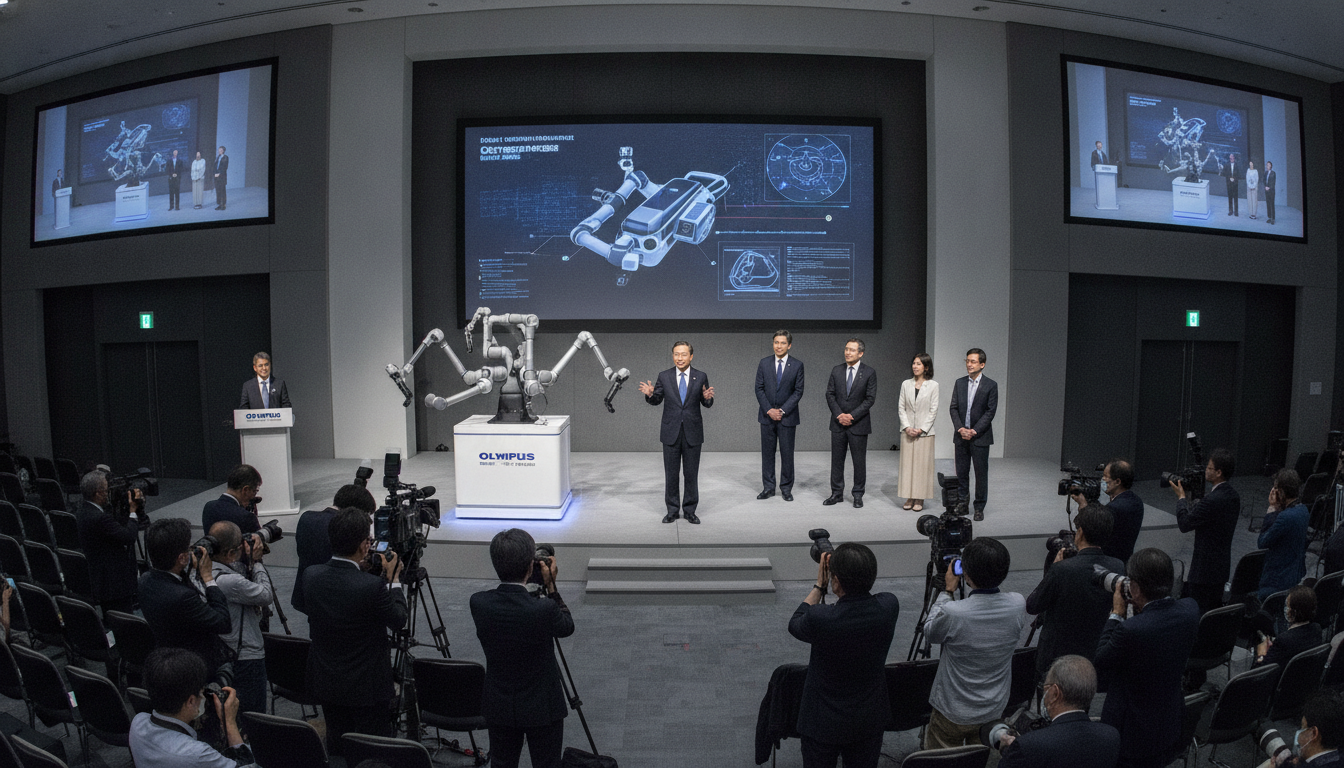
Olympus pushes endoscopic robotics toward robotic consoles to ease physician workloads
Olympus pushes endoscopic robotics from bedside to robotic consoles, aiming to cut physician workloads while facing training, regulatory and market challenges.
Japan’s Olympus is accelerating development of endoscopic robotics to move endoscopy from bedside procedures to surgeon-operated robotic consoles, a shift that the company and other device makers say could significantly reduce physician workloads. The company envisions a future in which endoscopic robotics and artificial intelligence handle routine navigation and image interpretation, allowing clinicians to focus on complex decision-making. The announcement signals a broader industry push to integrate robotics and AI into clinical workflows across gastroenterology and related specialties.
Olympus outlines console-driven endoscopy strategy
Olympus has publicly described plans to transform traditional endoscopy by introducing console-based systems that separate operator controls from the patient bedside. Company executives argue that console operation can improve ergonomics for clinicians and standardize procedural steps, reducing variability in performance. The system is intended to couple robotic actuation with advanced imaging and software tools to assist navigation and lesion detection.
The strategy reflects a recognition among device makers that endoscopic robotics could address rising demand for minimally invasive diagnostics and procedures. By packaging robotics, AI, and connectivity, Olympus aims to offer integrated solutions that appeal to hospitals seeking workflow efficiencies and better clinical throughput. The approach also aligns with broader trends in surgical robotics, which have moved surgeons from direct manual manipulation to mediated console control.
How endoscopic robotics and AI will change procedures
Endoscopic robotics employ miniature actuators, flexible instruments and remote-control interfaces to steer scopes through complex anatomy with greater precision than manual techniques. AI algorithms are being developed to identify polyps, characterize tissue and assist with real-time decision support, potentially reducing the cognitive load on endoscopists. Together, these technologies aim to shorten procedure times, lower complication rates and increase the consistency of diagnostic yields.
Manufacturers emphasize that robotics will not replace clinicians but will augment their capabilities, performing repetitive tasks and stabilizing instrument positioning. Enhanced imaging, including high-definition and augmented-reality overlays, is expected to work in tandem with AI to flag areas of concern for physician review. The combined system could shift the procedural model from one of manual dexterity to supervision and interpretation.
Device makers see physician workload relief and new roles
Executives at multiple medical device companies say endoscopic robotics will let physicians delegate routine manipulations while preserving clinical oversight, thereby alleviating physical strain and burnout. The technology could enable a single specialist to supervise multiple rooms or remotely guide procedures, improving resource utilization in busy hospitals. Support staff roles may change too, with technicians assuming tasks related to device setup and maintenance.
However, the transition will require rethinking scheduling, staffing and credentialing models within institutions. Hospitals will need to balance potential efficiency gains with investments in infrastructure and personnel training. For clinicians, the shift entails learning new interfaces and refining judgment skills for AI-assisted outputs rather than purely manual techniques.
Training, regulation and reimbursement hurdles remain
Widespread adoption of endoscopic robotics faces regulatory reviews and the need for robust clinical evidence demonstrating safety and cost-effectiveness. Regulators in major markets demand trials that show non-inferiority or superiority to conventional endoscopy on key outcomes such as lesion detection and complication rates. Manufacturers must also secure reimbursement pathways, which can be slow to adapt to device-driven procedural changes.
Training is another major barrier: clinicians will need standardized curricula and simulation platforms to gain proficiency in console-based systems. Medical societies and teaching hospitals will play a central role in developing credentialing frameworks and continuing education. Until these components are in place, uptake may be limited to specialized centers with the resources to invest in both equipment and human capital.
Market prospects and competitive landscape
Analysts expect demand for endoscopic robotics to grow as aging populations increase screening and therapeutic procedures that rely on minimally invasive techniques. Japan, with its advanced medical-device industry and high uptake of screening programs, could become an early market for console-based endoscopy. Global competition is intensifying, with multiple firms racing to combine flexible robotics with AI-powered imaging and cloud-based analytics.
Pricing and total cost of ownership will influence hospital decisions, particularly in systems under fiscal pressure. Manufacturers that can demonstrate improved throughput, reduced complication-related costs and clear clinical advantages are more likely to win contracts. Partnerships with hospital networks and academic centers will be crucial to generate the clinical evidence and user feedback needed to refine systems.
The path to routine use of endoscopic robotics will be incremental, with hybrid models likely to predominate during the transition period. Early adopters will provide case studies and data that shape regulatory and reimbursement policies, while broader commercialization will hinge on demonstrable improvements in outcomes and workflow.
Endoscopic robotics promises to reshape how endoscopy is delivered by shifting manual tasks to machines and recasting clinicians as strategic supervisors of AI-augmented systems. The technology offers potential relief for physician workloads and the prospect of more consistent diagnostic performance, but realization of that promise depends on overcoming training, regulatory and economic obstacles. Hospitals, clinicians and device makers will need to collaborate closely to ensure that robotic consoles and AI tools are safe, effective and accessible to the patients who stand to benefit.

