
Kazakhstan Rare Earths: Astana Seeks Role as Alternative to China’s Processing Dominance
Kazakhstan rare earths: Astana pitches mines and mining expertise to buyers, seeking investment to build refining capacity as China dominates processing.
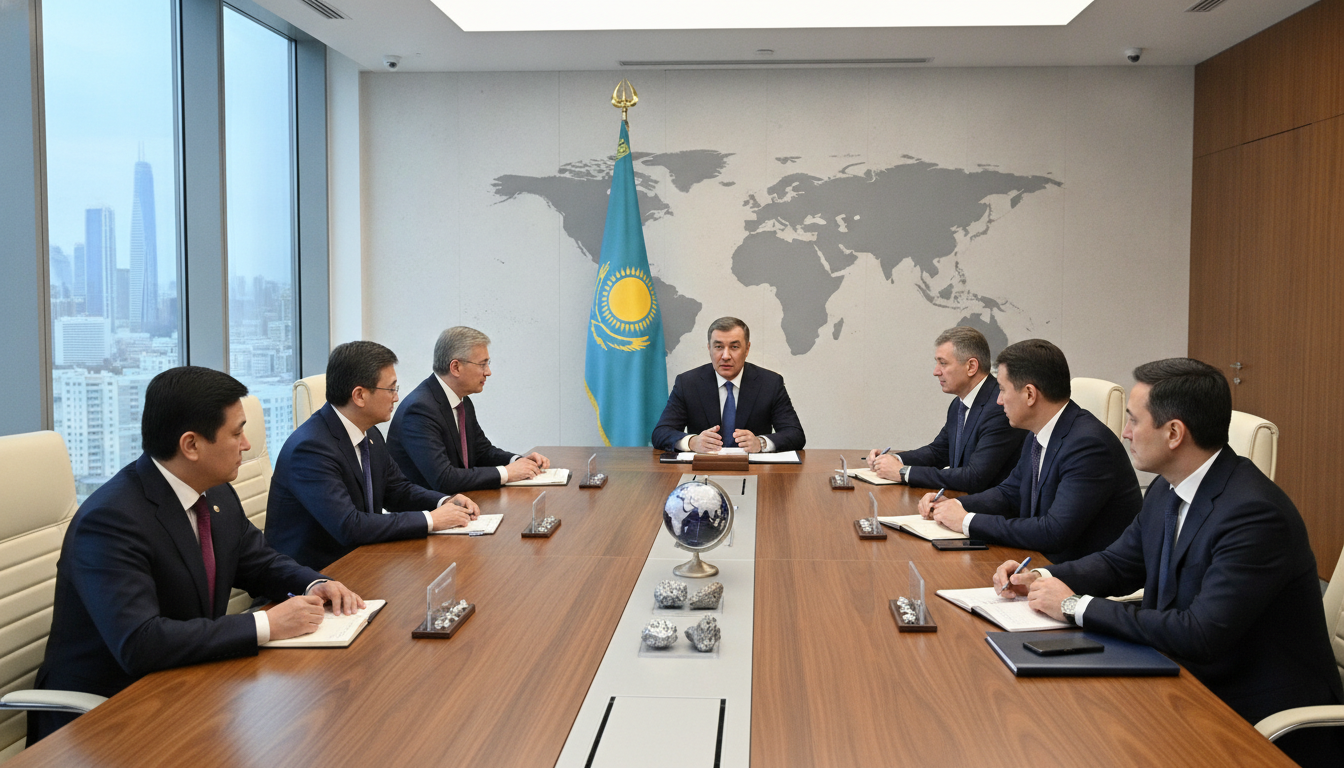
Kazakhstan presented itself last week in Astana as a potential alternative source for rare-earth minerals, arguing its deposits and mining expertise could ease reliance on China. The country’s pitch targeted governments and companies worried about supply-chain concentration for technologies from electric vehicles to wind turbines. Kazakhstan rare earths featured centrally in discussions as speakers highlighted the gap between extraction capacity and downstream refining.
Astana’s pitch to international partners
Kazakh officials told delegates at the Hilton Astana that the country can supply heavy concentrations of rare-earth ores and has decades of mineral-sector experience. Their presentation emphasized existing mine infrastructure, skilled labor, and a willingness to fast-track permits for strategic projects. The government framed these advantages as a chance for buyers to diversify away from a single dominant processor.
Private sector representatives at the event echoed the call for investment but stressed the economics are complex. Mining is capital intensive and short-term returns are limited without downstream processing facilities. Investors, officials said, must weigh the costs of building refineries against the strategic benefit of a more resilient supply chain.
China’s position in production and refining
Global market observers note China currently accounts for roughly 70% of rare-earth production and controls about 90% of processing and refining capacity. That concentration leaves much of the value chain exposed, since concentrates shipped abroad typically return as finished materials after being refined and alloyed. For countries seeking secure supplies, control of processing is as important as access to ore.
Analysts say altering that balance will not be quick because processing requires specialist technology, experienced chemical engineers, and large, environmentally compliant facilities. The scale of investment in China over the past decades created a dense ecosystem that cannot be replicated overnight. Any attempt to build parallel capacity will need coordinated industrial policy and patient capital.
From ore to magnet: the refining bottleneck
Kazakhstan’s geological potential and mining know-how are not matched by domestic refining of rare-earth oxides and metals. Processing involves complex separation of closely related elements and management of radioactive and toxic by-products, which demands stringent controls. Without local refining, Kazakhstan would remain a supplier of concentrates, leaving the most valuable stages of the supply chain offshore.
Building refining plants calls for advanced metallurgy, licensed technologies and long-term feedstock contracts to justify the upfront cost. Governments and companies considering support face practical questions about technology transfer and intellectual property. These issues have made some potential partners cautious about moving quickly from promises to factory blueprints.
International interest and conditions for investment
Delegations from several governments reportedly expressed interest in exploring partnerships, driven by strategic concerns in Washington, Tokyo and Brussels. Interest has centered on joint ventures, co-financing mechanisms and incentive packages to reduce commercial risk for foreign investors. Kazakhstan has signaled openness to special economic zones and tax breaks tied to localized processing.
Yet investors want guarantees on regulatory stability, environmental compliance and access to skilled workers. For many companies, the preferred route may be phased investment: buying concentrates while supporting pilot separation plants, then scaling capacity if trials succeed. That staged approach could lower immediate costs while testing commercial viability.
Environmental and logistical challenges
Rare-earth processing produces hazardous wastes and often concentrates naturally occurring radioactive materials that require careful disposal. Kazakhstan’s decision-makers acknowledged these risks and said environmental safeguards would be a priority for any refining project. Ensuring modern waste treatment, continuous monitoring and community engagement will be essential to secure social license.
Logistics present another hurdle: transporting ore from remote deposits to coastal markets or new refineries requires reliable rail, road and port infrastructure. Kazakhstan’s landlocked geography increases reliance on transit partners and raises costs for export-oriented processing. Planners say integrated investment in transport and energy is as important as the plant itself.
Strategic implications for global supply chains
If Kazakhstan can attract sustained investment into refining, buyers would gain an additional node outside China and reduce single-source risk for critical technologies. However, the transition from potential supplier to integrated producer is years, not months, away. In the interim, global actors may pursue a mix of short-term contracts for concentrates and longer-term commitments to build processing capabilities.
Shifts in rare-earth supply dynamics could influence prices, industrial policy and geopolitics, especially in sectors where specific elements are essential. Nations currently dependent on imports will be watching whether Astana’s outreach turns into tangible capacity that reshapes sourcing strategies.
Kazakhstan’s pitch at the Hilton Astana framed the country as ready to play a larger role in global rare-earth supply chains, but the path from mines to magnets is defined by technical, environmental and financial obstacles that will determine whether that promise is fulfilled.

