
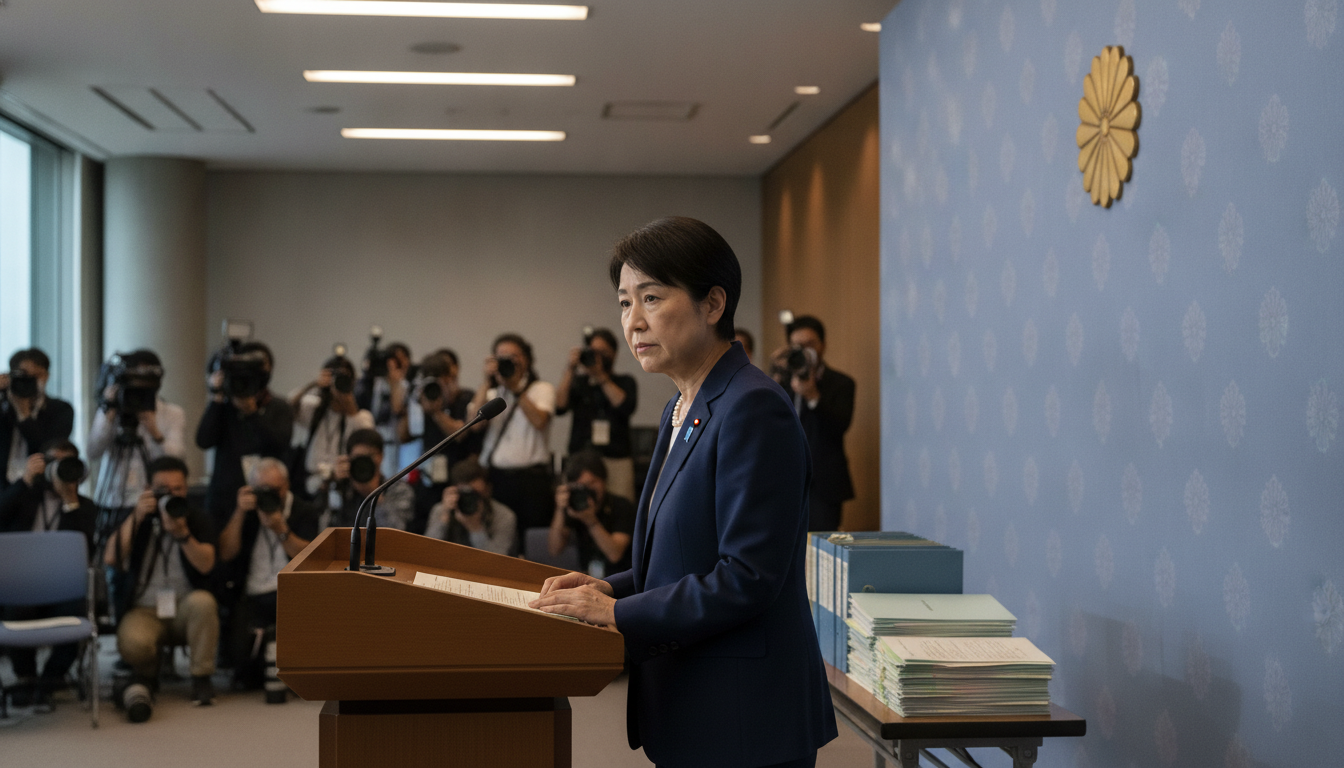
Prime Minister Sanae Takaichi Faces Governance Test After 158-Day Diet Session
Takaichi ends a 158-day Diet with slipping approval; reporters warn her forceful approach, miscommunication and slow inflation response weaken governance.
Prime Minister Sanae Takaichi concluded a 158-day special Diet session in July after taking office following a decisive lower-house victory in February. The session ended amid falling cabinet approval and rising commentary from senior political reporters about the administration’s style and substance. Critics cite a pattern of forceful parliamentary tactics combined with delays on measures to ease rising prices as central challenges for the new government.
Parliamentary Tactics and Political Fallout
The government pushed a steady stream of bills through the Diet, but the manner of proceedings drew sharp attention. Several opposition lawmakers and independent observers said that the ruling camp often pressed forward without adequate dialogue, a practice that contributed to sharper partisan divides. Reporters covering the sessions judged that the administration’s emphasis on outcomes sometimes came at the expense of transparent debate and consensus-building.
Bills Passed, Key Promises Deferred
Officials point out that government-submitted legislation had a high enactment rate over the session, a fact the Prime Minister’s office has highlighted as a success. Yet several high-profile promises tied to the post-election agenda did not materialize within the anticipated timetable. An agreed reduction in lower-house seats, pledged in talks with a coalition partner, was postponed, and an early deadline for approving the main budget slipped beyond initial targets.
Breakdowns Between Cabinet, Party and Diet Teams
Senior political editors who coordinated coverage of the cabinet, party and Diet noted persistent communication gaps between the Prime Minister’s office and ruling-party strategists. Party officials said they frequently found it difficult to anticipate the prime minister’s moves, leaving parliamentary managers to improvise. That lack of synchronized messaging and planning complicated committee scheduling and contributed to last-minute shifts in strategy.
Opaque Decision-Making and the ‘Inner Circle’
Several correspondents described an “inner circle” dynamic in which the Prime Minister’s immediate confidants shaped key choices without always signaling plans to broader party ranks. That opacity fueled frustration among veteran lawmakers and senior staff, who at times reported being briefed only after major decisions were announced. The arrangement intensified questions about who ultimately sets priorities in the administration.
Controversial Committee Maneuvers Draw Surprise
One episode that underlined the tensions involved a move to substitute a written statement for an oral committee answer concerning a contentious video report, a step that startled even some ruling-party leaders. Parliamentary veterans said the abrupt shift — announced publicly without prior consultation with Diet managers — reflected an inclination to control exposure rather than engage in sustained questioning. That tactic drew criticism for undercutting the standard give-and-take of committee scrutiny.
Economic Response and Inflation Measures Lagging
Observers pointed to a perception that policy responses to rising consumer prices lagged behind public concern during the Diet term. While ministers argued that a range of measures has been prepared, critics noted delays in tangible relief or clear timelines for action. For many voters experiencing higher living costs, the speed and visibility of government relief were judged insufficient, a factor that likely contributed to the drop in public support.
Political Costs and Risk to Governance
The combined effect of a forceful legislative approach, internal miscommunication and a perceived slow roll-out of price relief has translated into political costs for the administration. Polling trends cited by analysts show slippage in the cabinet’s popularity since the start of the session, and opposition parties have sought to exploit missteps to rally public debate. Political correspondents warn that sustained erosion of public trust could constrain the government’s ability to pursue complex reforms.
Looking ahead, the Prime Minister faces a choice between intensifying top-down management to secure rapid policy wins or rebuilding broader coordination across the cabinet and party to restore public confidence. How the administration addresses immediate cost-of-living concerns and whether it alters its parliamentary style will determine whether it can convert legislative momentum into durable political capital.

