
Japan unveils 10.5 trillion yen plan to invest in physical artificial intelligence by fiscal 2040
Japan plans 10.5 trillion yen public-private investment in physical artificial intelligence by fiscal 2040 across 17 strategic sectors to boost industry.
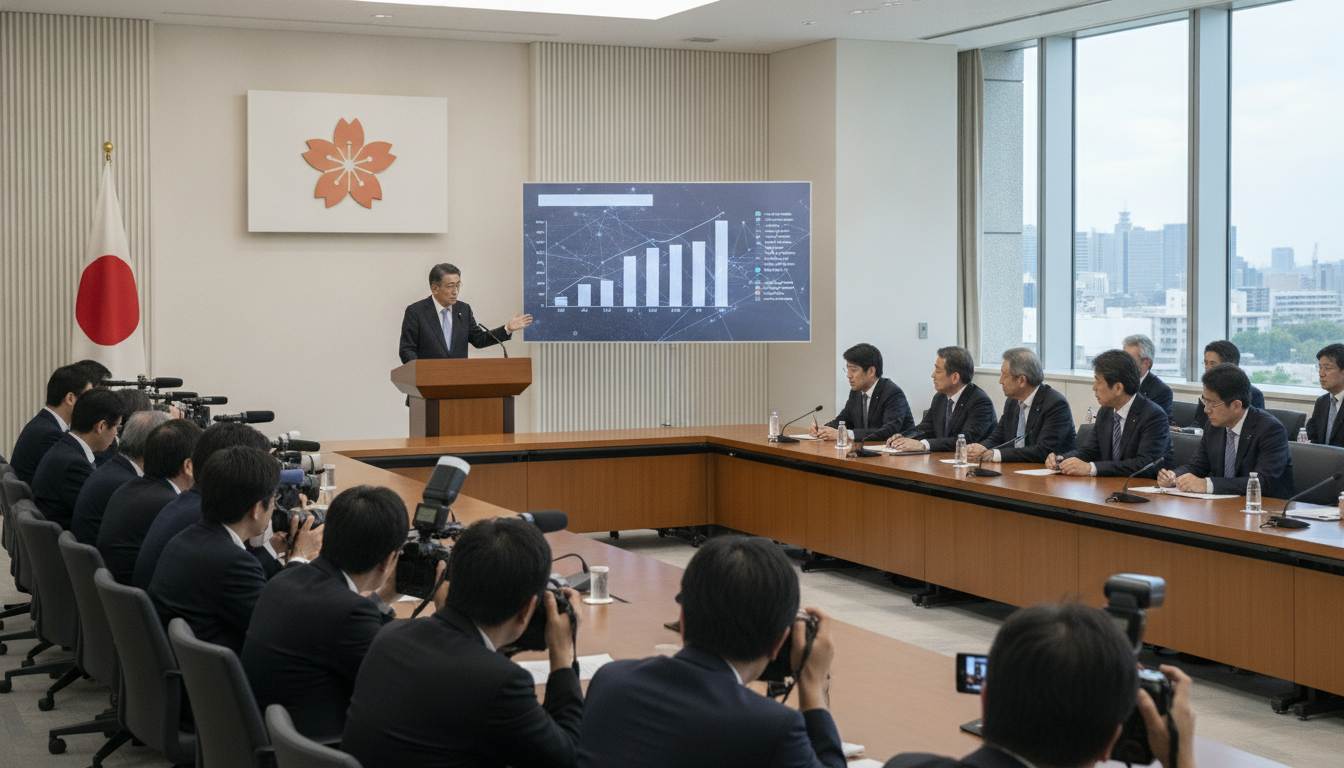
The Japanese government on Friday unveiled a national strategy to mobilize a combined 10.5 trillion yen (about $65.1 billion) in public and private funding for physical artificial intelligence by the end of fiscal 2040, setting out priorities for technology deployment across the economy. The announcement, presented by Prime Minister Sanae Takaichi’s administration, defines “physical artificial intelligence” as the application of AI to machines, infrastructure and systems that operate in the real world. Officials said the plan aims to accelerate adoption in targeted sectors and to position Japan as a global leader in AI-driven industries.
Government commits to a long-term investment target
The plan sets a clear financial ambition: 10.5 trillion yen of cumulative investment through fiscal 2040, combining state budgets, public finance instruments and anticipated private capital. Government documents released with the announcement frame the target as both an allocation and a signal to markets designed to attract corporate partners and venture investors. The timeline is intended to give firms and local governments certainty for multi-decade projects that require sustained funding and coordination.
Seventeen strategic sectors prioritized for deployment
The strategy identifies 17 strategic sectors for focused investment, listing areas such as advanced manufacturing, robotics, mobility, energy systems, healthcare, agriculture and disaster response among the priorities. The government said targeting specific sectors will allow resources to concentrate where Japan has industrial strengths and urgent societal needs, including aging population care and resilience against natural hazards. By concentrating investments, officials hope to accelerate demonstrator projects, standards development and cross-sector supply chains.
Public-private finance and policy instruments to catalyze spending
Officials described the funding model as a blend of direct government spending, concessional financing, public venture funds and inducements to leverage private sector investment, while cautioning that private commitments will be essential to reach the headline total. The strategy highlights mechanisms to reduce early-stage risk for businesses, including co-investment, loan guarantees and support for demonstration projects that validate new physical AI deployments in real-world settings. Policymakers also signaled review of tax and procurement rules to make large-scale public-private partnerships easier to structure and to shorten the path from prototype to commercial scale.
Phased implementation, research and infrastructure priorities
The plan outlines a phased approach that pairs near-term research and demonstration efforts with longer-term rollout and infrastructure investment over the next decade and beyond. In the short term, officials prioritized R&D, pilot projects and standards work that will be necessary before mass deployment of AI-enabled machinery and control systems. Over the medium and long term, the strategy anticipates investments in digital connectivity, edge computing, sensor networks and manufacturing capacity to support widespread adoption of physical artificial intelligence.
Industry and experts identify key challenges ahead
Industry groups and independent analysts welcomed the clarity of the investment goal but cautioned that achieving 10.5 trillion yen will require addressing workforce shortages, data governance, cybersecurity and supply-chain resilience. Observers noted that scaling physical AI differs from software AI because it requires integrating hardware, sensors, safety certification and maintenance regimes in addition to algorithms. Some analysts urged the government to pair funding with workforce training programs, international standards engagement and measures to protect critical systems from cyber threats.
Regional and economic implications for Japan
Officials argued the plan could boost regional economies by anchoring manufacturing and testing facilities outside Tokyo, while helping domestic companies capture value in next-generation robotics and industrial automation. Targeted deployment in sectors such as construction, logistics and eldercare could relieve pressure on labor markets and improve productivity in local communities. The government also framed the investment as part of broader industrial policy aimed at enhancing economic security and technological sovereignty amid intensifying global competition in AI.
The government’s announcement marks a significant escalation of public intent to shape the direction of AI deployment in physical systems, setting a multi-decade financial target and a sectoral agenda intended to marshal both state resources and private capital. Whether the 10.5 trillion yen goal is met will depend on sustained political commitment, successful public-private cooperation and the ability of firms to translate pilots into commercially viable, safe and secure systems.

