
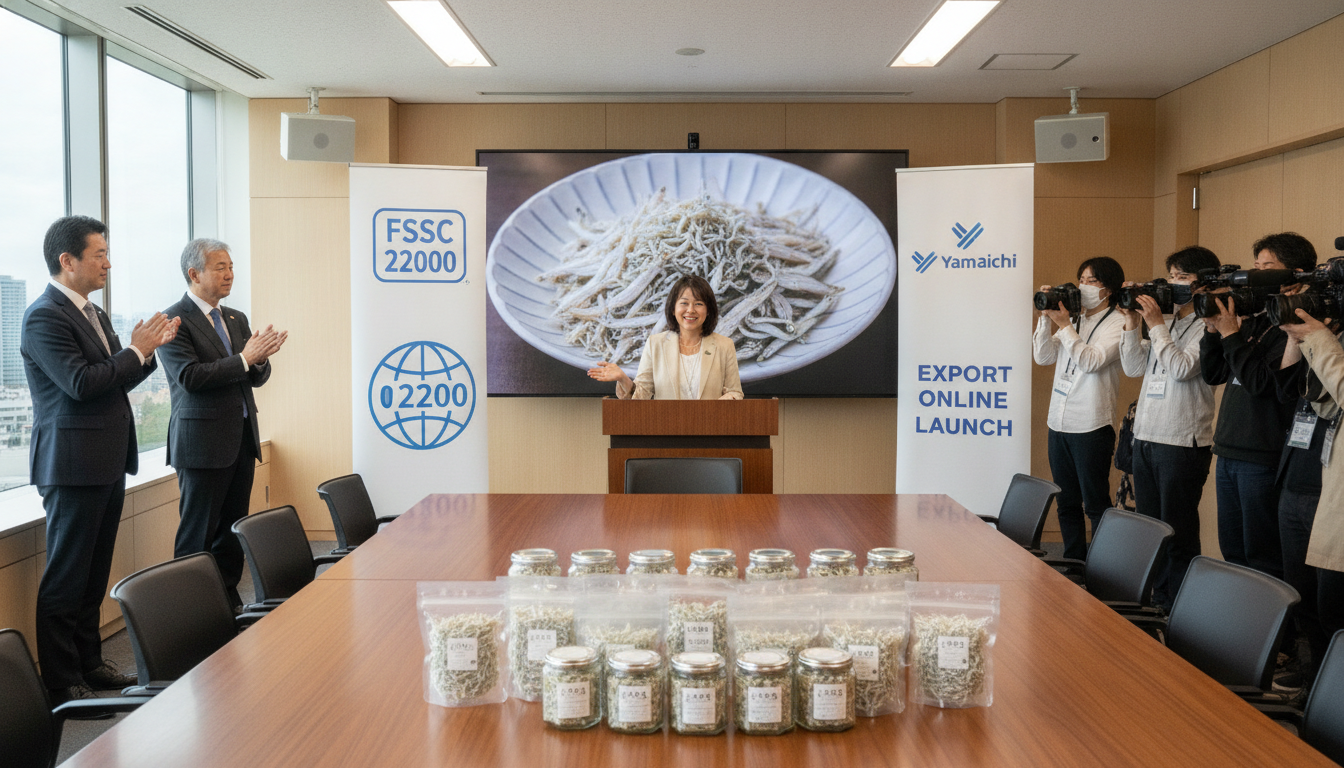
Yamaichi to start online sales of shirasu after securing international food-safety certification
Yamaichi plans to launch online sales of shirasu whitebait this summer after its Hitachinaka plant earned international food-safety certification, aiming to boost the brand and open export channels. The move positions Yamaichi shirasu as a traceable, certified seafood product for domestic consumers and overseas buyers. Company executives say the dual push for e-commerce and certified exports will support local fisheries in Ibaraki.
Certification Secured for Export
Yamaichi’s Hitachinaka factory has received recognition under the FSSC 22000 food safety management standard, meeting internationally accepted criteria for processing and export. Company representatives say the certification covers hazard analysis, traceability, and hygienic production systems required by major markets. The accreditation is expected to ease inspections and paperwork for shipments while signalling higher safety assurance to distributors and consumers abroad.
Yamaichi also reports that its certification process involved third-party audits and upgrades to its cold-chain logistics and documentation systems. Those improvements were aimed specifically at enabling cross-border sales of chilled and frozen shirasu whitebait. The firm views the certificate as a cornerstone for both regulatory compliance and marketing in unfamiliar markets.
Online Sales to Begin This Summer
The company will debut direct-to-consumer online sales of Yamaichi shirasu during the summer season, leveraging e-commerce to raise brand awareness. The online launch will offer portioned, chilled and frozen formats designed for home delivery and retail sampling. Executives said the web storefront will include product information, cooking suggestions, and traceability details to build consumer trust.
Online sales are intended to complement, not replace, Yamaichi’s existing wholesale relationships with local supermarkets and restaurants. By cultivating individual buyers, the company expects to generate repeat demand and collect consumer data to refine packaging and regional marketing. The timing aligns with peak domestic interest in shirasu dishes during the warmer months.
Production and Quality Controls at Ibaraki Plant
The Hitachinaka facility processes shirasu sourced from nearby fisheries, employing modified-atmosphere packaging and temperature-controlled storage. Yamaichi has invested in sanitary upgrades, staff training, and documentation to meet FSSC 22000 prerequisites. These measures include batch tracking from catch to dispatch, enabling rapid recalls if necessary.
Operational managers report capacity adjustments to balance domestic orders with forecasted export volumes while preserving freshness. The company is also implementing periodic internal audits and supplier assessments to ensure consistent raw-material quality. Such controls are presented as necessary for long-distance shipping and compliance with import regulations.
Target Markets and Export Strategy
Yamaichi intends to pursue overseas channels that value premium, certified seafood, naming neighboring Asian markets and select Western buyers as priorities. The firm plans a phased export rollout, beginning with small shipments to test logistics, customs procedures, and consumer response. Distribution will combine direct sales to specialty retailers and partnerships with local importers experienced in chilled seafood handling.
To appeal to international consumers, Yamaichi will emphasize product safety, Japanese origin, and easy preparation methods in promotional materials. The company believes the FSSC 22000 certificate will reduce barriers in markets where food-safety credentials heavily influence purchasing decisions. Pricing strategies will reflect the added value of certification and the costs of cold-chain export.
Regulatory and Logistic Challenges Ahead
Despite certification, Yamaichi faces practical hurdles common to seafood exporters, including variable catch volumes, seasonal supply constraints, and differing import rules across countries. Cold-chain integrity during air or sea transit remains critical for shirasu, which has a short shelf life even when frozen. Exporters must also navigate tariff schedules, sanitary inspections, and labelling requirements that vary by destination.
Yamaichi acknowledges the need to scale logistics while avoiding stockouts for domestic customers who rely on its product. The company must balance inventory buffers against waste risk and additional refrigeration expenses. Collaboration with experienced freight forwarders and customs brokers is likely to be essential to avoid delays at ports and airports.
Implications for Local Fisheries and Brand Building
For Ibaraki fisheries and local processors, Yamaichi’s certification and e-commerce push could raise the profile of regional shirasu and boost incomes across the supply chain. Retail and restaurant partners may benefit from a clearer quality story and stronger consumer recognition of the Yamaichi shirasu label. The initiative also creates incentives for fishers to maintain sustainable harvesting and traceable practices.
At the same time, analysts caution that long-term export success will require consistent supply, competitive pricing, and ongoing marketing investment. Building a reputation in foreign markets typically takes repeated shipments and positive consumer experiences. Yamaichi appears prepared to invest in those areas while monitoring market feedback closely.
Yamaichi’s combined strategy of securing international food-safety certification and launching online sales aims to make shirasu more accessible to domestic consumers and credible to overseas buyers. If execution holds, the move could help transform a regional specialty into a certified export product and provide a model for other small-scale seafood processors in Japan.

