
Rong Chhun ruling extends political ban, raising concerns ahead of Cambodia elections
Cambodia’s Supreme Court on June 19, 2026 upheld and extended restrictions on prominent labor activist and political advisor Rong Chhun, a decision critics say will limit dissent ahead of upcoming national elections. The Rong Chhun ruling bars him from participating in political activities and deepens worries among opposition groups and civil society about the narrowing of democratic space.
Supreme Court extends political ban on Rong Chhun
The Supreme Court issued its decision on June 19, 2026, saying restrictions on Rong Chhun’s political activity should remain in place while legal processes continue. The court’s move follows a lower-court conviction for incitement that Rong Chhun has appealed, according to statements from observers and court attendees.
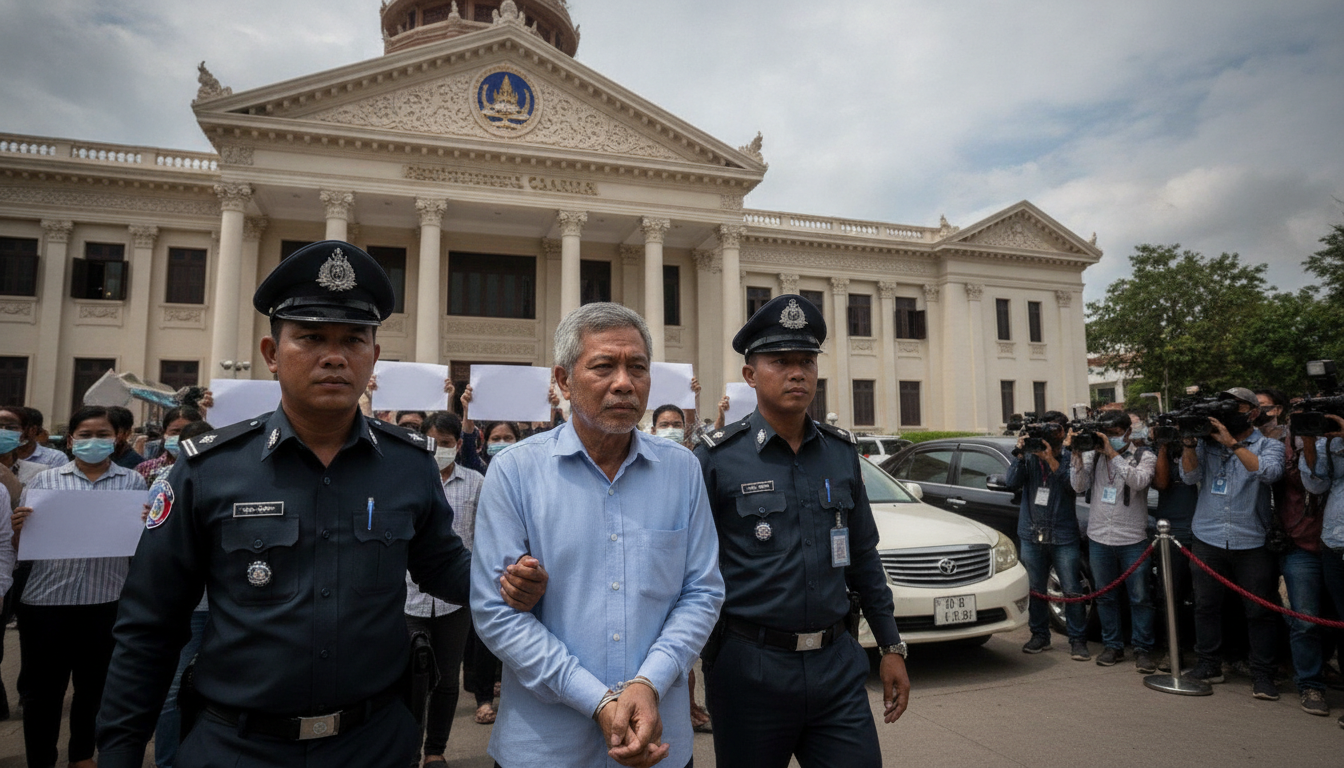
Supporters who gathered outside the court chanted and waved signs as Rong Chhun arrived to hear the ruling, underscoring the case’s public resonance. The atmosphere at the hearing highlighted the polarizing nature of the decision and its significance for political activism in Cambodia.
Conviction history and appeal process
Rong Chhun, a well-known labor unionist and political adviser, was previously convicted on charges of incitement tied to public statements and protests. He appealed that conviction, arguing his remarks were part of legitimate civic and labor advocacy work. The Supreme Court’s extension of restrictions follows that appeal and keeps limits on his public political engagement in force.
Legal experts note that extensions of political bans during appeals are legally permissible under Cambodian law but are often controversial when applied to prominent critics. The case has become a test of how the judiciary balances criminal charges with political rights.
Opposition and civil society reactions
Opposition leaders and civil society groups described the Rong Chhun ruling as a deliberate effort to silence dissenting voices in the run-up to national polls. Several opposition figures said the timing and nature of the court’s decision would deter grassroots organizing and chill public debate. Human rights advocates argued the measure disproportionately targets an influential organizer whose work has long centered on labor rights.
Non-governmental organizations monitoring the case called for transparency and urged authorities to ensure that legal actions are not used to limit political competition. Local unions and activists signaled plans to continue advocacy while exploring legal and peaceful channels of protest.
Government and judicial response
Officials aligned with the government defended the Supreme Court’s decision as a lawful response to criminal allegations and emphasized the independence of the judiciary. Government spokespeople said courts must uphold legal rulings irrespective of an individual’s political profile. They framed the restrictions as procedural steps tied to an ongoing legal process rather than a targeted political maneuver.
The judiciary, in announcing the extension, cited procedural grounds and the need to prevent actions that could inflame public order during a sensitive period. State officials reiterated commitments to maintain stability and public safety ahead of the electoral season.
Political implications ahead of national elections
Analysts warn the Rong Chhun ruling could reshape campaign dynamics by limiting the public role of a prominent organizer whose influence spans labor movements and opposition circles. With national elections approaching, parties and civil groups face heightened pressure to mobilize in the face of legal constraints on prominent activists. The decision may prompt opposition strategists to seek alternative voices and tactics to reach voters.
Observers also cautioned that repeated legal actions against high-profile critics risk depressing voter engagement and international scrutiny. Campaigns could pivot to emphasize grassroots networks less dependent on individual leaders if restrictions remain in place.
International reactions and rights concerns
International rights organizations and diplomatic observers have flagged the ruling as part of a broader pattern of legal pressure on dissenting voices in Cambodia. Several rights groups urged the government to respect freedom of expression and to ensure fair judicial processes. Foreign embassies monitoring the situation called for restraint from all parties and emphasized the importance of open civic space for credible elections.
Some international observers indicated they would watch for further developments in Rong Chhun’s appeal and any subsequent measures that might affect political participation. The case may factor into assessments of Cambodia’s electoral environment by regional and global institutions.
The Rong Chhun ruling now shifts focus to the remaining stages of the legal process and the practical effects of the ban on political organizing. As appeals continue, both domestic actors and international observers will be looking closely at how Cambodia balances security, law enforcement and the rights of political critics in the run-up to the polls.

