
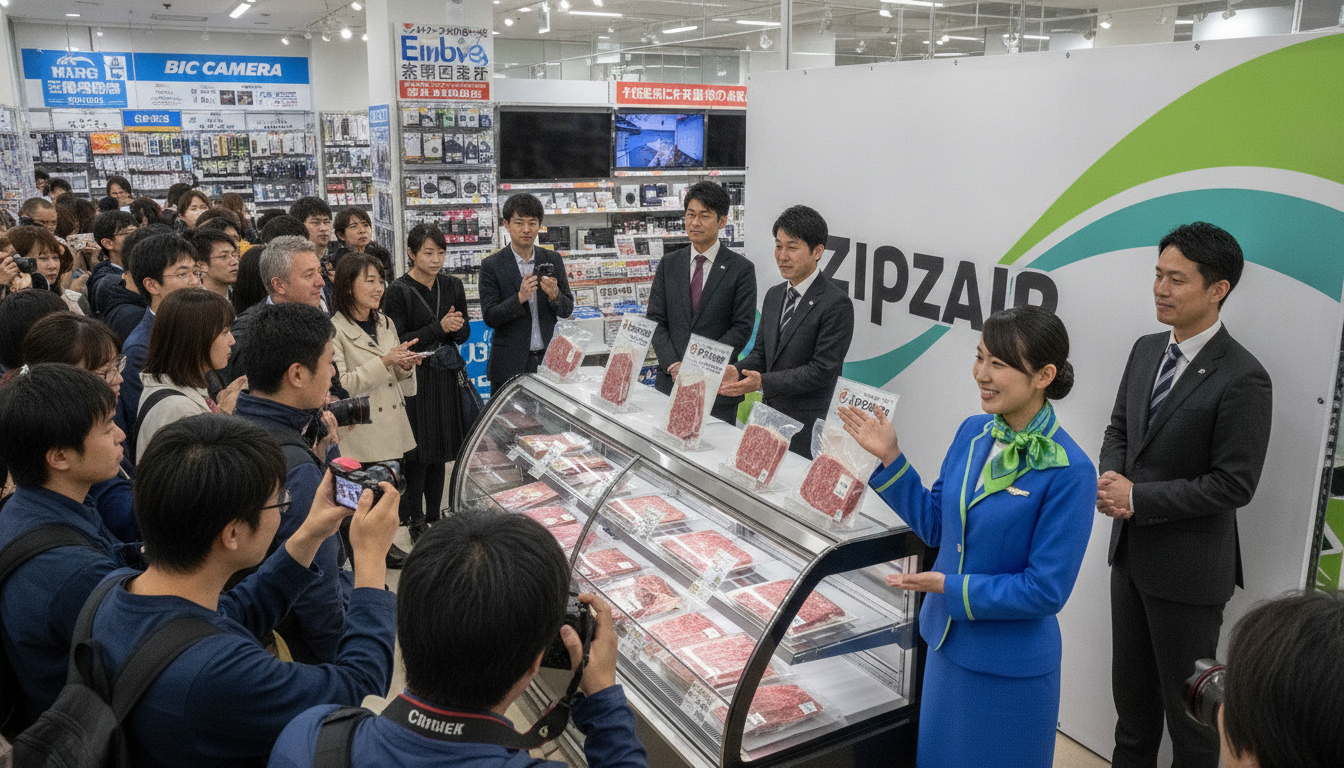
Zipair Tokyo launches wagyu sales at Bic Camera stores for tourists
Zipair Tokyo partners with Bic Camera and JAL Cargo Service to sell premium wagyu beef to tourists at Akihabara stores, a new retail-logistics tie-up launched June 19.
Zipair Tokyo has begun selling premium wagyu beef through a partnership with electronics retailer Bic Camera and logistics firm JAL Cargo Service, the companies announced on June 19 in Tokyo. The Zipair Tokyo wagyu initiative lets visitors to Japan order and purchase high-grade wagyu at Bic Camera’s physical stores in the Akihabara electronics district. The move pairs the carrier’s low-cost international reach with Bic Camera’s large tourist-facing retail footprint and JAL Cargo Service’s transport capabilities.
Partnership announced at Akihabara launch event
The collaboration was unveiled during a public announcement in Akihabara on June 19, where representatives from Zipair Tokyo, Bic Camera and JAL Cargo Service outlined the service for foreign visitors. Zipair Tokyo, a low-cost carrier owned by Japan Airlines, positioned the offer as a convenience-oriented retail service for inbound tourists. Bic Camera highlighted the strategy as part of its effort to broaden merchandise beyond electronics to meet evolving visitor demand.
How the in-store wagyu purchase process works
Under the new arrangement, tourists can order and complete purchases for premium wagyu directly at participating Bic Camera outlets, starting in Akihabara. The service is designed to be accessible to international shoppers who already visit electronics stores for souvenirs and gadgets. Companies said the arrangement simplifies the process of buying and taking home perishable, high-value food items during short trips to Tokyo.
Role of JAL Cargo Service in cold-chain logistics
JAL Cargo Service will support the initiative by managing the logistics and transportation aspects necessary for selling fresh, temperature-sensitive wagyu beef. Ensuring a robust cold chain is central to maintaining quality from point of sale to the buyer’s final destination. The involvement of an experienced air-cargo operator aims to reassure customers and retailers that product safety and freshness will be preserved during handling.
Bic Camera’s retail strategy and tourist targeting
Bic Camera has increasingly adapted its stores to serve overseas visitors, and the wagyu offering represents a further step into premium food sales. That strategy leverages the retailer’s large storefronts and high footfall in tourist districts such as Akihabara. By integrating speciality food into its product mix, Bic Camera is seeking to capture a slice of the lucrative market for Japanese culinary souvenirs and gifts.
Potential benefits for Zipair Tokyo and Japan’s tourism sector
For Zipair Tokyo, the wagyu initiative reinforces the carrier’s role in serving inbound travelers and supporting ancillary retail propositions. The partnership offers a way to extend the airline’s brand presence beyond seat sales and into the broader travel shopping experience. Industry observers say such tie-ups can boost average spending per visitor and help retailers and carriers tap renewed inbound tourism following pandemic-era declines.
Pilot scope and possible expansion
The Akihabara rollout is being treated as an initial phase, with companies indicating the potential to expand the program to additional Bic Camera locations if demand proves strong. Expansion decisions are likely to hinge on customer uptake, logistical performance and regulatory considerations around transporting food items internationally. Executives involved said they would monitor feedback from tourists and retail staff before outlining a wider rollout.
Japan’s mix of high-quality regional foods and strong inbound tourist interest has prompted retailers and transport firms to experiment with new retail-logistics pairings. The Zipair Tokyo wagyu project is part of a broader trend in which carriers, cargo operators and non-food retailers collaborate to offer distinctive experiences and merchandise to foreign visitors. If successful, the model could be replicated in other urban shopping hubs and at different points in the travel chain.
The companies emphasized convenience and quality as the program’s selling points and said they will adapt operations based on early customer responses.

