
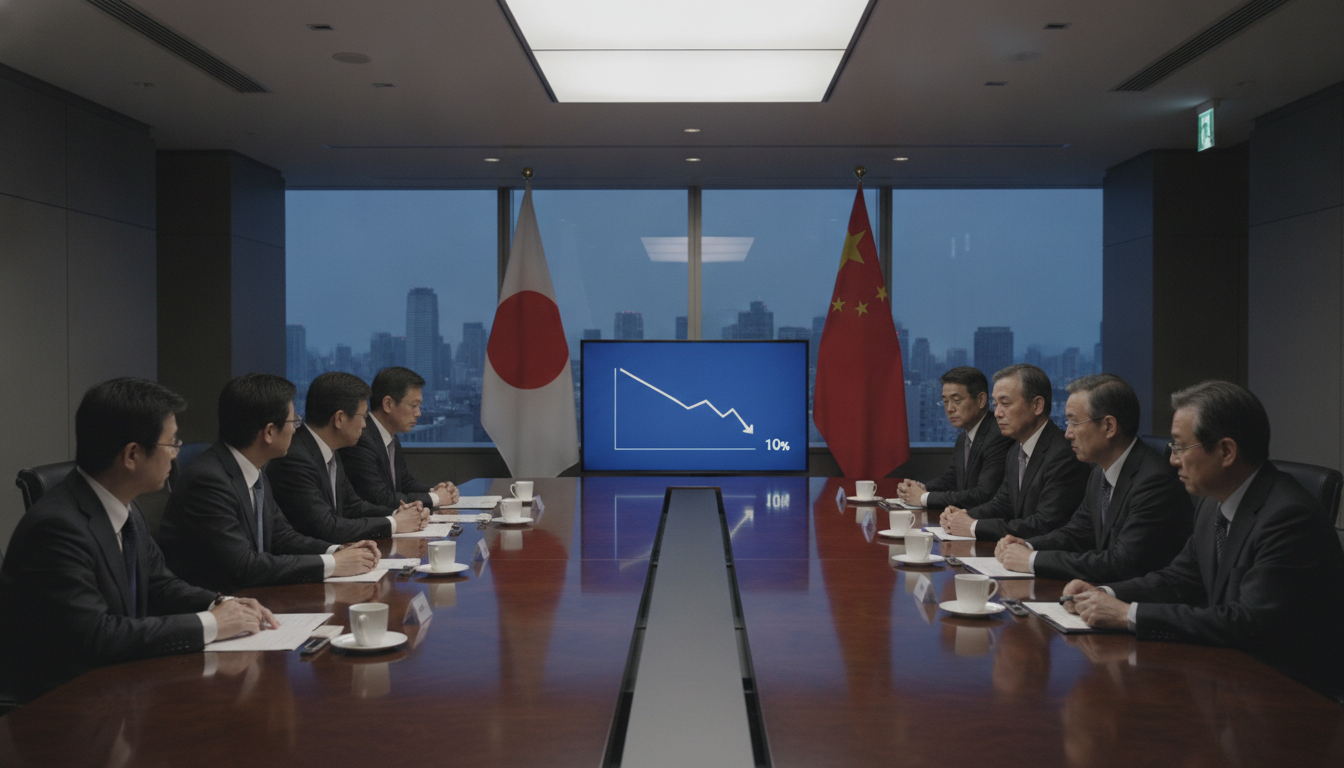
Japan’s chipmaking equipment sales to China fall 10% as Beijing boosts domestic vendors
Japan’s top five chipmaking equipment makers posted a 10% decline in combined sales to China for the year ended March 31, the first-ever decrease, as Beijing steps up support for domestic suppliers and reshapes regional supply chains.
Immediate decline in sales to China
Japan’s leading suppliers of chipmaking equipment reported a combined 10% drop in sales to China for the fiscal year ending March 31, marking the first recorded shrinkage in that sector. Industry data show the contraction is linked to a faster-than-expected shift by Chinese fabs toward locally produced equipment and a slowing of new capacity orders from some clients.
The fall in chipmaking equipment sales to China interrupts a years-long trend of growth for Japanese vendors, who have been major providers of lithography, etch and deposition tools. Executives and analysts say the decline reflects both policy pressure from Beijing and an accelerating build-out of Chinese domestic suppliers.
Beijing’s industrial policy accelerates domestic adoption
Chinese central and local government programs have explicitly prioritized self-reliance in semiconductor manufacturing equipment, offering subsidies, preferential procurement and financing to domestic vendors. Those measures have lowered the cost and risk for Chinese fabs to trial and then scale use of local equipment, industry observers say.
Procurement policies at state-backed fabs increasingly factor supplier nationality into purchasing decisions, and government-backed research and development funds have helped Chinese equipment makers advance faster than they otherwise might. The combined effect has narrowed the market opportunities for foreign tool suppliers competing in China.
Domestic suppliers gaining market share at trade events
Chinese manufacturers showcased progress at recent industry trade shows, where buyers crowded booths for emerging domestic toolmakers. A Naura Technology Group display in Shanghai in March drew notable attention, underscoring how homegrown firms are presenting viable alternatives for some wafer fabrication steps. (Photo by Shunsuke Tabeta.)
That on-the-ground momentum has translated into wins for some Chinese toolmakers in support areas and certain tool classes, though foreign suppliers retain advantages in the most advanced, high-end process equipment. Buyers report that domestic tools have improved in reliability and cost competitiveness for specific applications, prompting a reappraisal of supplier mixes.
Implications for Japanese equipment makers and exporters
The 10% contraction in sales to China threatens margins and growth trajectories for Japanese vendors that have depended heavily on the Chinese market. Company statements and industry commentary indicate firms are weighing strategies that include diversifying customer bases, accelerating product upgrades and deepening service offerings to retain clients.
Some Japanese manufacturers are also redoubling efforts in other Asian markets, North America and Europe to offset the decline in China revenue. At the same time, customers in China remain heterogeneous: while state-affiliated fabs are shifting toward domestic procurement, privately owned fabs and specialized foundries continue to source from established foreign vendors where specialization or performance demands persist.
Broader risks for global semiconductor supply chains
The shift toward domestic Chinese equipment raises questions about fragmentation in the global semiconductor supply chain and potential duplication of investment. Policymakers and industry leaders warn that an accelerated bifurcation could increase costs, reduce economies of scale and slow innovation cycles if suppliers focus on separate, incompatible ecosystems.
At the same time, proponents of onshoring argue that a diversified supplier base enhances resilience against geopolitical shocks and export restrictions. The market is likely to see a mix of collaboration, competition and targeted decoupling depending on technology class and national security considerations.
Outlook for the coming year
Analysts expect a continued rebalancing of equipment procurement in China over the next 12 to 24 months, with incremental gains for domestic makers in mid-range tools and sustained demand for top-tier foreign equipment in cutting-edge nodes. Japanese firms that move quickly to tailor services, provide performance guarantees and invest in next-generation tool development could slow market share erosion.
Revenue recovery in the China market will depend on how effectively foreign suppliers adapt their offerings and how Chinese policy evolves. Both sides face incentives to avoid abrupt disruptions, but the trajectory established in the latest fiscal year signals a more contested marketplace ahead.
The decline in chipmaking equipment sales to China highlights the changing dynamics of a strategically important industry, forcing suppliers and policymakers to re-evaluate approaches to trade, technology collaboration and industrial policy.

