
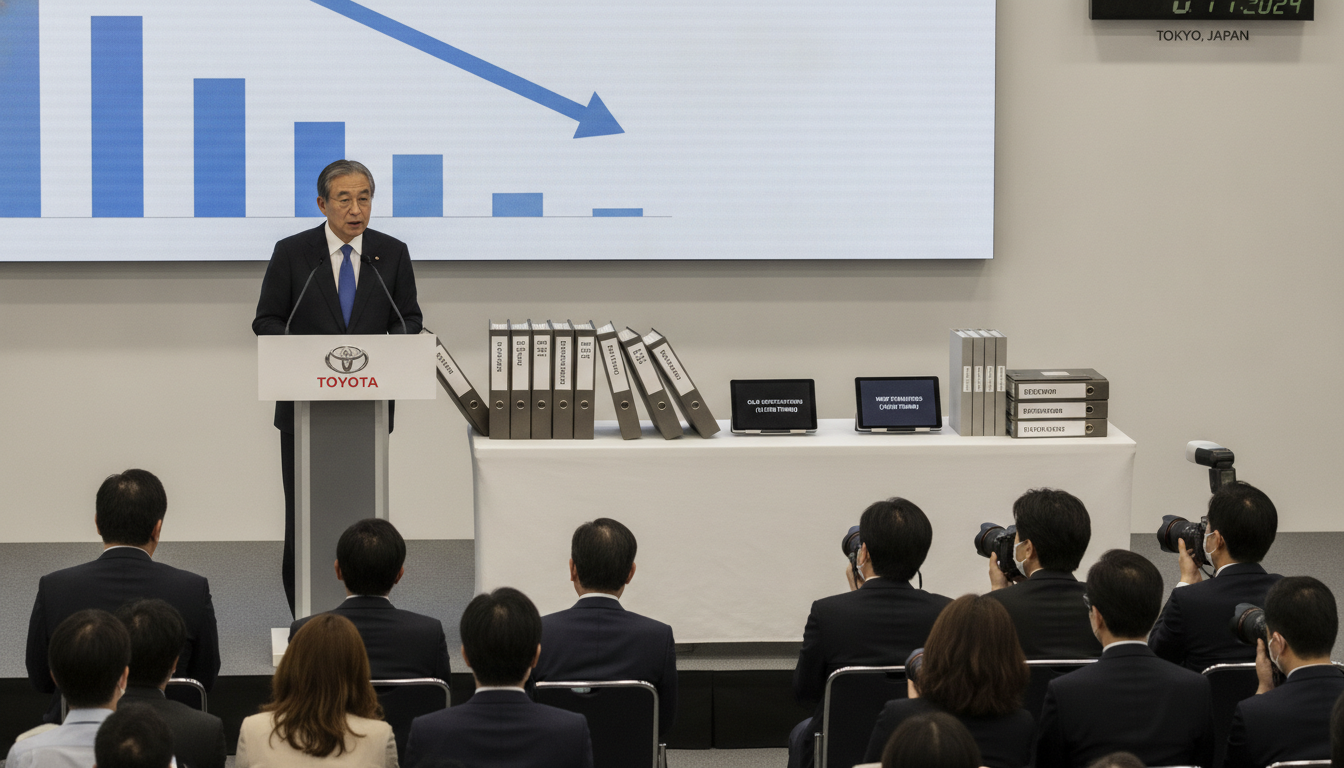
Toyota standardizes specification terminology to cut 45,000 terms to 5,000 and speed vehicle output
Toyota standardizes specification terminology across planning, production and sales, cutting 45,000 terms to 5,000 and cut waste.
Toyota Motor announced a company-wide initiative to standardize specification terminology across its planning, production and sales divisions, aiming to reduce the number of specialized terms from roughly 45,000 to about 5,000. The move, announced in Nagoya, is designed to pare intermediary steps by roughly 30% and shorten the path from design to finished vehicle. The effort is intended to speed vehicle output while reducing ambiguity in product lists and internal communications.
Decision to harmonize technical language
Toyota said the project will align the wording used in specification lists across multiple divisions, replacing disparate vocabularies that developed over decades. The company described the current situation as one in which different departments and regional teams used distinct terms for the same parts or procedures, increasing the need for translation and reconciliation. Standardized language is expected to simplify hand-offs between planning, production and sales and reduce the administrative burden of reconciling specification documents.
Toyota framed the harmonization as part of a broader drive to streamline operations in an era of faster product cycles. The automaker indicated the work will be phased, beginning with the most frequently used terms and expanding to cover model-specific items and options. Officials said the revision will be overseen centrally but executed with input from divisional specialists to preserve necessary technical nuance.
Projected efficiency gains and 30% reduction in intermediary steps
Company estimates project a decline of about 30% in intermediary administrative steps tied to specification reconciliation and approvals. Toyota expects that fewer intermediate verifications and rework cycles will accelerate workflows and reduce lead times for new-model programs. The reduction in procedural steps should also ease workload pressure on engineers and planners, allowing teams to focus more on design and quality control.
Toyota said fewer terminology mismatches will cut the need for parallel documentation and repeated checks between departments. That in turn can shorten the time vehicles spend in pre-production phases and enable the company to react more quickly to market demand or regulatory changes. Management highlighted the potential to reduce costly delays without compromising safety or engineering standards.
Implications for production quality and supply-chain coordination
Harmonizing terminology is intended to lower the risk of specification errors that can cascade into manufacturing defects or supply-chain mismatches. When parts lists and technical specifications are inconsistent, suppliers and assembly plants can face incorrect orders or misinterpretations that lead to rework or part shortages. Toyota expects a clearer common vocabulary to improve accuracy in procurement, inventory management and factory instruction sets.
Suppliers will be asked to adopt or map to the new standard terms during the rollout, which Toyota said will include training materials and digital reference guides. The company indicated it will leverage existing supplier communication channels and enterprise systems to update parts catalogs and ordering interfaces. While Toyota did not release a detailed timetable, officials said the program would be integrated into ongoing digitalization and data-management reforms.
Changes to systems and organizational processes
The terminology consolidation will require updates to IT systems, product data management platforms and documentation templates. Toyota plans to embed the revised vocabulary into the software tools used for parts lists, bill-of-materials records and engineering change notices. The company also foresees modifications to internal workflows and approval gates to reflect the reduced intermediary steps.
To maintain technical accuracy while simplifying language, Toyota intends to create controlled vocabularies and versioned glossaries that preserve necessary engineering detail. Cross-divisional working groups will vet terms to ensure they are both precise and usable in multiple contexts, from factory assembly lines to dealer option sheets. Training programs and change-management measures will be rolled out to support adoption across Japan and overseas operations.
Potential effects on model rollout and global operations
Industry observers say the standardization could help Toyota bring models to market more quickly, particularly as product cycles shorten and electrified vehicles proliferate. A common technical language may make it easier to scale engineering changes across regions and to coordinate simultaneous launches in different markets. Analysts also note that clearer specifications can reduce the administrative cost of customizing vehicles for local regulations or dealer options.
For a global manufacturer like Toyota, harmonized terminology may also simplify collaborations with international partners and suppliers, improving clarity in joint development programs. However, stakeholders caution that the success of the initiative will hinge on thorough implementation and supplier cooperation, and that entrenched local practices may require time and resources to change.
Toyota emphasized that the move will not compromise engineering rigor and that technical teams will retain the ability to specify detailed tolerances and performance parameters. The company framed the initiative as an efficiency and quality measure rather than a cost-cutting exercise that would affect product content or safety standards.
The standardization project follows a wider trend in the auto industry toward data-driven operations and digital continuity, as manufacturers seek to shorten development cycles while managing increasingly complex product portfolios. If implemented effectively, Toyota’s effort to standardize specification terminology could become a model for other manufacturers navigating the same pressures.

