
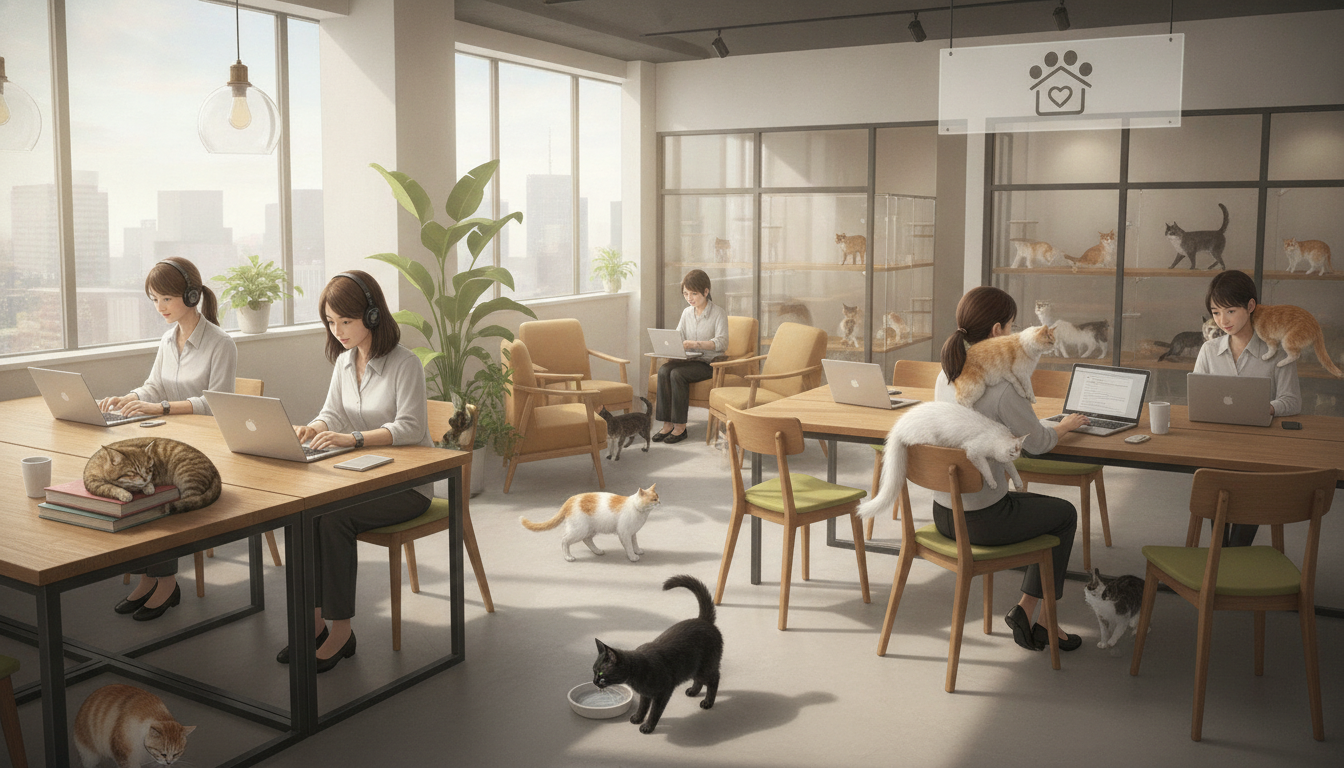
Japan’s cat cafes shift from simple playrooms to rescue hubs, coworking and boutique decor
Japan’s cat cafes are evolving into rescue-adoption centers, coworking venues and themed spaces that boost adoptions and broaden customer appeal.
Japan’s cat cafes have begun a noticeable transformation, with operators integrating rescue-adoption initiatives, coworking facilities and carefully curated interiors to attract a wider clientele and place more felines into permanent homes. The trend, observable in cities such as Osaka, pairs hands-on animal welfare work with revenue diversification, making the cat cafe model more sustainable. Visitors now come for more than cuddles; they come to meet adoptable cats, work remotely in cat-friendly zones and enjoy immersive design themes that reduce stress for animals and people alike.
Osaka’s cat cafe scene adapts
Osaka remains a focal point for the reinvention of cat cafes, where some long-established venues have retooled their offerings to reflect changing urban lifestyles. Operators report that the combination of adoption programs and new amenities has raised foot traffic beyond traditional daytime leisure hours. These changes are born partly from experience: more than two decades after the first such cafe appeared in the city, proprietors are rethinking how to balance animal welfare with business viability.
Many cafes in the region now advertise adoptable cats on arrival boards and social channels, and they schedule meet-and-greet sessions that guide would-be owners through the adoption process. That approach has helped more cats leave transient cafe life for stable households, while also building goodwill with repeat customers who follow a cat’s journey from rescue to home.
Rescue-to-home adoption programs
A growing number of cat cafes are partnering with shelters and rescue groups to source animals and manage adoptions responsibly. These collaborations typically include health checks, vaccinations and screening processes that aim to match cats with suitable households. By serving as an intermediary, cafes can reduce shelter overcrowding while giving visitors an immediate, low-pressure environment to assess compatibility.
Cafes facilitating adoptions also invest in post-adoption follow-up, offering behavioral advice and trial periods to improve long-term outcomes. The result, owners say, is reduced return rates and stronger relationships between cafes, rescue partners and new adopters.
Coworking and diversified revenue streams
Operators are increasingly monetizing space by adding coworking options that allow customers to work alongside resident cats. Dedicated quiet zones, reliable Wi‑Fi and hourly passes appeal to freelancers, students and remote workers seeking a novel environment. This model smooths out demand across the week and generates steadier income beyond peak leisure hours.
Some venues introduce membership tiers that bundle workspace access with priority meet-and-greet slots for adoptable cats, creating recurring revenue and sustained visitor engagement. The additional funds help cover veterinary care and facility upgrades, making the rescue-adoption component more financially viable.
Design choices that reduce stress and draw visitors
A notable feature of the newest cat cafes is an emphasis on themed, calming interiors that serve both marketing and welfare goals. Examples include spaces styled after traditional Japanese bathhouses and other nostalgic motifs that provide visual interest while creating discrete nooks for resting cats. Thoughtful layout, muted lighting and plentiful vertical perches help felines feel secure and allow timid animals to observe before interacting.
Design-led cafes also leverage photography-friendly backdrops and gentle acoustics to create shareable visitor experiences, helping spread adoption stories on social media. At the same time, staff-trained protocols preserve animals’ comfort during peak visitation periods.
Regulation, welfare standards and operational challenges
As the sector diversifies, operators face tighter scrutiny over animal welfare and business practices. Ensuring proper ventilation, limiting visitor numbers and enforcing hygiene protocols are now central to responsible management. Where adoption is involved, cafes must navigate paperwork, quarantine rules and the expectations of partnering shelters or municipal authorities.
Rising operating costs—veterinary bills, rent and staffing—put pressure on smaller cafes, prompting some to specialize or form cooperative networks to share resources. Balancing commercial sustainability with humane care continues to be the principal challenge for many owners.
Community engagement and local impact
Beyond adoptions and revenues, revamped cat cafes are cultivating community ties through education and outreach programs. Workshops on cat care, behavioral seminars and volunteer opportunities help demystify rescue cats and reduce stigma around adult or special-needs animals. Schools and local groups have been invited to visit, creating additional pathways to adoption and support.
These community-focused initiatives have strengthened ties between cafes and neighborhood residents, turning formerly transient attractions into civic-minded businesses that contribute to local welfare networks.
As Japan’s cat cafes evolve, the model that blends rescue adoption, coworking services and intentional design appears to be gaining traction, providing a blueprint for sustainable, humane operations that benefit cats, visitors and the wider community.

