
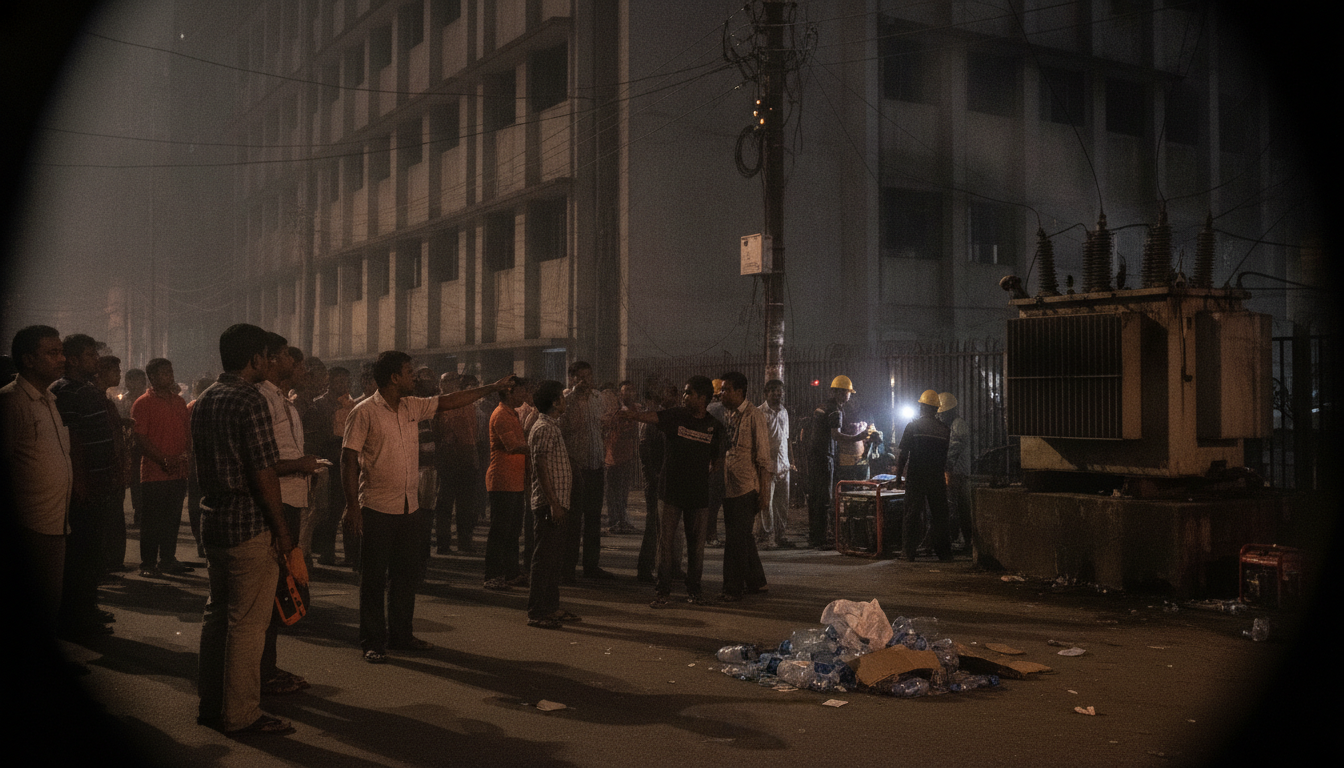
Bangladesh power outages surge amid heat wave as delayed payments and technical faults strain grid
Power outages in Bangladesh intensify during an extreme heat wave, driven by late government payments to power producers and technical problems that have forced planned load-shedding and widespread disruptions.
Bangladesh power outages that began in late June have escalated into daily intentional cuts across the national grid, hitting rural communities and garment factories as the country endures an extended period of extreme heat. The past two weeks have seen scheduled reductions in supply ranging from about 600 megawatts to as much as 3,350 megawatts per day, a higher upper level than earlier this year, according to industry reports and visual evidence from affected areas.
Government payments behind increased outages
Late payments from the central government to independent power producers have curtailed fuel deliveries and constrained generation capacity at several thermal plants. Payments that typically cover fuel procurement and operational costs were delayed, prompting some producers to scale back output or temporarily halt generation.
Power company officials and industry observers warned that delayed revenue flow reduces operators’ ability to procure expensive spot-market fuel and to maintain continuous operations. The financing strain has coincided with heightened demand from households and industry, compounding the risk of rotating cuts.
Technical faults and grid stress during peak demand
System operators reported technical problems at a number of plants and on transmission lines as demand surged with the heat wave. Equipment failures and maintenance backlogs increased the frequency and duration of unplanned outages, forcing grid managers to institute intentional load-shedding to protect the wider system.
Experts pointed to aging infrastructure, deferred upkeep, and the stress of operating near capacity as factors that heighten vulnerability to faults during peak load periods. The combined effect of mechanical breakdowns and lower-than-expected generation margins has left operators with limited options to stabilize supply.
Rural communities and households bearing the brunt
Rural areas, which already face intermittent supply, have seen prolonged and deeper cuts, affecting water pumping, small businesses and household coping strategies. Without reliable electricity, many families are forced to curtail use of fans and refrigeration during dangerously high temperatures, raising concerns for heat-related health risks among vulnerable groups.
Local officials described scenes of long queues for diesel generators and increased demand for temporary cooling shelters. Public health workers voiced concern about the compounded effect of power loss on medical refrigeration and patient care in district hospitals.
Garment factories reduce output amid losses
The export-oriented garment sector, a cornerstone of Bangladesh’s economy, has reported production slowdowns and increased operating costs as factories lose power during peak shifts. Factory managers say intermittent supply forces line stoppages, damaged goods from sudden blackouts, and additional spending on backup power.
Industry associations warned that prolonged disruptions could reduce monthly output and strain delivery schedules for international buyers. Smaller factories without robust backup systems face the greatest risk of lost orders and long-term financial damage.
Government response and contingency measures
In response to the crisis, officials have urged faster disbursement of payments to power producers and prioritized restoration of affected plants. Emergency coordination between the power ministry, system operator and state-owned utilities has been stepped up to target high-risk transmission corridors and critical load centers.
Authorities have also encouraged industrial users to shift non-essential consumption away from peak hours and appealed to consumers to conserve energy. Some districts have opened cooling centers and arranged emergency generator support for essential services.
Climate-driven heat wave amplifies electricity challenges
Meteorologists and climate scientists say the intensity and duration of the current heat wave are consistent with long-term warming trends that increase peak cooling demand. The combination of higher temperatures and irregular supply creates a feedback loop that accelerates grid stress in countries with constrained generation capacity.
Analysts argue that strengthening grid resilience will require both immediate fixes—such as clearing payment backlogs and repairing key equipment—and longer-term investment in diversified generation, demand management and transmission upgrades to handle rising peak loads.
Bangladesh faces the immediate task of stabilizing supplies as export industries, rural communities and public services cope with the twin pressures of extreme heat and constrained power availability. Efforts to accelerate payments and prioritize maintenance in the coming days will be key to reducing the scale of the intentional cuts and preventing further disruption.

