
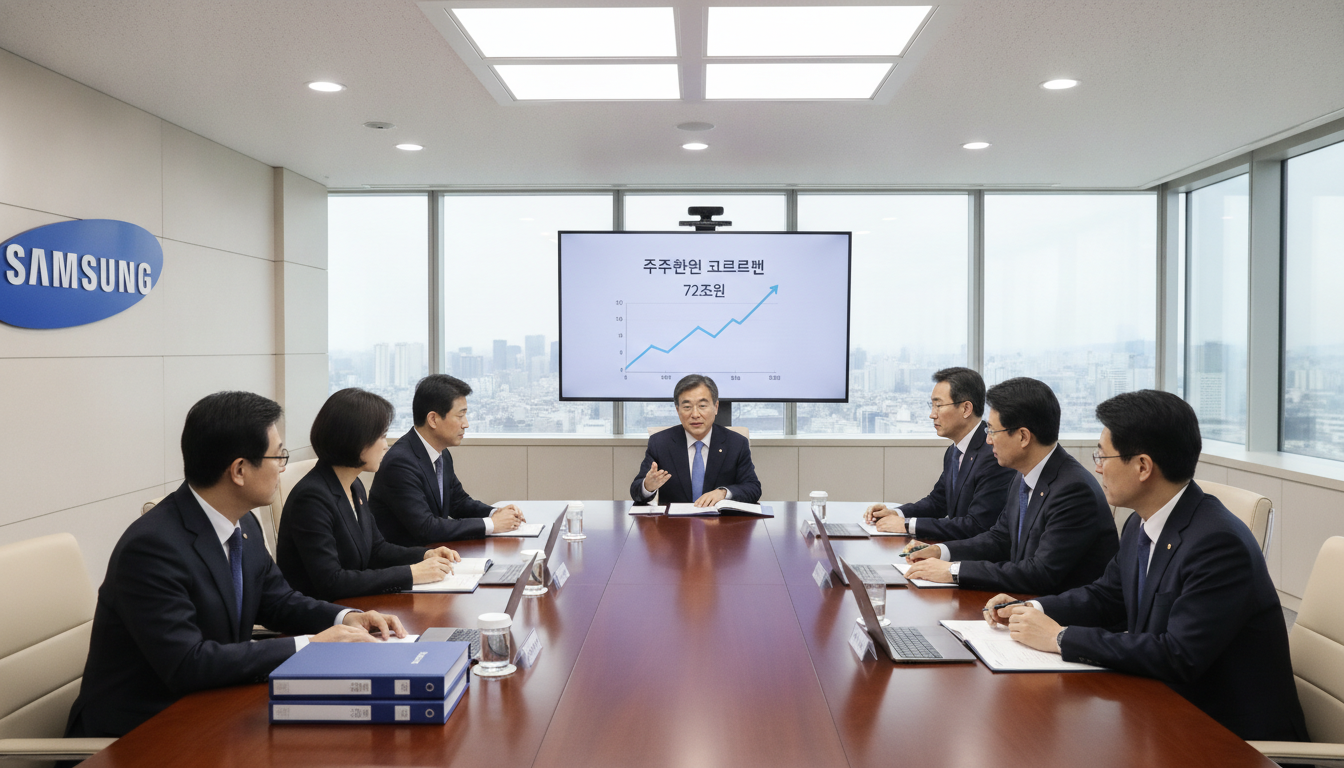
Samsung shareholder return program expected to total 100 trillion won as board meets Aug. 21
Samsung shareholder return program worth 100 trillion won (about $72 billion) is expected to be unveiled as the company schedules a board meeting on August 21, 2026, to consider the proposal. The substantial plan — if approved — would mark one of the largest capital-return packages in the technology sector and comes amid intensified shareholder pressure and competition in the semiconductor industry. Investors and market participants are watching closely as rivals have announced their own large-scale buybacks and dividends in recent months.
Board to consider 100 trillion won plan on August 21
Samsung is due to hold a board meeting on August 21, 2026, where directors are expected to review and potentially approve the proposed shareholder return program. Company officials have not publicly confirmed final figures, but the plan circulating in market reports totals roughly 100 trillion won, equivalent to about $72 billion at prevailing exchange rates.
The timing follows a period of active corporate governance developments among major Korean technology firms. A formal board decision would be required to finalize the structure — whether the package will emphasize buybacks, special dividends, or a mix of both — and to set an implementation timeline.
Size and likely structure of the shareholder return program
A 100 trillion won Samsung shareholder return program would be unusually large for a single corporate payout and could be structured in several ways. Large-scale returns commonly combine share buybacks, special cash dividends, and other financial measures designed to boost shareholder value and improve per-share metrics.
How Samsung funds the package is a key question for investors. Potential sources could include excess cash on the balance sheet, proceeds from asset sales, or a phased buyback approach that deploys capital as market conditions permit. The final mix will influence the program’s immediate effect on earnings per share and the company’s capacity for future capital spending.
Market and investor implications in Seoul and beyond
Approval of a major shareholder return could alter investor sentiment toward Samsung and the broader Korean stock market. A largescale buyback typically supports share prices by reducing outstanding float, while generous dividends directly reward shareholders and can attract income-focused investors.
Institutional investors and global funds will assess the program’s sustainability and whether it signals a shift in strategy from reinvesting all earnings into capital expenditure. Market analysts will also watch liquidity needs for Samsung’s vast semiconductor operations, particularly its memory and logic chip fabs, which require heavy ongoing investment.
Competitive backdrop with SK Hynix and chip-sector dynamics
The proposal arrives as rival SK Hynix has moved forward with a substantial share buyback program, intensifying competitive pressures to return capital to investors. Semiconductor companies have faced a cyclical market marked by volatile memory prices, inventories, and shifting demand from data centers and consumer electronics.
A large shareholder return by Samsung could be interpreted as management’s confidence in near-term cash generation and a desire to rebalance how profits are allocated between shareholders and capital projects. It may also trigger similar actions across the industry as companies seek to demonstrate shareholder-friendly governance.
Operational priorities and risks for Samsung’s capital spending
Samsung’s semiconductor business is capital intensive, with ongoing investment needed to maintain and expand fabrication capacity and research into next-generation process nodes. Committing a significant portion of resources to shareholder returns carries trade-offs that the board must weigh against long-term competitiveness.
Analysts and investors will scrutinize whether a major payout could delay or scale back planned expansions, particularly in advanced logic and memory production lines. Conversely, management could phase returns to avoid disrupting key capital programs, balancing immediate shareholder demands with strategic investment needs.
Regulatory and governance considerations in South Korea
In South Korea, corporate governance reforms and shareholder activism have increased scrutiny on how large firms allocate capital. A high-profile Samsung shareholder return program would likely prompt discussion among regulators, minority shareholders, and governance watchdogs about transparency, timing, and the fairness of distribution.
Boards must also ensure that any buyback or dividend complies with local disclosure requirements and does not unfairly advantage certain shareholder groups. The company’s stewardship obligations to employees, suppliers, and long-term investors will factor into public and regulatory reaction following any approval.
The proposed 100 trillion won package, if confirmed and implemented, would represent a major milestone in Samsung’s approach to capital allocation and could reshape investor expectations for the region’s largest technology groups. As the company’s board meets on August 21, 2026, stakeholders will be watching for details on the composition, timeline, and funding of the program and how it will interact with ongoing investment plans in semiconductors and other strategic businesses.

