
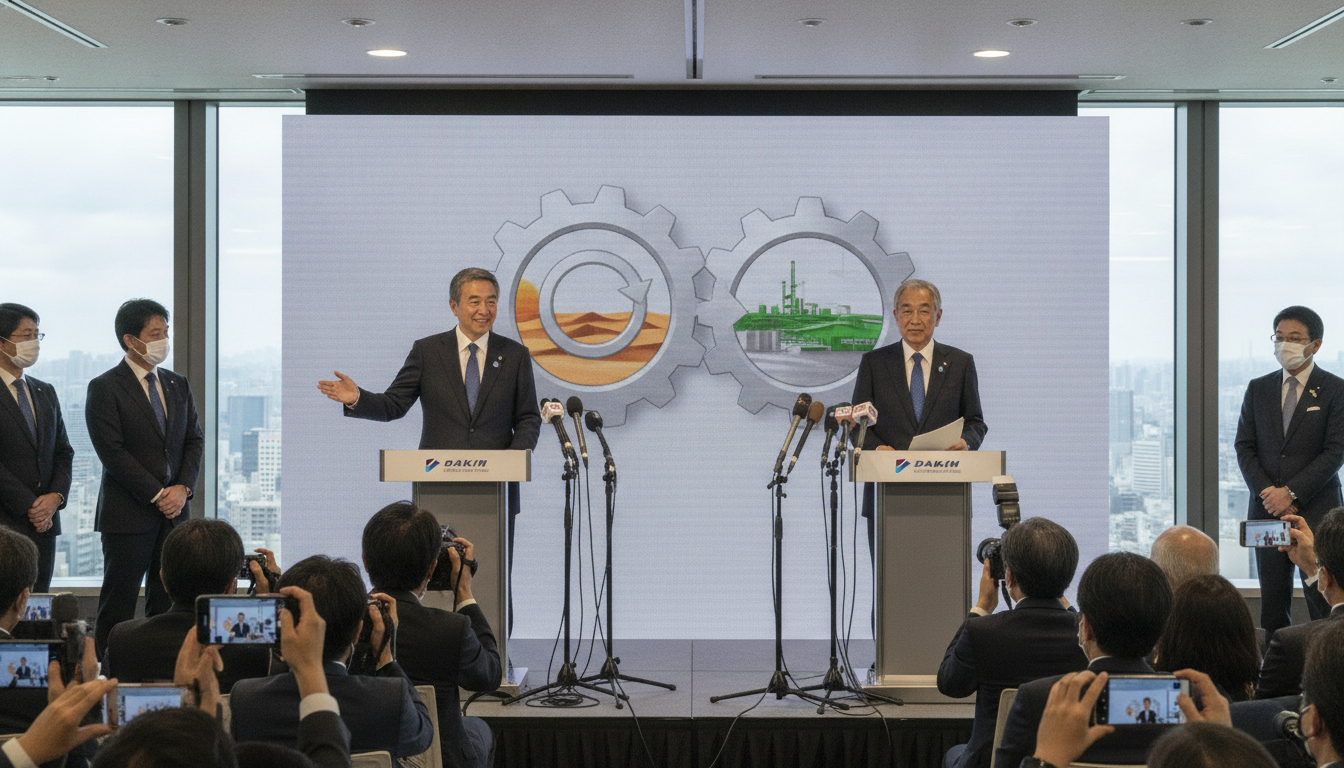
Itochu and Daikin to Launch Aluminum Recycling Venture to Reduce Japan’s Middle East Dependence
Itochu and Daikin will recover aluminum from used commercial air conditioners in a new recycling venture, aiming to cut Japan’s dependence on Middle East imports.
Japan’s trading house Itochu and air‑conditioner maker Daikin Industries have announced a joint business to recover aluminum from used commercial air conditioners, marking a targeted push into aluminum recycling as the nation seeks to shore up critical material supplies. The companies said the initiative will reclaim and process aluminum components from retired units, a move framed as part of broader efforts to reduce reliance on imports, particularly amid disruptions tied to conflict in the Middle East. The plan underscores growing interest among Japanese firms in circular‑economy solutions for metals deemed strategically important.
Partnership and business model
Itochu and Daikin will pool their strengths: Itochu’s trading and logistics networks combined with Daikin’s access to end‑of‑life air‑conditioning equipment and technical know‑how. The venture, as described by the companies, will establish collection, disassembly and material recovery operations focused initially on commercial units, which contain substantial aluminum components. Recovered metal will be processed for reuse in manufacturing or remelted into billet, depending on quality and market demand.
The partners indicated the model aims to integrate upstream collection with downstream refinement, creating a closed loop that can supply domestic manufacturers with secondary aluminum. By handling both sourcing and processing, the joint business is intended to improve material traceability and reduce costs associated with importing primary aluminum.
Scale and supply implications
Commercial air conditioners, widely used across offices, retail and industrial facilities, represent a sizeable stream of aluminum in Japan’s built environment. Industry analysts estimate that recovering metal from these units could contribute meaningfully to domestic secondary supply, though the exact volume that the new venture will handle has not been released. Companies participating in the agreement have said they will scale operations based on collection volumes and the technical feasibility of processing mixed‑alloy components.
If scaled, aluminum recycling from appliances could lower Japan’s exposure to global primary aluminum markets, which have recently been affected by geopolitical tensions and supply constraints. Secondary aluminum typically requires less energy to produce than primary metal, offering potential cost and emissions advantages when integrated into local supply chains.
Strategic context: dependence on Middle East supplies
Japan imports significant volumes of commodities and manufactured inputs, and leaders in business and government have expressed concern about vulnerabilities exposed by conflicts that disrupt shipping and raw material flows. The new recycling initiative is being presented as one practical response to such vulnerabilities, prioritizing domestic recovery of a metal used across transport, construction and industrial equipment.
Officials and corporate strategists view diversification of supply sources and development of domestic recycling capacity as complementary measures. By recovering aluminum at home, Japanese firms could reduce the logistical and price risks associated with long supply chains and regionally concentrated production, while also supporting national resilience in critical materials.
Operational and technical challenges
Recovering aluminum from commercial air conditioners poses technical hurdles, including the separation of aluminum from other metals, plastics and insulating materials. Units may also contain coatings, fasteners and mixed alloys that complicate remelting and reuse. Effective recycling requires careful disassembly processes, sorting facilities and metallurgical treatment to ensure recovered aluminum meets industrial specifications.
Logistics represent another challenge: establishing collection networks for end‑of‑life units spread across buildings and regions demands coordination with property managers, local governments and waste handlers. Itochu’s trading and logistics expertise is likely to be central to creating efficient reverse‑logistics pathways, while Daikin’s role will include facilitating access to retired units and advising on safe removal and transport.
Environmental and economic considerations
Aluminum recycling delivers energy and carbon benefits compared with primary production, which can be energy intensive. For manufacturers, increased access to secondary aluminum can reduce input costs and carbon footprints, aligning with corporate sustainability commitments and regulatory pressure to lower emissions. The venture may also open new business lines in refurbishing and remarketing components, extending the economic life of appliances.
At the same time, the economics of recycling hinge on metal prices, processing costs and regulatory incentives. The viability of large‑scale recovery will depend on how efficiently the partners can collect, sort and process material and whether policy measures—such as subsidies, tax incentives or standards for recycled content—support market development.
Outlook and potential expansion
Itochu and Daikin have framed the venture as an initial step that could be expanded if the pilot phase proves successful. Potential next stages include increasing processing capacity, incorporating other types of appliances, and exploring partnerships with municipal recycling programs and manufacturers that can absorb the recycled aluminum. The model could also be replicated for other critical metals used in electronics and industrial equipment.
By creating a domestically oriented supply of secondary aluminum, the partnership aims to offer a pragmatic tool for supply‑chain resilience while advancing corporate sustainability goals. The initiative will be watched by industry peers and policymakers as a test case for private‑sector led recycling of strategic materials.
The success of the project will depend on operational execution, market conditions for recycled metal and the ability to build efficient collection networks across Japan’s commercial property sector.

