
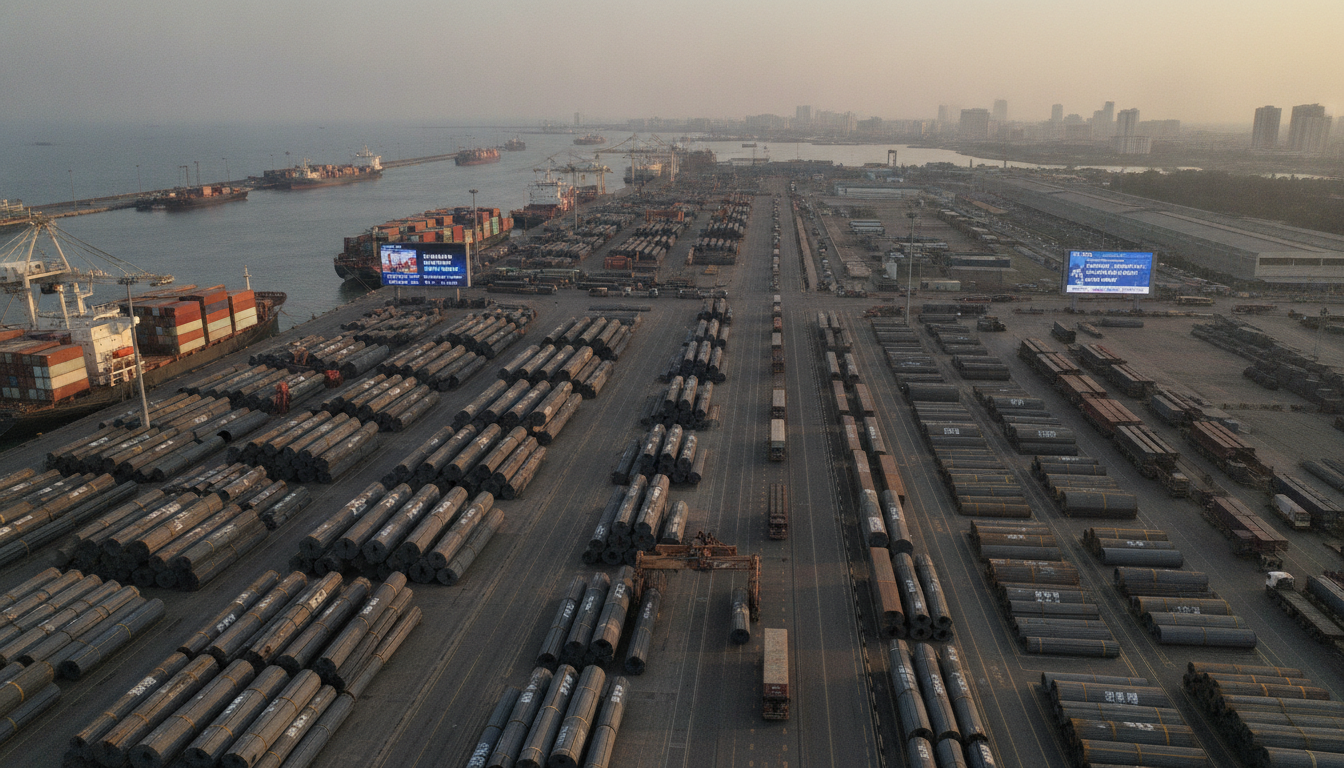
Chinese steel exports driving supply glut in Southeast Asia, World Steel Association warns
World Steel Association warns Chinese steel exports driving a supply glut in Southeast Asia amid rising local capacity and geopolitical shifts in trade.
China’s surge in steel shipments to Southeast Asia is contributing to an emerging supply glut in the region, the World Steel Association has warned. Director General Edwin Basson told Nikkei that increased Chinese steel exports are arriving just as domestic production capacity in Southeast Asian countries has been expanding. The combination, he said, is creating downward pressure on regional prices and heightening stress for local producers.
World Steel Association flags regional oversupply
Edwin Basson, the association’s director general, identified signs of oversupply in Southeast Asian markets during an interview with Nikkei. He described the dynamic as notable because it pairs elevated export volumes from China with expansions in local mill capacity. The warning highlights an industry shift from short-term market imbalances to a more persistent structural surplus.
This assessment follows months of international trade shifts that have redirected flows of steel and other commodities. The World Steel Association’s view carries weight because it aggregates production and trade data across major producing and consuming countries, offering a wider lens on the supply-demand balance.
Chinese steel exports intensify competition
Chinese steelmakers have been stepping up shipments to Southeast Asia, attracted by nearby markets and established distribution networks. Export growth has been driven in part by excess capacity in China as well as strategic moves by firms to find markets outside traditional destinations. Industry observers say the result is sharper competition for orders that previously supported regional producers.
Major Chinese producers, including state-owned and private firms, have the scale to offer aggressive pricing, which can undercut smaller regional mills. That pricing pressure accelerates inventory buildups at distributors and leaves local manufacturers facing narrower margins or idle capacity.
Local capacity expansion compounds the issue
At the same time as imports rise, several Southeast Asian countries have increased their own steelmaking capacity to meet domestic infrastructure and construction demand. New plants and modernization projects have elevated domestic supply, reducing the need for imports for some product grades. Where domestic output now overlaps with Chinese export offerings, market tension has intensified.
Industry executives say the timing has been unfortunate: domestic growth that might have been absorbed by stronger regional demand is instead colliding with a wave of low-cost imports. The compounded effect raises questions about the medium-term viability of smaller producers and the pace of future investment in local steelmaking.
Geopolitical shifts and tariffs redirect trade flows
Geopolitical events and Western trade measures have also influenced where Chinese steel is sent. Conflicts in the Middle East and shifting tariff regimes in North America and Europe have rerouted some trade flows toward Asia, according to trade analysts. These external pressures have made Southeast Asia a more attractive destination for exporters seeking to diversify markets.
Tariffs and anti-dumping duties in developed markets have a spillover effect: when access to higher-priced markets is constrained, exporters often pivot to nearby regions with fewer trade barriers. That pivot changes competitive dynamics and can accelerate price erosion where demand growth is moderate.
Impact on Southeast Asian producers and prices
The combined surge in imports and rising local output is already visible in market indicators, with downward pressure on spot prices for several flat and long steel products. Distributors report higher inventory levels and lengthening lead times for new orders as buyers delay purchases to see if prices fall further. For manufacturers reliant on steady margins, the environment is forcing cost-cutting and production adjustments.
Smaller mills and downstream fabricators are particularly vulnerable, as they lack the scale to absorb prolonged price competition. Some firms may seek consolidation, move up the value chain into higher-margin products, or lobby for protective measures — though such responses carry their own economic and political trade-offs.
Policy options and industry responses under consideration
Regional governments and trade bodies are weighing responses ranging from temporary safeguard measures to anti-dumping investigations. Industry associations have called for closer monitoring of trade flows and for enhanced transparency around export pricing. At the same time, companies are exploring diversification of products and export markets to reduce reliance on commodity-grade segments.
Private-sector strategies include shifting toward higher-value, specialized steel grades and investing in efficiency improvements that lower unit costs. For policy-makers, the challenge will be balancing support for domestic industry with the risks of escalating protectionism that could provoke retaliation and undermine regional trade integration.
The World Steel Association’s warning underscores the complex interplay between global trade shifts and local industrial policies, and it signals a period of adjustment for Southeast Asia’s steel sector as stakeholders weigh measures to stabilise markets.

