
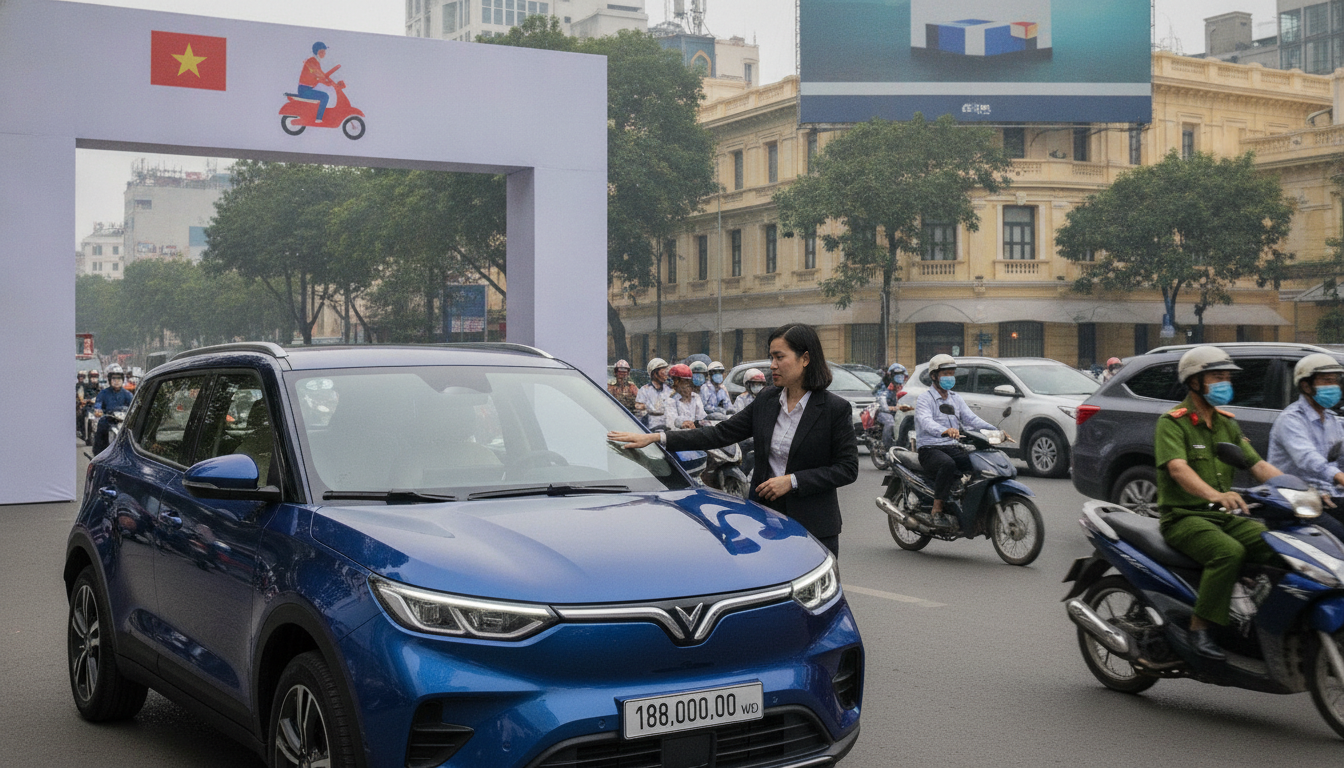
VinFast VF2 Priced at 188 Million Dong as Hanoi Tightens Rules on Gasoline Motorcycles
VinFast launches the VF2 at 188 million dong ($7,148), its cheapest electric vehicle yet, targeting mass-market buyers as Hanoi enacts stricter rules on gasoline-powered motorcycles in Vietnam.
HANOI — VinFast has introduced the VF2, the smallest and most affordable model in its electric vehicle lineup, priced at 188 million dong ($7,148). The company says the move is intended to make car ownership more achievable for Vietnamese consumers who have long relied on motorcycles. The launch comes amid new regulatory pressure from Hanoi aimed at reducing reliance on gasoline-powered two-wheelers, a development that could reshape urban mobility patterns.
Price and model positioning
The VF2 is being marketed as VinFast’s entry-level offering, positioned to attract first-time car buyers and households seeking an economical step up from motorcycles. At 188 million dong, the model sits well below typical compact car prices in Vietnam, signaling a deliberate push toward affordability. VinFast’s pricing strategy reflects an effort to expand its customer base beyond early EV adopters and corporate fleets.
Company goals and market strategy
VinFast has signaled that broadening ownership is central to its strategy, combining lower sticker prices with flexible purchase options. The automaker has previously emphasized local production and scale as levers to reduce costs, and the VF2 appears to be a continuation of that approach. By offering a lower-priced model, VinFast aims to accelerate adoption in urban and peri-urban areas where daily commuting distances are modest.
Hanoi policy changes and potential demand effects
Hanoi’s tighter measures on gasoline-powered motorcycles are intended to curb pollution and improve road safety, according to city authorities. Those regulatory shifts are likely to prompt some motorcyclists and households to consider alternative forms of transport, including small cars and electric vehicles. For manufacturers like VinFast, policy-driven demand could create a new cohort of buyers seeking affordable, emissions-free options for city travel.
Infrastructure and adoption challenges
Despite a growing interest in EVs, structural challenges remain, particularly in charging infrastructure and urban parking. Widespread adoption of compact electric cars will depend on the expansion of public chargers, workplace charging, and home charging solutions compatible with dense, multi-family housing. Additionally, affordability must be evaluated against the entrenched cost advantages and convenience of motorcycles for many Vietnamese consumers.
Dealer networks and after-sales considerations
Sales performance for an entry-level model will hinge on dealer readiness and after-sales support, including servicing, battery warranties, and spare parts availability. Dealers in provincial and suburban markets will need training and equipment to maintain EVs reliably. Consumer confidence in long-term serviceability often becomes a deciding factor for buyers transitioning from motorcycles to four-wheeled vehicles.
Market outlook and competitive landscape
The VF2’s launch is likely to prompt reactions from both domestic and international competitors seeking share in Vietnam’s growing EV segment. Automakers that can pair competitively priced models with robust support networks and financing are best positioned to capture new buyers. Observers expect the short-term market to be driven by urban demand and regulatory incentives, while longer-term adoption will depend on infrastructure investments and continued price competition.
VinFast’s decision to introduce a lower-priced electric model as Hanoi tightens rules on gasoline motorcycles underscores a pivotal moment in Vietnam’s urban transport transition. If the VF2 achieves significant uptake, it could catalyze broader shifts in vehicle ownership patterns and accelerate demand for complementary services and infrastructure.

