
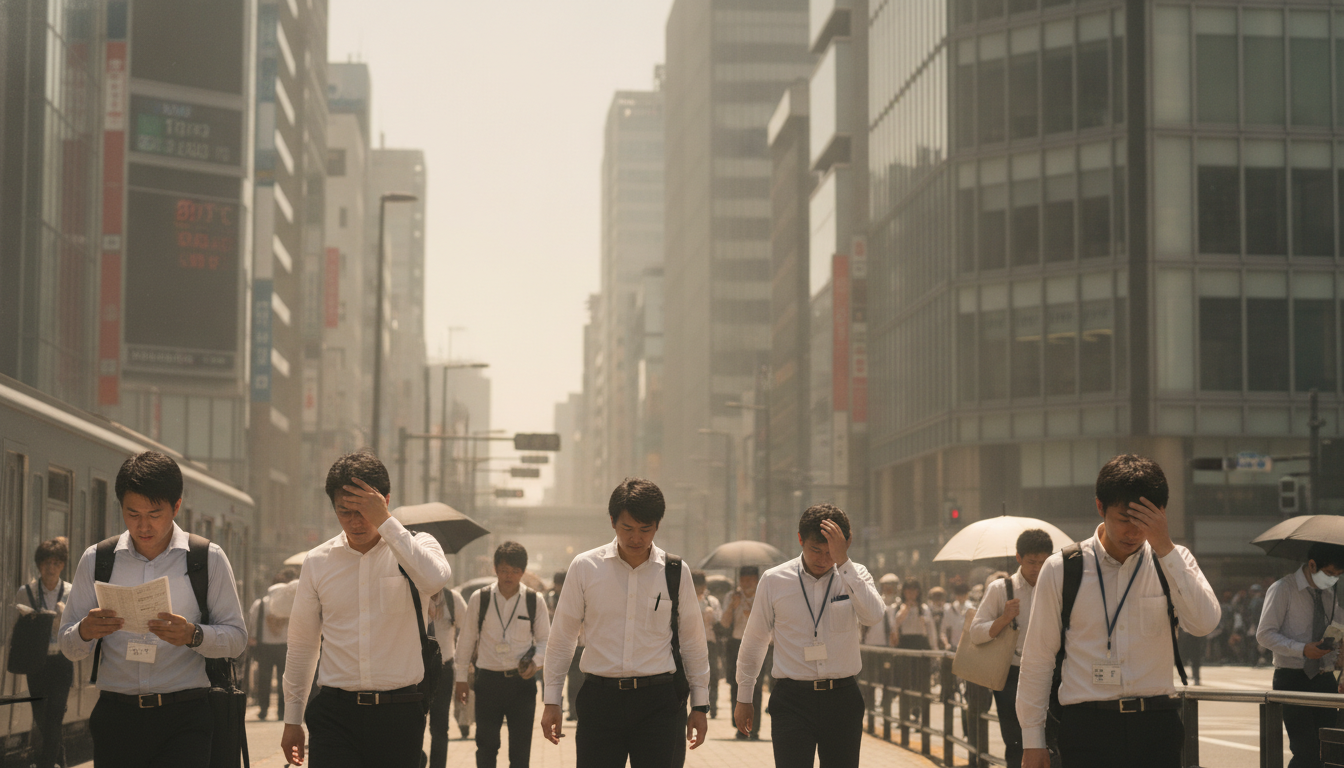
Work time lost due to heat tops 2.8 billion hours a year in Japan as Tokyo climate rivals Southeast Asia
Tokyo’s rising heat and humidity now rival Southeast Asian levels; work time lost due to heat reaches 2.8 billion hours a year in Japan, taxing health and industries.
Tokyo and other parts of Japan are experiencing a sharp increase in heat and humidity that researchers say is now comparable with major Southeast Asian cities, a trend that has translated into a substantial loss of working hours nationwide. Work time lost due to heat has climbed to an estimated 2.8 billion hours annually in Japan, according to recent data analyses, creating mounting pressure on public health services and business operations. Incidents of heatstroke among both outdoor and indoor workers have surged, underscoring the difficulty of protecting laborers even when work takes place inside climate-controlled buildings.
Rising urban heat and humidity in Tokyo
Meteorological measures show not only higher daytime temperatures but also elevated nighttime humidity, which reduces the body’s ability to cool and raises heat stress for residents and workers. The combined effect of temperature and humidity — often tracked by wet-bulb and apparent temperature indices — is producing conditions more typically found in tropical cities. City streets, transport hubs and poorly ventilated workplaces are increasingly hostile environments for people performing physical labor or prolonged tasks.
Urban factors including dense built environments and heat-retaining infrastructure have amplified local warming, making metropolitan areas like Tokyo more vulnerable than surrounding regions. Heat trapped between high-rise buildings and the prevalence of dark surfaces accelerate warming during heatwaves, prolonging exposure well into the evening hours. These microclimate changes are an important part of why heat-related health risks are showing up across diverse job sites.
Work time lost climbs to 2.8 billion hours
Analysts estimate that Japan now loses about 2.8 billion working hours per year due to heat-related reductions in productivity and forced absences, a figure derived from aggregated industry and labor data. The loss reflects a mix of absenteeism from heatstroke and related illness, reduced work intensity for safety reasons, and precautionary shutdowns in sectors such as construction, agriculture and outdoor services. For employers, the cumulative effect is heavier payroll costs, delayed projects and strained supply chains.
The economic toll is unevenly distributed, hitting labor-intensive industries hardest and creating secondary impacts for smaller companies that lack resources to implement protective measures. Regions with older infrastructure or limited access to reliable air conditioning face particularly steep challenges, amplifying existing regional disparities in workforce resilience. Analysts warn that without systemic adaptation, the annual hours lost could rise further as extreme heat events become more frequent.
Heatstroke risk extends inside buildings
Contrary to common belief, heatstroke is not limited to outdoor labor; workplaces within buildings are reporting increasing cases due to insufficient cooling, high indoor humidity and prolonged exertion. Enclosed factory floors, kitchens, warehouses and poorly ventilated offices can trap heat, especially when older air-conditioning systems struggle to cope with higher ambient temperatures. Workers performing physically demanding tasks indoors remain at elevated risk because cooling alone does not fully mitigate high humidity or radiant heat.
Employers face practical dilemmas balancing thermal comfort, energy consumption and productivity; stricter air-conditioning use raises power demand and costs, while undercooling endangers worker safety. Occupational health services and labor supervisors are noting more frequent incidents that require immediate medical attention and time off, signaling a need for targeted interventions beyond conventional outdoor heat protocols.
Industry and government responses under way
Companies across construction, logistics and manufacturing are experimenting with staggered shifts, mandatory rest breaks, shaded rest areas and wearable cooling devices to reduce heat exposure. Some firms have installed real-time temperature and humidity monitors and trained supervisors to alter work intensity based on heat stress thresholds. These operational adaptations can reduce short-term risk but often require capital investment and ongoing maintenance.
Local governments and national ministries have begun issuing heat advisories earlier in the season and expanding worker guidance, yet critics say policy measures lag behind the pace of climate-driven risk. Calls for clearer statutory protections, revised labor standards addressing heat exposure and subsidies for workplace cooling upgrades are growing louder from labor groups and public health advocates. Coordinated policy action will be necessary to align workplace safety with changing climatic realities.
Long-term adaptations and urban planning priorities
Experts emphasize that mitigating work time lost due to heat will require a mix of immediate workplace changes and long-term urban planning reforms. Measures include redesigning streets and public spaces to increase tree canopy, deploying reflective and green roofing to reduce heat absorption, and improving building codes to enhance natural ventilation. Investments in early warning systems and localized forecasting can give employers and workers more time to prepare for dangerous heat events.
Sector-specific strategies are also critical: agriculture and construction may need revised schedules and mechanization options, while service industries could adopt hybrid work arrangements where feasible. Workforce training on heat stress recognition and first aid, coupled with improved access to medical care, will reduce mortality and shorten recovery times for affected workers. Financing mechanisms, including incentives for small businesses to upgrade cooling infrastructure, are likely to be central to equitable adaptation.
As Japan confronts a summer climate that increasingly mirrors tropical humidity and heat, the convergence of public health risk and economic disruption is becoming unmistakable. Addressing the estimated 2.8 billion hours of annual work time lost due to heat will require sustained coordination between employers, local governments and national policymakers to protect workers and preserve productivity in a warming world.

