
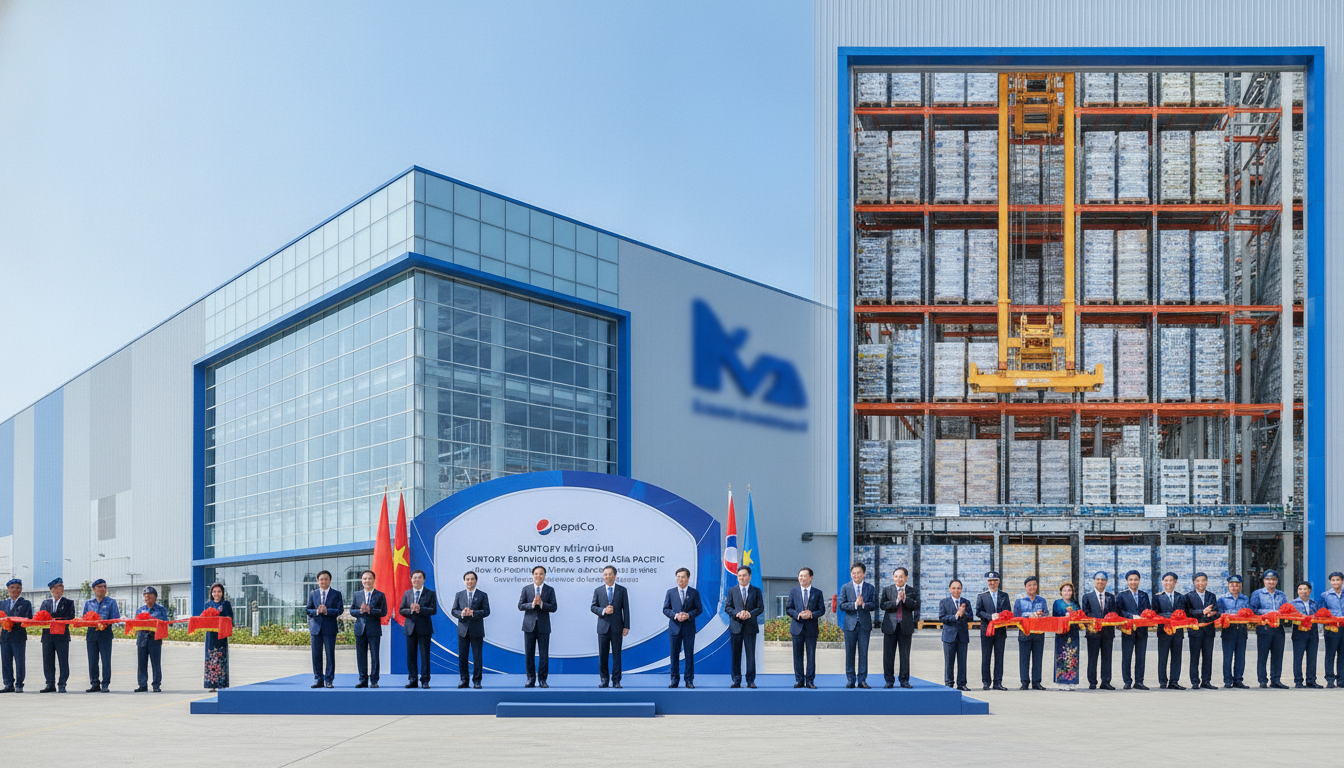
Suntory PepsiCo opens $300 million factory in Vietnam as demand shifts to healthier drinks
Suntory PepsiCo opens $300m Tay Ninh factory in Vietnam with Asia’s first fully automated warehouse to boost healthier beverage output amid changing tastes.
Suntory PepsiCo has inaugurated a $300 million manufacturing complex in Tay Ninh province, marking the company’s largest factory in Asia and underlining its strategic bet on demand for healthier beverages in Vietnam. The new Suntory PepsiCo factory in Vietnam includes what the company describes as its first fully automated warehouse in Asia and is designed to support a broader shift away from traditional carbonated soft drinks. Company officials framed the investment as a response to rising incomes and changing consumer preferences across the region.
Factory scale and strategic rationale
The Tay Ninh facility is the biggest production site Suntory PepsiCo has built on the continent, reflecting a long-term commitment to the Vietnamese market. Company executives say the plant will increase local production capacity for a broader portfolio of drinks, with an emphasis on lower-sugar and non-carbonated options. The investment comes as global beverage companies retool operations to capture growth in emerging markets where consumption patterns are evolving.
The move is also positioned as a defensive play against slowing sales in conventional soft drinks, which have faced headwinds from health-conscious consumers and policy pressures. By expanding manufacturing closer to fast-growing customer bases, the company hopes to reduce lead times and tailor products more quickly to local tastes. Observers say regional expansion like this also helps multinational producers manage costs and currency exposure.
Automation and logistics innovation
A headline feature of the Tay Ninh site is its fully automated warehouse, which Suntory PepsiCo says is the company’s first such facility in Asia. Automation is expected to improve inventory turnover and packing efficiency while lowering manual handling requirements. The company has framed these logistics upgrades as essential to distributing a more diversified product mix across Vietnam and into neighboring markets.
Automation also supports flexible production runs, allowing the plant to switch between formats and product types with less disruption. That flexibility is valuable as beverage portfolios increasingly include ready-to-drink teas, flavored waters, functional drinks and other non-carbonated options. Industry analysts note that manufacturing automation can increase throughput while helping companies meet tighter sustainability and quality-control standards.
Local economic impact and workforce development
Suntory PepsiCo said the Tay Ninh complex will create direct and indirect jobs in the province, although specific employment figures were not disclosed. Local officials welcomed the investment for its potential to boost manufacturing and logistics employment in a region that has attracted increasing factory activity. The company also emphasized training programs to upgrade worker skills for automated operations and modern production lines.
Community engagement and supplier development are likely to be part of the plant’s footprint as it scales up procurement of packaging and ancillary services. Experts caution that automation can reduce some routine roles even as it creates higher-skilled positions, underlining the need for targeted workforce transition measures. Regional governments typically view such investments as catalysts for broader industrial development and infrastructure improvements.
Market context: healthier beverages and shifting consumption
Vietnam’s beverage market has been evolving, with consumers showing greater interest in lower-sugar, natural and functional drinks as incomes rise. Suntory PepsiCo’s investment aligns with that trend, aiming to capture the growth segment even as demand for traditional carbonated beverages plateaus. The company told stakeholders it expects long-term growth driven by urbanization and changing dietary preferences.
Multinational rivals have also been expanding local manufacturing footprints to win shelf space and respond to faster product cycles. Analysts say companies that can launch and distribute new formats quickly will have an edge in a crowded market where brand loyalty is fluid. Pricing, packaging and the ability to meet regulatory and retail standards remain central to success.
Distribution, regional reach and supply chain considerations
The new Tay Ninh plant’s logistics capabilities are likely to improve distribution efficiency across southern Vietnam and into nearby provinces. Proximity to consumer markets helps cut transport times and costs, which is particularly valuable for large-format and chilled products. The automated warehouse is expected to streamline order fulfillment and support e-commerce and modern trade channels that have grown rapidly in recent years.
Supply chain resilience will be a focal point as the company scales production, with attention to sourcing of ingredients, packaging materials and energy inputs. Suntory PepsiCo will need to coordinate suppliers and local authorities to ensure reliable inputs and to meet environmental and safety requirements. How the facility integrates with the company’s regional network will shape its contribution to overall group volumes.
Suntory PepsiCo, a joint venture with U.S. and Japanese ties, has signaled that Vietnam will remain a strategic market within its Asia operations. The Tay Ninh investment underscores a broader industry pivot toward healthier beverage options and operational modernization.
The new factory marks a significant step in Suntory PepsiCo’s regional expansion and reflects wider shifts in consumer demand across Southeast Asia.

