
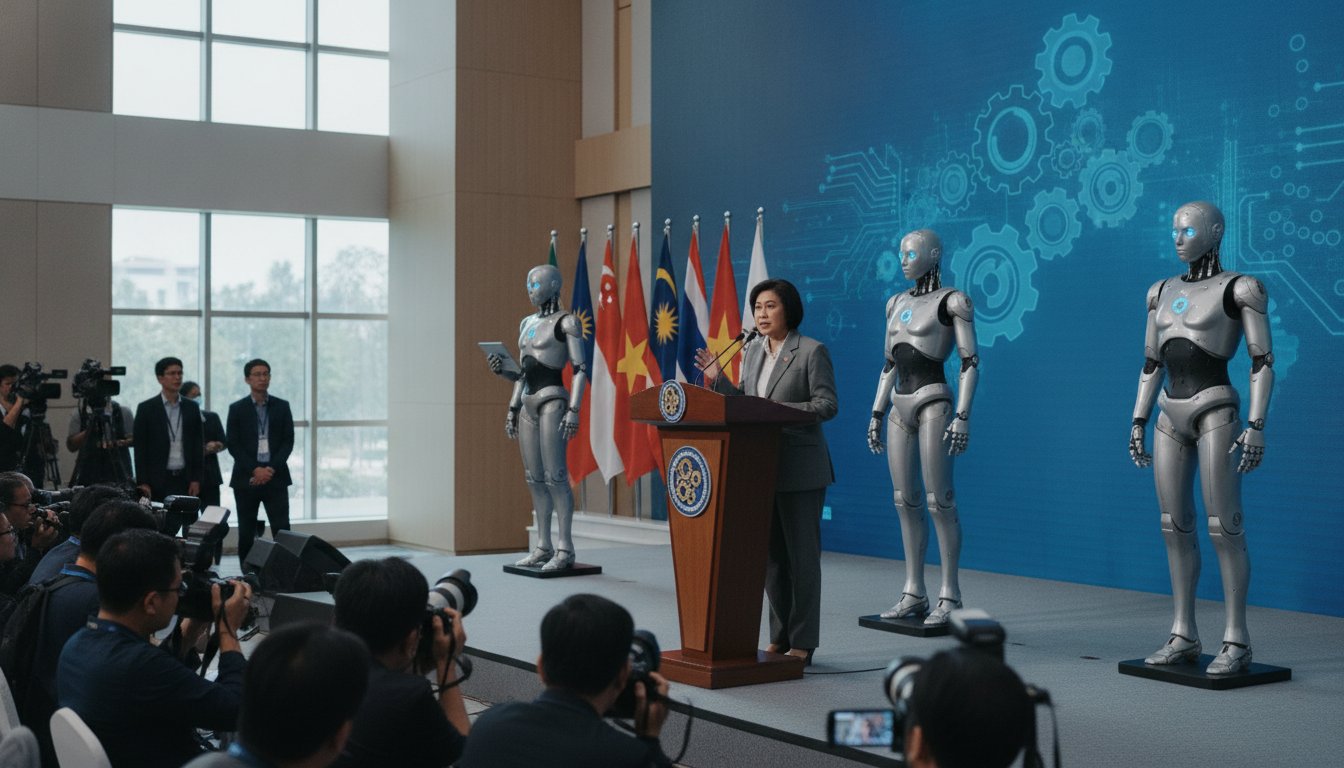
AI-powered humanoid robots poised for rapid adoption across ASEAN, industry speaker says
ASEAN countries are well placed to roll out AI-powered humanoid robots in factories and logistics hubs, a senior industry executive told the Nikkei Asia Forum APAC in Bangkok on July 16, 2026, highlighting pilot projects and commercial interest.
ASEAN readiness highlighted at Nikkei Asia Forum APAC 2026
A senior executive in the AI industry told delegates at the Nikkei Asia Forum APAC in Bangkok on July 16 that ASEAN countries are in a strong position to deploy AI-powered humanoid robots across manufacturing and logistics centers. The comment came as a humanoid robot performed a public demonstration during a panel session, underscoring the pace of development and investor appetite. Forum participants described the region’s mix of rising wages, growing e-commerce and existing industrial bases as a backdrop for accelerated adoption.
Manufacturing and logistics applications underlined by speakers
Panelists outlined clear use cases in assembly, inspection, warehousing and goods handling where humanoid robots could augment existing operations. They said robots equipped with advanced sensors and generative AI controllers can perform repetitive or hazardous tasks and operate in human-centric environments. Companies at the forum emphasized integration with conveyor systems, automated storage and retrieval systems, and last-mile logistics as immediate target areas.
Commercial drivers include labour shortages and operational efficiency
Speakers at the forum pointed to persistent labour shortages in parts of Southeast Asia and the need to raise productivity as commercial drivers for robot adoption. Rising labor costs in several ASEAN markets were cited as making capital investment in automation more attractive compared with manual labour. Delegates also noted that the rapid expansion of regional supply chains and 24/7 e-commerce fulfillment creates a demand profile in which robots can deliver consistent, scalable output.
Industry roadmaps and pilot projects discussed publicly
Several executives described ongoing pilot programs in warehouse and light-manufacturing settings, though few disclosed client names or detailed timelines. They said pilots are focusing on task reliability, human–robot collaboration and safety verification before large-scale rollouts. Speakers estimated that commercial deployments in selected hubs could begin within a few years, contingent on regulatory approvals and further field validation.
Safety standards, certification and policy remain key hurdles
Regulators, industry and labor representatives at the forum agreed that safety standards and certification pathways will be crucial to widescale deployment. Concerns raised included collision avoidance in mixed human–robot environments, cybersecurity of networked systems and clear liability frameworks when machines perform work traditionally done by people. Panelists urged governments to work with manufacturers and standards bodies to establish testing protocols and transparent approval processes.
Workforce transition and reskilling emphasized by participants
While industry sources framed humanoid robots as tools to raise productivity, labor stakeholders at the forum reiterated the need for proactive reskilling and transition programs. Panelists called for public–private partnerships to fund training in robot maintenance, programming and supervisory roles that will grow alongside deployments. Several companies said they are piloting upskilling initiatives with local partners to ensure that technology adoption does not exacerbate unemployment in affected communities.
Regional economic implications and ties with Japan
Delegates noted the potential for deeper industrial collaboration between ASEAN countries and Japanese technology and manufacturing firms. Japanese companies with robotics expertise and established supply-chain links to Southeast Asia were identified as likely partners for pilots and commercial rollouts. Forum speakers suggested that strategic partnerships could accelerate deployment while allowing domestic firms to absorb technical know-how and strengthen regional value chains.
The demonstration in Bangkok and remarks by industry leaders at the Nikkei Asia Forum APAC point to a growing consensus that AI-powered humanoid robots could become part of the operational fabric in ASEAN manufacturing and logistics within the coming years. Successful scaling will depend on coordinated regulation, investments in training and careful pilot testing to balance efficiency gains with workforce and safety considerations.

