
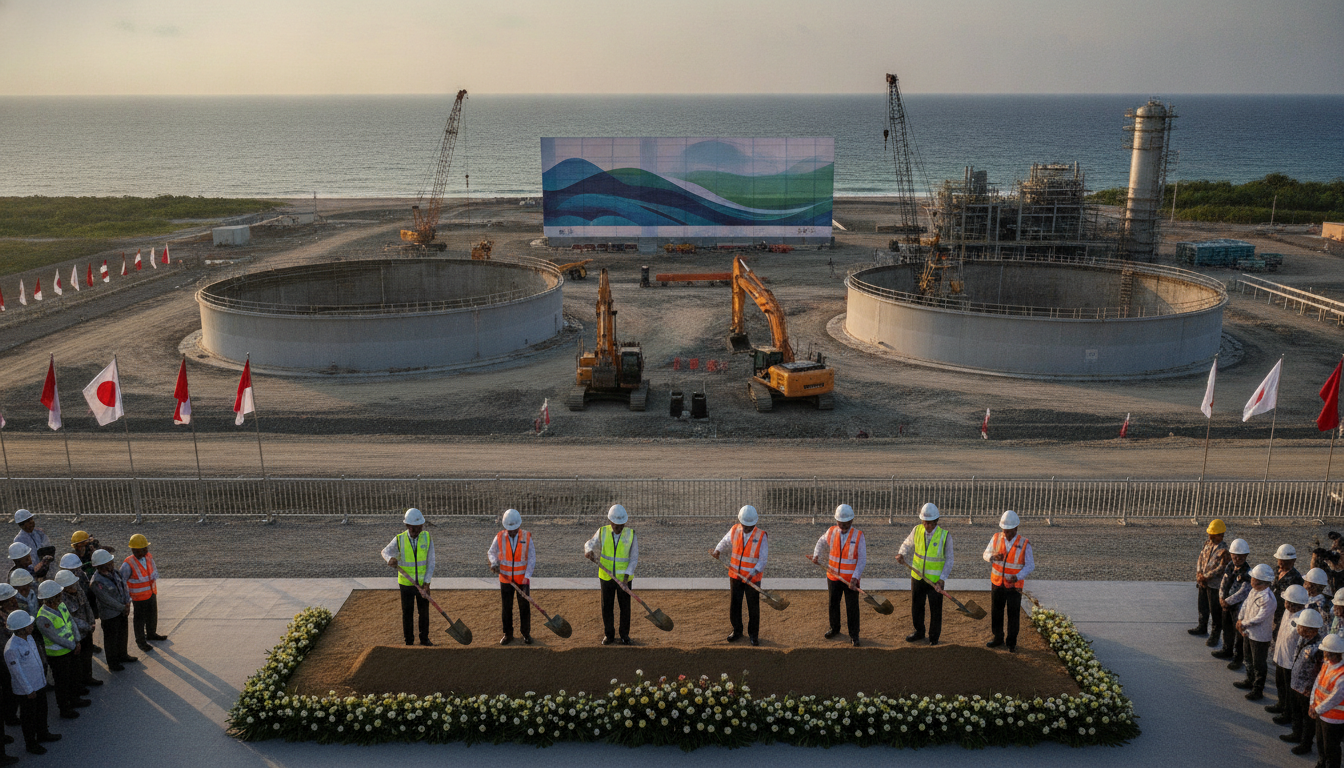
Inpex Breaks Ground on Abadi LNG Project in Tanimbar Islands
Inpex breaks ground on the Abadi LNG project in eastern Indonesia, a long-delayed initiative poised to become one of Asia’s largest liquefied natural gas facilities and a pillar of Indo-Pacific energy security.
TANIMBAR ISLANDS — Japanese energy group Inpex on Thursday began construction work on the Abadi LNG project at a ceremony in the Tanimbar Islands, formalizing the start of physical development after years of planning and delays. The Abadi LNG project, operated by INPEX Masela Ltd., is intended to deliver large-scale liquefied natural gas from the Masela block in the Arafura Sea and was described by the company’s leadership as “extremely important” for energy security across the Indo-Pacific. (en.antaranews.com)
Groundbreaking Ceremony and Official Launch
The ceremonial event in Tanimbar was attended by government and industry figures who signalled strong political backing for the project’s acceleration. Indonesian officials have repeatedly urged the operator to move swiftly to final investment decision and construction, reflecting Jakarta’s interest in turning the Masela block into a strategic energy hub.
Inpex has positioned the groundbreaking as a milestone that moves the project from preparatory work into full-scale construction, following recent approvals and engineering contracts that cleared key regulatory and planning hurdles. The company and partners said they expect the work to proceed under close government oversight.
Project Scope and Ownership
The Abadi LNG project is planned to produce roughly 9.5 million tonnes of LNG per year, with additional domestic pipeline gas and condensate expected from the same development. The project footprint spans the Masela block in waters off Saumlaki in Maluku province and is structured as an INPEX-operated development. (inpex.com)
INPEX Masela holds the operating interest, while Indonesia’s Pertamina Hulu Energi Masela and Malaysia’s Petronas Masela joined as partners in 2023 following the transfer of a prior stake. The ownership mix positions the venture with both major regional energy companies and strong Indonesian state participation.
Engineering, FEED Contracts and Schedule
Front-end engineering and design (FEED) activity for the project has already advanced in recent months, with major contractors awarded key packages for both onshore liquefaction and floating production infrastructure. JGC Indonesia and other engineering firms have been contracted to complete FEED work covering the onshore plant and FPSO facilities, laying the groundwork for detailed design and procurement. (jgc-indonesia.com)
Officials and operator teams have set an accelerated timetable to move from FEED to a final investment decision, with industry and government sources pointing to a multi-year construction phase before the facility enters production. The timeline will hinge on financing, procurement lead times and completion of environmental and local permitting requirements.
Offtake Agreements and Market Strategy
Inpex has been advancing offtake discussions and has reported agreements in principle with several regional buyers, aimed at securing long-term demand for Abadi LNG cargoes. Discussions reported with international traders and domestic offtakers reflect a strategy to blend export volumes with local gas sales for industrial and power uses. (lngindustry.com)
Securing binding sales and shipping arrangements will be a priority for operators as they seek to underpin project financing and mitigate market exposure. Industry analysts say establishing a core portfolio of long-term buyers will be critical to reducing commercial risk for such a large upfront investment.
Investment, Jobs and Local Impact
The Abadi project carries an estimated capital investment in the order of tens of billions of dollars and is being described as one of Indonesia’s largest recent energy investments. Jakarta has framed the development as both a national strategic project and a catalyst for regional economic growth in Maluku. (en.antaranews.com)
Local authorities and the operator have committed to programs aimed at maximizing Indonesian content, creating employment and developing ancillary industries tied to the project. However, community stakeholders and environmental groups will be watching closely as construction moves forward to ensure impacts on fisheries, coastal ecosystems and local livelihoods are managed.
Carbon Management and Emissions Controls
INPEX has said the Abadi LNG project will include carbon capture and storage (CCS) measures to mitigate CO2 emissions associated with hydrocarbon production, aiming to reduce the carbon footprint of the facility as part of the company’s broader decarbonization plans. The inclusion of CCS features is presented by the operator as a distinctive element intended to align the project with evolving climate and regulatory expectations. (inpex.com)
Implementing CCS at scale will add technical complexity and cost, but proponents argue it can make the project more acceptable to environmentally minded buyers and regulators while supporting Indonesia’s climate commitments. Operators will need to demonstrate both the technical viability and commercial framework for CCS to be integrated into long-term operations.
The start of construction at Tanimbar signals a decisive shift for the long-stalled Abadi LNG project, bringing a major new source of LNG closer to reality and underscoring Indonesia’s ambition to deepen its role in regional energy markets. The coming months will test whether the venture can translate engineering plans and preliminary market deals into the binding contracts, financing and community consent required to deliver first gas on the planned schedule.

