
Asia stock exchanges urge deeper regional connectivity to capture investment and boost liquidity
Asia stock exchanges at Bangkok summit urge deeper regional connectivity to attract investment, boost liquidity and modernize market infrastructure regionally.
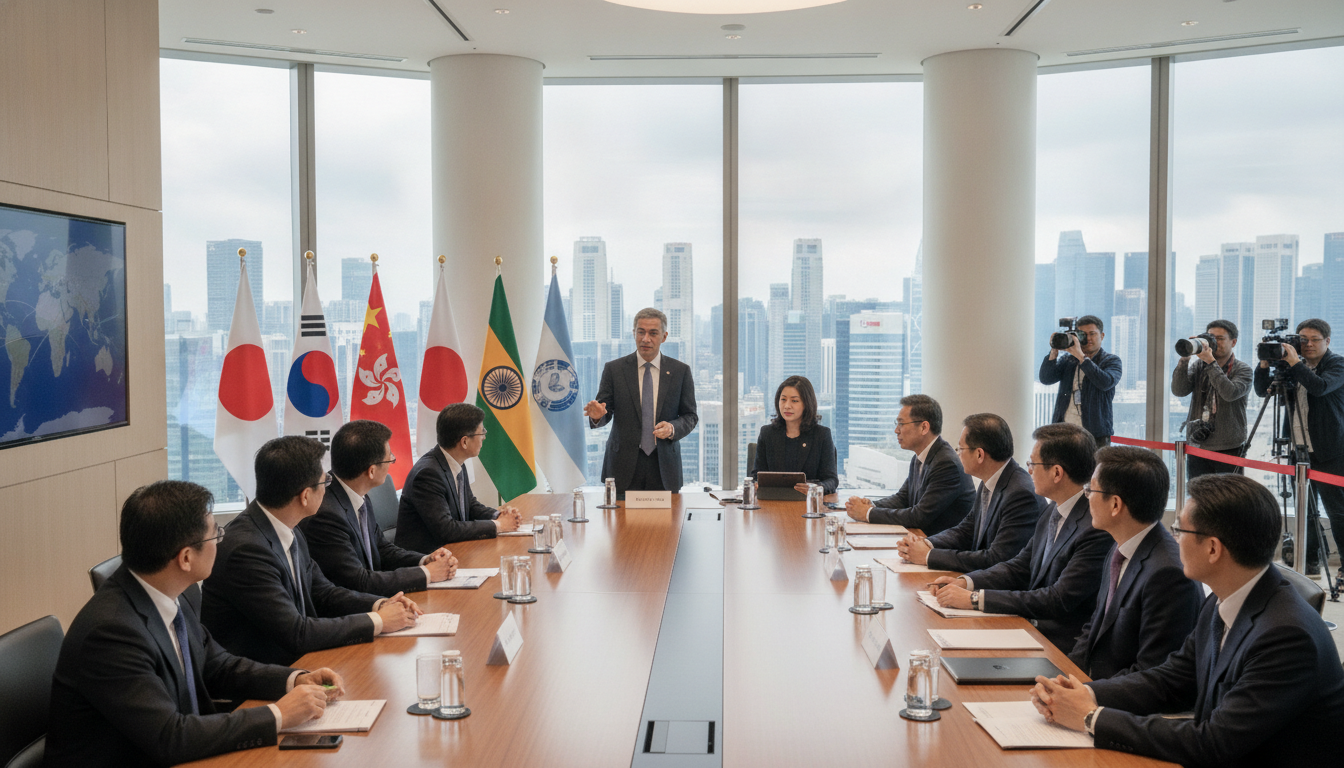
Asia stock exchanges called for stronger regional connectivity on July 16 at the Nikkei Asia Forum APAC 2026 in Bangkok, saying improved links are essential to capture investment inflows and sustain growth across the region. Senior exchange executives and market operators argued that cross-border cooperation, upgraded infrastructure and aligned rules would help Asian capital markets compete for global capital. The panel discussion featured Masanori Yoshida of Japan Exchange Group, Asadej Kongsiri of the Stock Exchange of Thailand and Michael Syn of Singapore Exchange.
Executives press for integrated market links
Masanori Yoshida told the forum that the ability to channel investment across borders would be a defining factor in market competitiveness going forward. He emphasized that enhanced connectivity would not only attract capital but also support market resilience during periods of volatility.
Asadej Kongsiri and Michael Syn echoed those remarks, noting that investors increasingly compare Asian venues with integrated global markets. They said coordination among exchanges could unlock liquidity and broaden opportunities for issuers and investors alike.
Challenges to cross-border investment remain
Panelists identified regulatory fragmentation and divergent market practices as persistent obstacles to seamless cross-border flows. Differences in listing rules, disclosure requirements and tax treatments were cited as practical hurdles that deter institutional and retail investors from moving capital regionally.
Speakers also highlighted operational frictions such as settlement mismatches and currency conversion costs that raise transaction expenses. They suggested that easing these technical barriers would make intra-Asian investment more attractive without compromising market integrity.
Technology and infrastructure as enablers
Executives called for targeted technology upgrades to clear and settle transactions faster and more securely. They argued that modernized trading platforms, improved data sharing and stronger cybersecurity measures would reduce costs and increase confidence among international investors.
Panelists pointed to opportunities in harmonizing post-trade systems and expanding linkages that allow investors to execute trades across markets with minimal friction. Such technical work, they said, would require sustained investment by exchanges together with support from central banks and infrastructure providers.
Exchanges’ role in listings and liquidity provision
Speakers underscored the role of exchanges in creating deeper pools of capital through new listing pathways and incentive structures. They discussed measures to broaden the investor base, including initiatives to support small and medium-sized enterprises and to promote sector-specific listings that attract strategic investors.
Liquidity provisioning and market-making arrangements were also highlighted as priorities, with exchanges exploring programs to encourage participation from long-term institutional investors. Panelists said that improved liquidity would in turn reduce volatility and lower costs for issuers.
Regulatory coordination and policy support urged
The forum discussion stressed the importance of regulators and policymakers working alongside exchanges to create predictable, investor-friendly frameworks. Executives recommended dialogues to align reporting standards, tax treatments and investor protections to minimize arbitrage and uncertainty.
They also suggested that multilateral fora and bilateral agreements could accelerate practical steps toward interoperability. Close cooperation between market operators and authorities was presented as essential to balancing open markets with systemic stability.
Market outlook and competition for capital
Panelists agreed that Asia’s capital markets have significant growth potential if the region can present a more unified investment proposition. With global capital reallocations underway, they argued that Asia must offer scale, depth and operational convenience to secure a larger share of flows.
Executives warned that inaction would allow other global centres to consolidate advantages, but they also expressed optimism that pragmatic, incremental reforms could yield measurable gains in the near term.
The discussions in Bangkok signaled a shared recognition among exchange leaders that practical steps—rather than broad pledges—will determine whether Asia can turn its fragmented ecosystem into a coherent advantage for investors and issuers alike.

