
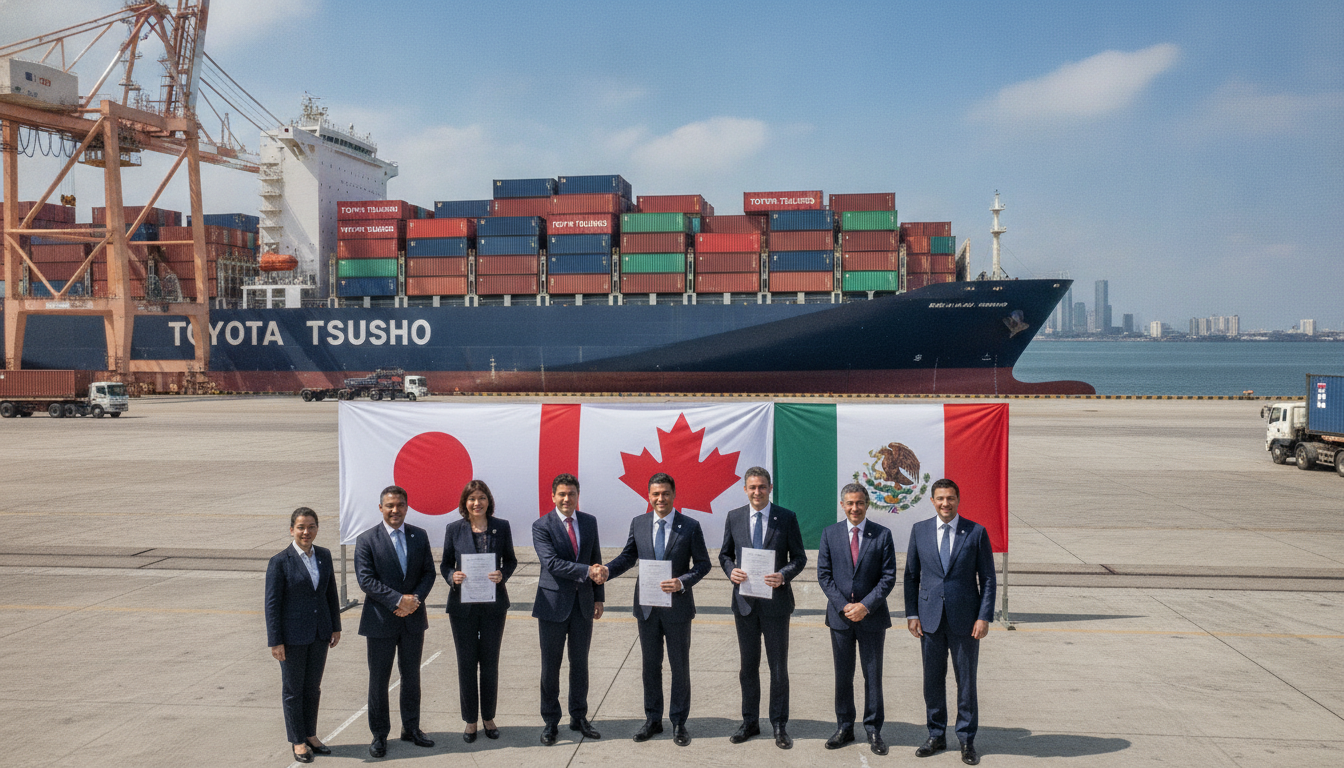
Toyota Tsusho Begins Direct Shipping to Canada and Mexico to Cut Costs for Small Auto Suppliers
Toyota Tsusho direct shipping from Japan to Canada and Mexico aims to lower transport costs and help small suppliers reach carmaking hubs without transiting the U.S.
Toyota Tsusho has launched a direct shipping service that moves auto parts from Japan straight to warehouses in Canada and Mexico, bypassing the United States. The move is intended to help small and medium-sized suppliers reach North American carmaking regions more efficiently. Company materials say the program can reduce transport expenses for smaller shippers by as much as 60 percent. The new route also addresses tariff and customs complexities that have historically burdened suppliers transshipping through the U.S.
Service Targets Small Suppliers Facing High Logistics Costs
The new offering specifically targets small parts makers that lack economies of scale in international freight. These firms often pay disproportionately high transport and handling fees when consignments are routed through major U.S. ports. By consolidating shipments and delivering directly to distribution hubs in Canada and Mexico, Toyota Tsusho aims to compress unit costs and simplify paperwork for smaller operators.
The cost reduction figure cited — up to 60 percent — reflects savings across transport, handling and intermediate warehousing. Reduced overhead is expected to make some suppliers more competitive when bidding for North American original equipment manufacturer (OEM) contracts.
Direct Routes Reduce Double-Tariff Risk
A central benefit of the program is its potential to prevent double tariffs that can arise when goods move through the United States en route to other North American markets. Direct consignments to Canadian or Mexican warehouses remove an intermediate customs clearance step that can trigger additional duties or fees. For suppliers selling into integrated continental supply chains, avoiding such charges can materially improve margins.
The approach also streamlines customs documentation by making the final destination clear from shipment inception. That clarity can shorten customs processing times and reduce the risk of delay-related penalties.
How Toyota Tsusho’s Logistics Model Works
Shipments from Japanese suppliers are consolidated at origin and loaded onto vessels or air freight bound directly for Toyota Tsusho’s distribution centers in Canada and Mexico. The trading house handles freight booking, cross-border compliance, and last-mile distribution, offering a single logistics touchpoint for clients. By internally managing these steps, Toyota Tsusho hopes to cut intermediaries and the markups they add.
The company is leveraging its existing warehousing footprint in North America to receive and store parts before onward delivery to assembly plants. This hub-and-spoke arrangement is designed to maintain inventory visibility while reducing supplier exposure to volatile freight markets.
Implications for North American Auto Supply Chains
The service responds to broader industry trends of reshoring and regionalization in auto manufacturing, where proximity to assembly plants has become a strategic priority. Improved access to Canadian and Mexican hubs could encourage Japanese suppliers to maintain or expand their presence in the region. Shorter, more reliable supply lines also support just-in-time and just-in-sequence production practices used by many automakers.
For the automakers themselves, the shift could mean more diversified sourcing and reduced vulnerability to bottlenecks at U.S. ports. Direct links between Japanese component manufacturers and North American facilities may also accelerate response times for model changes or surge production.
Trade and Regulatory Considerations Under USMCA Dynamics
The move comes amid evolving trade patterns under the United States–Mexico–Canada Agreement (USMCA), which governs many aspects of North American automotive trade. While USMCA sets rules of origin and preferential duty treatments, transshipment through the U.S. has sometimes complicated compliance for non-NAFTA-origin goods. Direct deliveries to Canadian and Mexican warehouses can simplify application of regional rules and documentation required for preferential treatment.
Nevertheless, importers will still need to navigate local tariff schedules, entry procedures and potential anti-dumping measures. Toyota Tsusho’s service includes customs brokerage support intended to reduce those administrative burdens, but clients will remain responsible for ensuring product eligibility under relevant trade regimes.
Industry Reaction and Potential Uptake
Market observers say the service could find rapid uptake among smaller suppliers that have struggled with rising freight rates and constrained container capacity. For larger suppliers with full-container loads and established North American operations, the benefits may be marginal. Still, the new route adds flexibility to the logistics options available to all tiers of the supply chain.
Automotive logistics providers will likely watch how Toyota Tsusho prices and scales the offering. If cost savings and lead-time improvements are realized broadly, competing logistics firms may introduce similar direct-route services, increasing competition and potentially driving further efficiency.
Toyota Tsusho’s initiative underscores the trading house’s role in linking Japanese manufacturing with global markets through integrated logistics and distribution solutions. The direct-to-Canada-and-Mexico program is pitched as a practical step to reduce costs and complexity for smaller suppliers participating in North American automotive production.
The success of the service will hinge on consistent freight capacity, regulatory clarity and the ability of warehouses in Canada and Mexico to handle varied component assortments. If those elements align, the new routing could become a durable feature of transpacific auto parts logistics, easing supply-chain pressure points and helping small suppliers compete for work across North America.

