
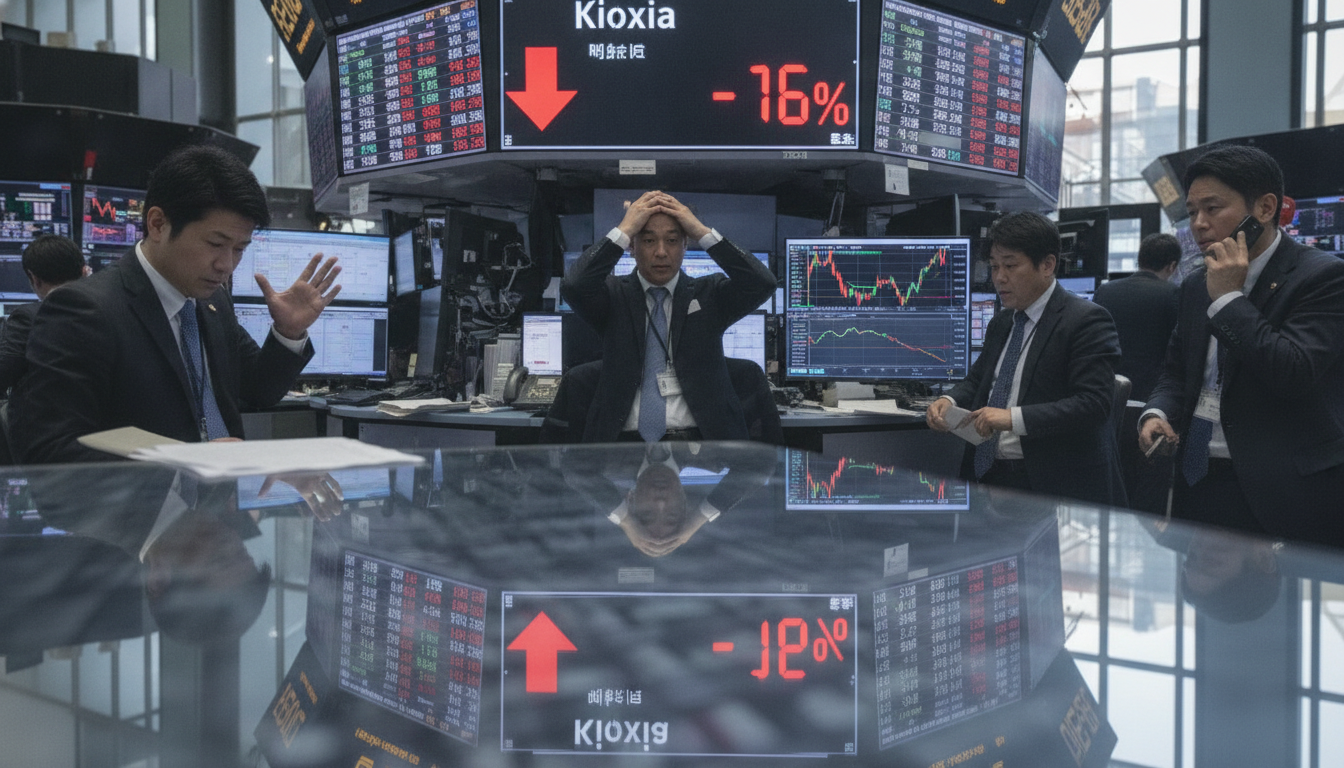
Kioxia hits daily trading limit as semiconductor selloff sweeps Asia and US
Kioxia shares hit their daily limit as a regional rout in semiconductor and AI-proxy stocks spread across Asian and US markets, prompting investor deleveraging.
Kioxia’s shares plunged sharply on Friday, triggering the stock’s daily trading limit as investors reduced leveraged positions tied to technology names. The retreat reflected growing doubts about the durability of the AI-led rally that had buoyed chipmakers and related firms over recent months. The move in Kioxia came as equity benchmarks across Asia fell, with AI proxy stocks among the hardest hit. Market participants said the selloff reflected both profit-taking and a reassessment of demand forecasts for memory products.
Kioxia share price drop reached circuit breaker threshold
Kioxia’s decline reached the threshold that halts further selling under exchange rules, forcing an automatic pause in trading activity. The approximately 16% fall on the day marked one of the steepest moves for the Japanese memory group in recent sessions. Traders noted the speed of the selloff as leverage unwound quickly, amplifying price moves in a market already sensitive to shifts in growth expectations. The limit-down event underscored how thin liquidity and concentrated positioning can accelerate volatility in single-stock trading.
AI-focused names led regional index weakness
Across Asian markets, benchmark indices slumped as investors rotated out of AI-exposed and semiconductor-related equities. Stocks perceived as proxies for AI demand experienced outsized declines, dragging broader technology sectors lower. The spillover extended to ancillary suppliers and capital-goods firms tied to chip production, increasing sector-wide losses. Analysts said the pattern echoed recent sessions in the United States, where profit-taking in large-cap AI beneficiaries had set off a global repricing.
Leverage and margin unwinds intensified selling pressure
Market participants pointed to the forced reduction of leveraged positions as a key driver of the rapid decline in Kioxia and peers. Hedge funds and other leveraged accounts that had built exposure to tech rallies were reported to be cutting risk amid rising volatility and tighter funding conditions. Those liquidations prompted stop-loss sequences and margin calls, which in turn fed further selling into already stressed names. The dynamic highlighted how leverage can magnify both rallies and reversals in concentrated market episodes.
U.S. tech retreat added pressure on chip stocks
Weakness in U.S. technology and semiconductor shares earlier in the week helped set the tone for Asian trading, according to traders and regional strategists. The U.S. selloff removed a key source of momentum for global chip demand expectations, prompting investors to reassess valuations at home and abroad. Semiconductor manufacturers with global supply chains felt the impact as sentiment about near-term capital spending and inventory cycles shifted. Market analysts said cross-border correlation in the sector has increased as AI-related narratives have unified investor focus.
Industry implications for memory markets and capital spending
Kioxia’s sudden share correction raises questions about near-term demand for memory products and the capital spending plans of major manufacturers. Memory pricing is cyclical and sensitive to inventory levels at cloud providers, device makers and data centres, making such firms vulnerable to rapid changes in demand expectations. A protracted pullback in share values could also affect access to equity funding for capacity expansion at a time when chipmakers weigh long-term AI-driven investment needs. Industry watchers caution that pricing and order trends in coming quarters will be critical for determining whether this episode is a short-term repricing or the start of a broader slowdown.
Regulatory and policy attention in Japan’s tech sector
The volatility in a large domestic memory producer will likely draw attention from Japanese regulators and policymakers focused on financial stability and industrial resilience. Authorities monitor extreme swings in equity markets, particularly when they involve firms central to strategic supply chains such as semiconductors. Any sustained hit to investor confidence could spur discussions on market liquidity mechanisms or targeted support for the sector’s global competitiveness. Meanwhile, corporate disclosures and quarterly updates from chipmakers will be watched closely for signs of demand resilience or deterioration.
Investors and market watchers said the coming days will be pivotal for gauging whether selling momentum abates or spreads to a wider swath of technology and industrial names. Traders expect earnings updates, inventory reports and commentary from major chip customers to influence sentiment. For Kioxia, near-term developments on orders, pricing and any corporate response will be especially important in determining whether the stock can stabilize after hitting its trading limit. The broader market will likely remain sensitive to shifts in the AI narrative as participants reassess the pace and sustainability of demand that has underpinned recent sector rallies.

