
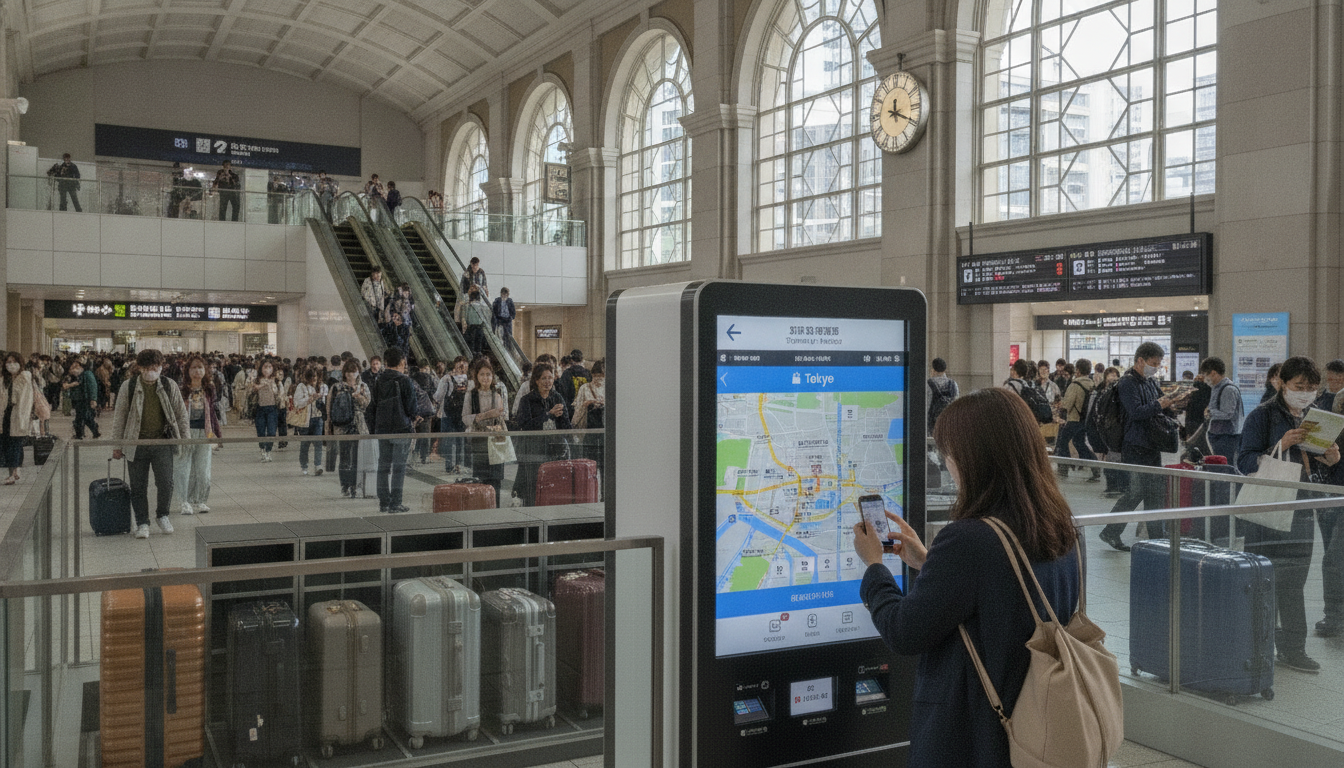
Luggage storage in Tokyo: where to leave bags at airports, stations, apps and courier counters
Comprehensive guide to luggage storage in Tokyo: airports, station lockers, courier services, apps and Shinkansen rules to help you travel hands-free.
Tokyo’s options for luggage storage have expanded to meet the needs of short-stay visitors and long-term travelers alike, and this guide explains how to stash suitcases safely and legally. Luggage storage in Tokyo is available at airports, major train stations, tourist hubs and via app-based networks, giving visitors straightforward choices for dropping off items while they sightsee. This article summarises the main providers, typical costs, opening hours and the practical steps you need to take to move through the city without being weighed down.
Airport luggage counters and coin lockers at Narita and Haneda
Airport baggage facilities remain the most convenient choice for many travelers arriving or departing through Tokyo’s two main airports. At Narita, staffed counters operated by airport partners typically price daily storage from around ¥500 up to about ¥1,050 depending on item size, with many counters accepting luggage for up to 30 days. Coin lockers are also installed in multiple locations across terminals, with small, medium and large sizes; expect fees to range commonly from about ¥300 to ¥600 per day and time limits of roughly one week to eight days at most locations.
Haneda offers a similar mix of staffed baggage counters and coin lockers, but with locations closer to central Tokyo and more options suited to same-day use. Temporary baggage service counters operate in all three terminals, with rates often quoted between roughly ¥400 and ¥1,100 per day and typical storage windows of 14 to 30 days on some staffed counter services. Coin lockers at Haneda differ by terminal: many provide multi-day access ranging from three to seven days, and larger-size lockers for items like skis or oversize luggage are available in select areas outside security.
Before you commit to airport storage, check hours of operation and whether the counter or locker is inside or outside security; coin lockers are generally accessible from public areas while some staffed counters are located before security checkpoints. For travelers planning same-day excursions from the airport it can be faster to use a nearby counter or locker; for multi-day storage, airports run by larger carriers may offer longer retention periods, albeit at a higher cumulative cost.
Train stations: coin lockers, service desks and courier counters
Tokyo’s train stations remain a backbone of the city’s short-term baggage network, with coin lockers found at nearly every major stop and staffed service desks available at central hubs. Lockers come in three conventional sizes—small, medium and large—with day rates typically around ¥300, ¥500 and ¥800 respectively, though local variations of ±¥100 are common. Electronic lockers at busier stations will accept IC cards such as Suica or Pasmo and usually provide multilingual on-screen instructions, which makes them fast and simple for transient storage.
At large terminals where lockers are fully booked, station service desks and dedicated courier counters offer alternative storage and handling solutions. The JR East Travel Service Center at Tokyo Station and courier companies such as Yamato and Sagawa maintain staffed counters that accept luggage for per-item storage or offer same-day porter and delivery options. Rates at these service desks are higher than lockers—often in the ¥600–¥1,000 per-item-per-day range—but they provide added flexibility, language support and the ability to retrieve items after regular locker time limits expire.
Practical station tips include photographing the locker bank and noting nearby exits to avoid getting lost, checking real-time locker availability where online services exist, and asking station staff for help if you can’t find your locker or receipt. If an item is abandoned beyond the permitted period, stations will generally clear lockers and hold items at the lost-and-found, and you can usually recover them by paying overdue charges and presenting identification.
App-based networks and citywide storage providers
App-driven luggage networks and private storage brands have scaled rapidly across Tokyo, offering on-demand drop-off points in cafés, shops and tourist facilities. Popular global and domestic services partner with local businesses to provide thousands of short-term storage locations across the city, often bookable in English through mobile apps or web portals. Typical daily rates from these platforms range from about ¥500 to ¥1,000, and many advertise insurance coverage for bookings, 24/7 customer service and free cancellation policies.
Major providers operate on different terms: some platforms work on a fixed daily price with no size or weight limits at participating hosts, while others publish separate rates for bags and suitcases. Because many locations are independent small businesses, hours of access, check-in procedures and pickup windows can vary, making advance reservation and clear communication with the host useful. App-based services are especially convenient for travelers staying in short-term rentals without a hotel front desk, or for visitors exploring areas without nearby station lockers.
Citywide courier and logistics companies also offer walk-in storage at tourist locations and convention centers; these counters can serve as a hybrid between lockers and full luggage-forwarding services. For those who favor a human touch—an attendant at a counter, multilingual assistance, or acceptance of oversized items—these options fill gaps that automated lockers and app listings may not cover.
Shinkansen luggage rules and alternatives for large suitcases
If your itinerary includes intercity travel on the Shinkansen, Tokyo luggage considerations extend to the bullet train’s size and reservation rules. For baggage with combined dimensions between 160 cm and 250 cm, many Shinkansen services require advance luggage reservations tied to a reserved seat ticket. These reservations are typically free but must be secured prior to boarding; failure to reserve in advance can result in a fine and the need to upgrade to a reserved seat if space is not available. Items with combined dimensions exceeding 250 cm are generally prohibited from carriage.
To avoid complications when moving between cities, many travelers opt for luggage-forwarding services as an alternative to carrying oversized suitcases onto the Shinkansen. Major Japanese couriers will pick up from hotels, airports or designated counters and deliver to your next accommodation or airport, often with next-day delivery windows for metropolitan routes. Forwarding eliminates the stress of securing a large-luggage reservation and frees up seat or storage space on trains during busy travel periods.
Plan ahead if you expect to travel with large items during peak travel seasons, and check the rules of the specific rail operator for the trains you intend to use, as enforcement and reservation systems have tightened in recent years. Shipping or forwarding bulky bags is usually straightforward and can save both time and the risk of denied boarding on crowded services.
Costs, opening hours and practical tips for choosing a storage method
Costs vary by storage type, location and size but a few consistent patterns can guide decisions. Coin lockers remain the cheapest short-term solution and are best for small to medium bags when you expect to pick them up within a day or two. Staffed counters and courier storage provide more flexibility for irregular hours, group items or extended retention but carry higher per-item fees that add up if you store for multiple days. App-based services balance convenience and price, and may be the most convenient option for visitors in tourist neighborhoods without easy access to station lockers.
Opening hours matter: airport and station counters often match flight and train timetables and some operate late into the night, while app-hosted shops may maintain standard retail hours and can close early. If you need after-hours access, prioritize 24/7 locker banks or services that explicitly advertise round-the-clock availability. For multi-day or long-term storage, check the operator’s maximum retention period—some lockers clear after three days, airport counters often allow longer storage, and courier firms typically offer flexible delivery and pickup schedules.
Security and insurance are further considerations. Many app-based and branded services include limited insurance coverage per booking; check the policy limits and what is or isn’t covered before leaving valuable items. When using coin lockers, keep the key or receipt secure and take a photo of the locker’s number and surrounding landmarks; if you use staffed counters, retain the claim ticket and note operating hours for timely retrieval. Finally, if you plan onward travel that involves airlines or charter services, verify any separate baggage restrictions or airport-specific requirements well before departure.
Where to leave luggage depending on your itinerary and preferences
Your ideal storage choice depends on how long you plan to be away from your belongings, how large the items are, and whether you need multilingual assistance. For same-day sightseeing after early-morning arrival, airport lockers or quick app bookings near tourist spots are the fastest solutions. If you will be changing cities by rail, either reserve Shinkansen luggage space where required or forward your bags through a courier to the next hotel or airport address.
For vacation rentals and neighborhoods with fewer station lockers, app-based services or courier drop-off counters near major attractions are practical and often bookable in advance. If you require long-term storage during an extended trip, airport-based storage counters associated with large carriers can retain items for multiple weeks, although costs can grow—so compare forwarding prices to airport storage fees to determine which makes more sense for your route.
Group travelers should consider consolidating items into a single large locker or a courier pick-up to save per-item fees, while those carrying fragile or valuable gear may prefer staffed counters or insured app services that accept responsibility for breakages or loss. Plan retrieval times to avoid late returns when counters might be closed; 24/7 lockers eliminate that constraint but carry the usual physical size limits.
Common questions and final advice for a smoother trip
How much will you pay? Expect typical ranges between roughly ¥300 and ¥1,000 per item per day depending on whether you use a public locker, a staffed counter, an app-based host, or a courier desk. Coin lockers are frequently the lowest-cost choice for short stays, while staffed and courier options cost more but give better service and larger capacity. For longer retention periods, airports and certain logistics providers offer extended storage for an added fee.
What works best for families and large groups? Consider courier forwarding or centralized storage at a staffed desk where attendants can manage multiple items and provide receipts for each package. If you must split items across lockers, label everything clearly and photograph contents for easier recovery in case of discrepancies.
Finally, plan mitigation for unexpected scenarios: take photos of receipts and locker numbers, keep travel insurance documents handy, and allow buffer time when returning to collect luggage before a flight or train. Booking in advance via apps avoids last-minute searching for available lockers in peak areas; and if you expect to use the Shinkansen with larger items, either reserve the baggage space in advance or forward your bags to the destination to bypass the rail-size rules.
Travelling light in Tokyo is much easier now than it used to be thanks to the range of luggage storage services across airports, stations, tourist neighborhoods and app networks, so choose the option that best matches your schedule and luggage size to make the most of your visit.

