
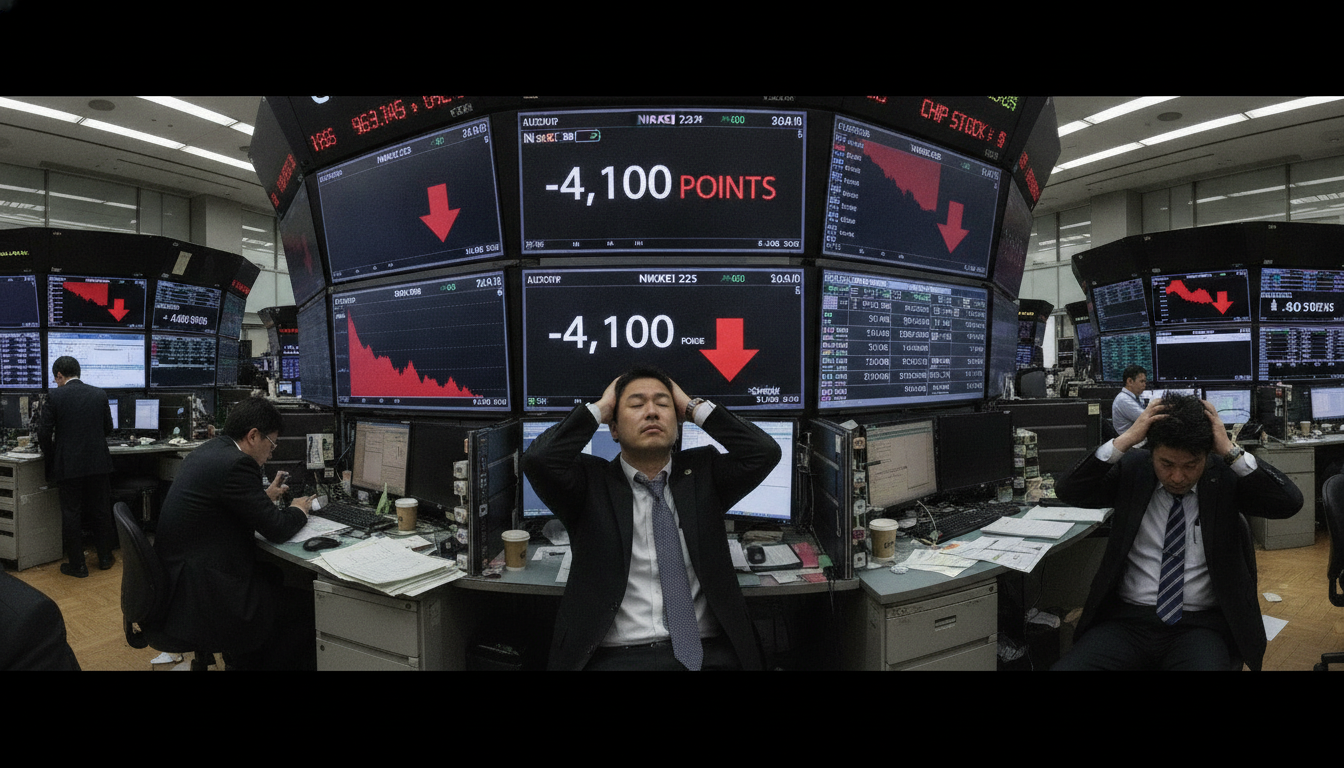
Nikkei average plunges as Kioxia-led selloff erases 4,100 points
Nikkei average plunged after Kioxia’s 16% slide and a broad AI-proxy selloff, erasing 4,100 points as investors unwound leveraged tech positions on July 17, 2026.
TOKYO — The Nikkei average tumbled sharply on July 17, 2026, as a steep decline in memory-chip maker Kioxia Holdings set off a wider selloff across technology and AI-proxy stocks. Investors moved to reduce leveraged positions they had built during the AI-led rally, triggering heavy losses in semiconductor and related sectors. The sudden drop wiped out roughly 4,100 intraday points, underscoring how concentrated gains in a handful of names left the market vulnerable to rapid reversals.
Nikkei average plunges 4,100 points intraday
The Nikkei average lost ground swiftly after early trade, with momentum accelerating as selling spread from a handful of large-cap tech names. Market participants said the breadth of the selloff was notable given the outsized gains those stocks had delivered in recent months. The scale of the intraday swing highlighted the sensitivity of Japan’s equity benchmark to sentiment shifts in the technology sector.
Trading desks reported higher-than-normal margin calls and forced selling in the wake of sharp price falls, which amplified the downward move. The speed of the decline also prompted some participants to pull back from program trading strategies that had been supportive during the rally.
Kioxia’s 16% slide triggers semiconductor rout
Kioxia Holdings, a major memory-chip producer, fell about 16% as investors reassessed demand expectations for memory products tied to AI and data-center deployment. The company’s slide was the most visible example of profit-taking in a sector that has been among the strongest performers this year. Losses in Kioxia rippled through other memory and semiconductor names, many of which traded well off their recent highs.
Analysts pointed to a combination of stretched valuations and the prospect of slower near-term capital expenditure across chip value chains as contributing factors. While fundamentals remain intact for many firms over the medium term, the correction exposed the vulnerability of highly concentrated gains to shifts in investor positioning.
AI-proxy stocks bear the brunt of the rout
Stocks perceived as direct beneficiaries of the AI boom came under particular pressure, reflecting a reassessment of how quickly new AI-related revenue streams will materialize. Companies that had been used as proxy plays for AI investments saw outsized outflows as funds rebalanced and risk managers tightened exposures. Market commentary highlighted that headline AI momentum had attracted speculative flows that were now reversing as traders locked in profits.
This rotation left other sectors less affected, though the psychological impact of a tech-led plunge weighed on overall market sentiment. The volatility underscored the distinction between durable structural winners and names whose valuations relied heavily on near-term investor enthusiasm.
Investors unwind leveraged positions and margin risk
Market participants said a central driver of the sharp move was the unwinding of leverage accumulated during the rally, including futures positions and margin-financed stock holdings. As prices fell, margin calls forced some investors to liquidate positions, creating a feedback loop that intensified selling pressure. Brokerages adjusted risk limits, and some algorithmic strategies throttled activity to avoid exacerbating losses.
The episode served as a reminder of liquidity dynamics in a market where concentrated gains can be quickly reversed under stress. Regulators and exchanges typically monitor such abrupt volatility, and participants said they were watchful for any systemic spillovers.
Regional markets and currency reactions
The selloff in Tokyo was mirrored across other Asian equity markets, where benchmarks declined as investors reassessed growth prospects tied to AI and chip demand. Equity declines were broadly correlated with shifts in risk appetite and cross-border flows that had favored technology-focused names. Currency markets saw some reaction as the yen briefly strengthened amid risk-off sentiment, reflecting safe-haven flows into domestic assets.
Overseas demand dynamics for semiconductors and the outlook for global data-center investment were cited by traders as cross-border factors that influenced sentiment. Portfolio managers noted that global positioning in AI exposures contributed to synchronized moves across markets.
Analysts weigh outlook for Japan’s tech recovery
Analysts offered mixed perspectives on the path forward, with some emphasizing the long-term secular case for AI-related investment while cautioning about near-term volatility. Several research notes stressed that demand for memory and advanced chips will likely remain robust over the medium term, but that timing of capital spending and inventory cycles could produce further fluctuations. Others highlighted that the correction may create selective buying opportunities in fundamentally strong companies trading at more attractive valuations.
Market strategists said monitoring order flows, inventory data, and corporate guidance in the coming weeks will be critical to assessing the durability of any rebound. They also recommended that investors reassess leverage and concentration risks after the abrupt market move.
The immediate market reaction on July 17, 2026, underscored how narrow leadership and speculative positioning can amplify downside risk, even as the broader economic backdrop remains mixed. Investors and policymakers will be watching subsequent earnings updates and capital-spending signals for clearer direction on the tech and semiconductor recovery.

