
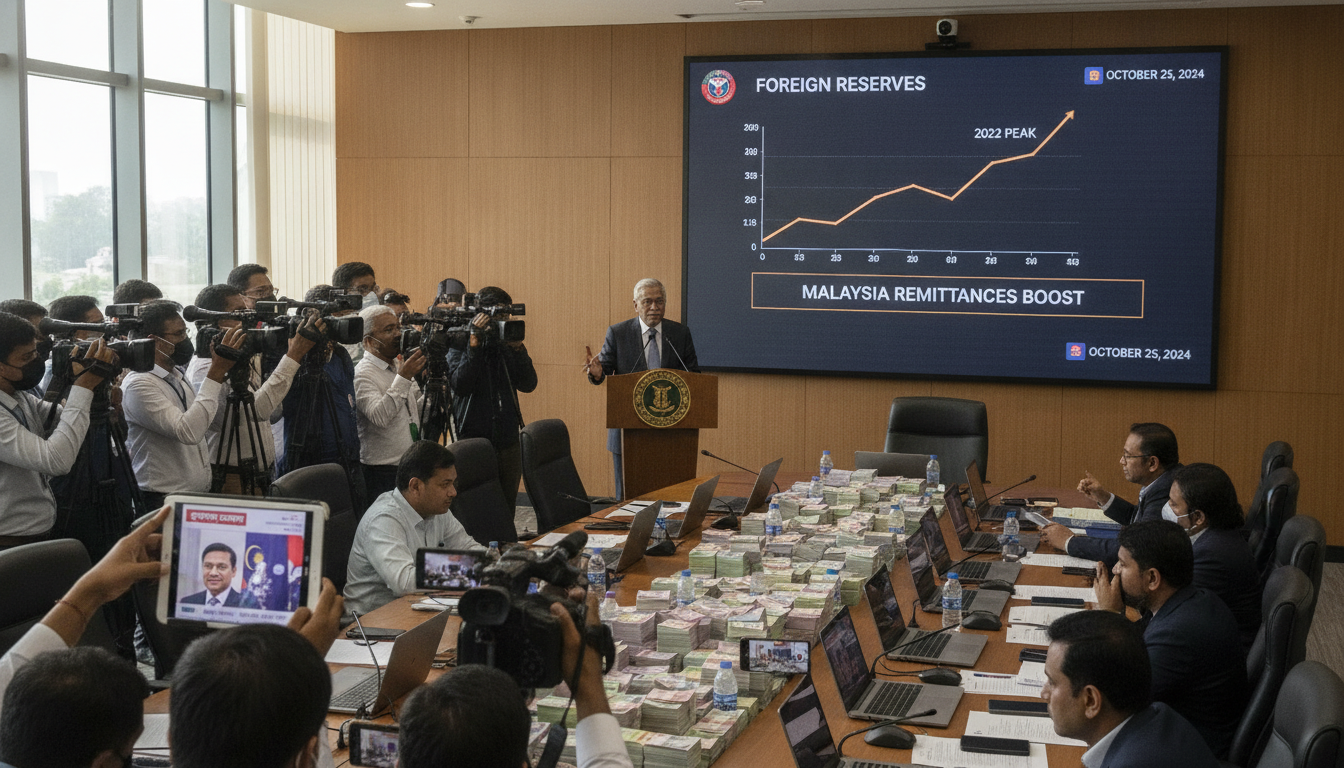
Bangladesh foreign exchange reserves climb to 2022 levels as remittances pick up
Bangladesh foreign exchange reserves have risen back to levels last seen in 2022 as stronger remittance inflows from Saudi Arabia and other Gulf states, together with the reopening of Malaysia to Bangladeshi workers, lift external finances. Officials say the rebound marks a turning point after years of pressure on the country’s external buffer. The recovery has come amid a steady uptick in migrant worker payments and broader improvements in the balance of payments.
Reserves Return to 2022 Levels
The central bank reports that Bangladesh’s foreign exchange reserves have recovered to a level comparable with mid-2022, reversing a multi-year decline that strained the country’s financial buffers. The improvement follows a period of tighter external conditions that prompted policymakers to prioritize reserve rebuilding and external stability.
Analysts attribute the reversal to a combination of renewed remittance flows and a gradual narrowing of the current account deficit. The central bank’s ability to manage liquidity and smooth volatility has also supported confidence in the exchange rate and the wider financial system.
Remittances from Saudi Arabia Drive Inflows
Remittances from Saudi Arabia have surged in recent months, reflecting stronger employment and wage payments to Bangladeshi migrants in the kingdom. Government officials and banking sources say this uptick has been a major contributor to the increase in foreign currency receipts.
Workers’ payments through formal banking channels have risen, reducing reliance on informal corridors and helping to bring more dollars into the banking system. Increased formalization of remittances is likely to provide a steadier flow of foreign exchange going forward.
Malaysia Reopening Expected to Boost Flows
The reopening of Malaysia’s labor market to Bangladeshi workers is expected to add further momentum to remittance inflows as recruitment resumes and new contracts are signed. Observers anticipate that the return of low- and medium-skilled labor opportunities will lift outward employment and remittance volumes over the coming quarters.
Recruitment firms and labor ministry officials have signalled a steady restart of deployments, which should translate into higher migrant earnings and cross-border transfers. For Bangladesh, the Malaysia channel represents both immediate earnings and longer-term ties that support sustained remittance growth.
External Balances and Policy Implications
A stronger remittance outlook has eased short-term pressure on the country’s current account, providing breathing room for policymakers managing import bills and external debt obligations. Improved foreign exchange reserves reduce the need for emergency measures and create scope for more measured macroeconomic policy.
Authorities are expected to continue monitoring the composition of inflows and maintain measures to encourage formal remittance channels. Financial-sector reforms that facilitate faster, lower-cost transfers could amplify gains and help stabilize external metrics over a longer horizon.
Risks from Global Headwinds and Domestic Demand
Despite the recovery, risks remain from global economic uncertainty, volatile commodity prices, and shifts in labor markets across the Gulf and Southeast Asia. A slowdown in host economies or renewed disruptions to migration patterns could dampen remittance growth and reverse some of the recent gains.
Domestically, rising import demand tied to recovery and investment could strain reserves if not matched by external financing or additional remittance inflows. Policymakers will need to balance support for growth with prudent external management to avoid renewed pressures on the currency and reserves.
Market and Business Reactions
Banks and exporters have welcomed the strengthening of reserves, noting that improved foreign currency availability can ease payment bottlenecks and support trade finance. Market participants say clearer reserve dynamics may reduce volatility in the foreign exchange market and lower hedging costs for businesses.
The private sector is watching recruitment flows to Malaysia and continued wage trends in the Gulf closely, as these will determine the pace of remittance-led recovery. Financial institutions are also preparing for potentially higher volumes of inward transfers as recruitment and payrolls normalize.
The return of Bangladesh foreign exchange reserves to 2022 levels signals a notable recovery in external finances, driven by remittances from Saudi Arabia and expectations of further inflows from Malaysia’s reopening. Continued attention to formal transfer channels, prudent import management, and close monitoring of labor market developments abroad will be central to sustaining the gains and strengthening the country’s external resilience.

