
Trump election interference claims put spotlight on voter data and calls for rule changes
President Trump on July 16 asserted that foreign interference and domestic fraud threaten U.S. elections, linking his allegations to calls for congressional reform ahead of the November midterms.
White House speech frames election system as at risk
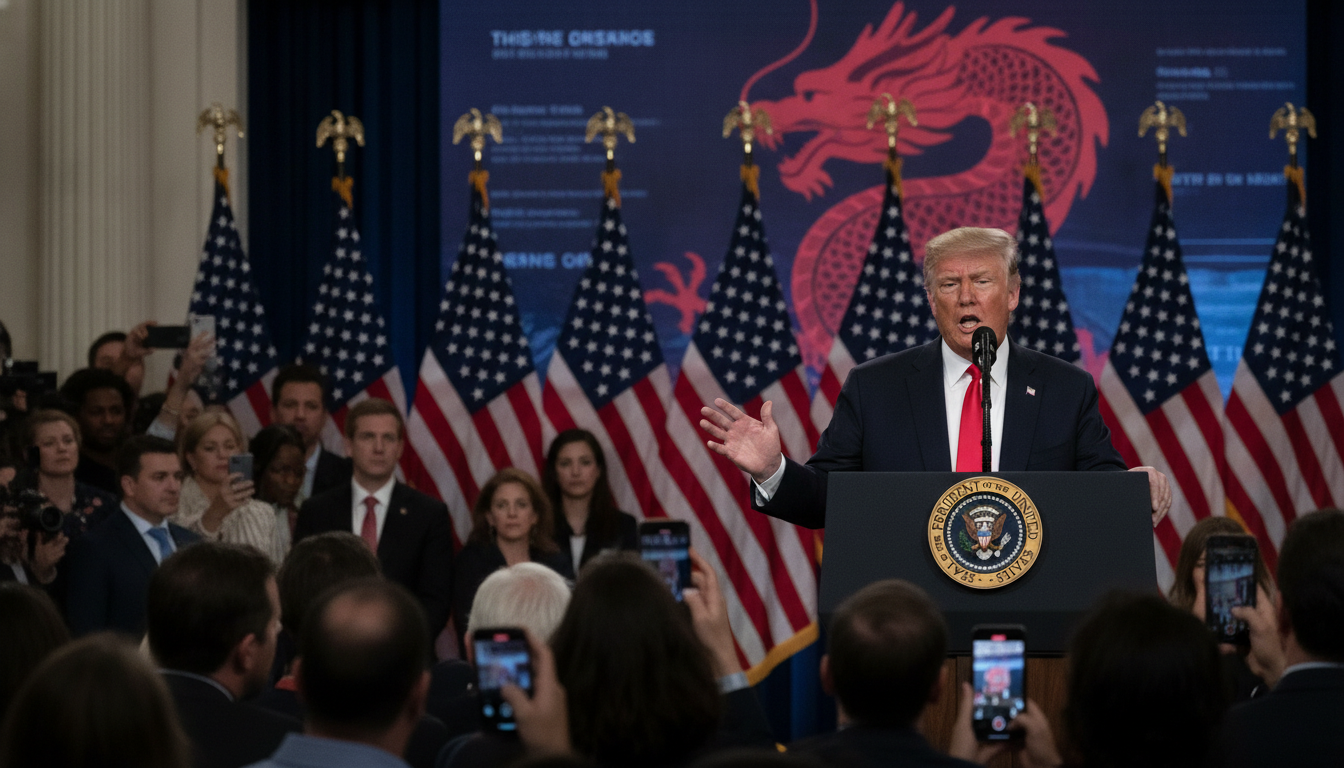
President Trump used a White House address on July 16 to argue that the integrity of U.S. elections is under threat from foreign actors and internal malfeasance. He tied those assertions to long-standing allegations about the 2020 presidential contest and urged lawmakers to alter voting rules before the November midterm elections. The Trump election interference claims dominated the speech and set the agenda for his requests to Congress and federal law enforcement.
The president described a broad pattern of interference and irregularities, presenting them as justification for legislative action and further probes. He framed the matter as both a national security concern and a political imperative, insisting that changes are needed to restore public confidence.
Allegation of Chinese access to 220 million voter records
In his remarks, Trump alleged that China had obtained roughly 220 million U.S. voter records following the 2020 contest, including names, addresses, phone numbers and party affiliations. He suggested that such a breach would give foreign powers the ability to influence or manipulate aspects of American elections and accused intelligence officials of failing to disclose the threat. The president linked these claims to his broader narrative that the 2020 result reflected significant wrongdoing.
Trump did not, however, present what he described as concrete forensic proof during the address. Details such as the source of the claim, the timing of any alleged exfiltration, and how the data were used — if at all — were not provided in his speech.
U.S. intelligence community finds no evidence of vote manipulation
Past assessments by U.S. intelligence agencies have reached conclusions that diverge from the president’s public assertions. A widely cited intelligence evaluation completed in March 2021 determined that foreign actors explored options to influence the 2020 outcome but did not carry out operations intended to change vote totals. That assessment also reported no evidence that any foreign power succeeded in altering voter registration rolls, ballots cast, tabulation processes, or the public reporting of results.
The contrast between the administration’s public claims and prior intelligence findings raises questions about how new information, if any, would reconcile with earlier, cross-agency conclusions. Officials in the intelligence community have historically stressed the importance of sharing substantiated evidence before making sweeping public allegations.
Michigan registration probe and request for FBI review
Trump’s speech also focused on specific domestic cases, calling for renewed FBI scrutiny of voter registration applications in Michigan that he said were suspicious in 2020. He cited a Department of Homeland Security review indicating that roughly 278,000 non-citizens were listed in federal voter registration data, presenting that figure as evidence of systemic problems in voter rolls.
Federal authorities have not publicly confirmed that number in the context of prosecutions, and the administration did not detail how many of those registrations—if any—resulted in unlawful voting. The president asked the FBI to reopen inquiries and to consider criminal charges where warranted, a step that would require the bureau to identify new evidence or previously uninvestigated leads.
Claims about electronic voting systems and lack of public evidence
During the address Trump warned that foreign actors could gain illicit access to electronic voting machinery and tabulation systems. He argued that the possibility of such intrusions warranted urgent legislative remedies and enhanced oversight. Cybersecurity professionals and election officials, however, say claims of systemwide penetration require rigorous technical validation and cataloguing of forensic findings.
To date, public statements accompanying the speech did not include machine-level cyberforensics or chain-of-custody evidence that would demonstrate successful tampering with voting equipment. Specialists emphasize that vulnerabilities and attempted intrusions are distinct from verified manipulations of vote counts, and each requires different investigative standards.
Political fallout and implications for the November midterms
The president’s renewed focus on election integrity is likely to galvanize both supporters who view his statements as a call for stricter safeguards and critics who see the remarks as undermining confidence in the electoral process. Republican lawmakers sympathetic to the president’s agenda may press for expedited changes to federal election law, while Democrats are expected to demand documented proof before supporting any statutory revisions.
Legal experts warn that altering election rules on a compressed timeline could provoke litigation and state-federal conflicts, since many aspects of voting administration fall under state authority. The public debate over the Trump election interference claims could also influence turnout and campaign messaging as candidates for Congress and state offices prepare for November.
As Congress and law enforcement consider the president’s requests, the coming weeks will test whether officials can produce verifiable evidence to substantiate new allegations. The trajectory of investigations and any proposed legislative changes will shape the broader conversation about election security and voter confidence ahead of the midterms.

