
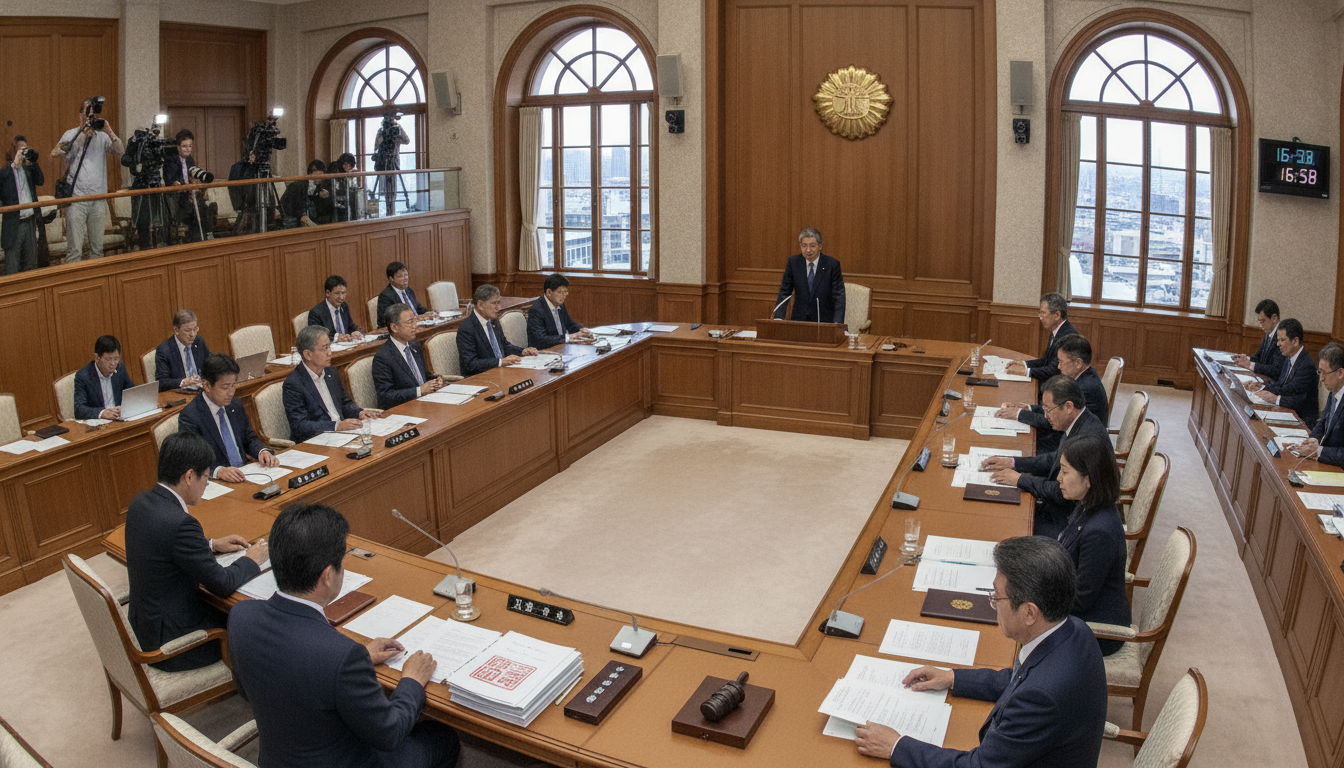
Upper House panel approves Imperial Household Law amendment, full chamber vote set for July 17
House panel approved Imperial Household Law amendment July 16, allowing female royals to keep status and enabling male-line adoptions; full vote set July 17.
Japan’s Upper House special committee on July 16, 2026, approved the Imperial Household Law amendment by a majority, moving the measure one step closer to enactment. The amendment, aimed at securing the number of imperial family members, would allow female members to retain their imperial status after marriage and permit the adoption of male-line males from former princely houses. Lawmakers said the bill is expected to be taken up by the full House of Councillors on July 17, where it is forecast to pass.
Special committee vote and party positions
The vote in the special committee reflected a split across the political spectrum, with the ruling coalition and several opposition parties supporting the measure. The Liberal Democratic Party, Nippon Ishin no Kai, Komeito, the Democratic Party for the People and Sanseitō voted in favor, while the Constitutional Democratic Party, the Japanese Communist Party and Reiwa Shinsengumi opposed the bill. Lawmakers who backed the amendment argued it is a pragmatic response to a shrinking pool of imperial family members and an urgent step to preserve ceremonial and public duties.
In debate prior to the vote, some opposition members who ultimately supported the bill emphasized the need to balance tradition with practical governance, while dissenting parties criticized the scope and timing of the reform. The committee session followed deliberations that began July 15 and came after the bill’s expedited approval in the House of Representatives on July 10, 2026. Supporters hailed the committee decision as a necessary advance toward legal clarity for the imperial household’s future.
Key provisions added to the Imperial Household Law amendment
The amendment incorporates two central proposals put forward by a government expert panel in 2021: permitting female imperial family members to retain their imperial status after marriage, and allowing male-line members of former princely houses to be adopted into the imperial family. Crucially, the text clarifies that males born to an adopted son would be eligible for imperial succession. That provision directly addresses concerns about the long-term viability of the male-line succession system under current rules.
Legislators said the changes are designed to increase the pool of individuals able to perform imperial duties and to provide a clear legal mechanism for adoption as a path to replenish male-line heirs. The law does not itself alter the current male-only succession order, but it enacts measures that could indirectly affect the number and status of potential successors by widening the membership of the imperial household.
Contentions over succession rights and parliamentary consensus
A central point of contention throughout committee debate was whether the amendment crosses the bounds of earlier parliamentary consensus on succession rules. Negotiators had, in earlier discussions, agreed not to reopen the fundamental question of how imperial succession is determined, focusing instead on measures to maintain the size of the imperial household. Critics, including leaders of the Constitutional Democratic Party, argued the adoption clause and succession implications exceed that understanding and amount to a substantive change without broad legislative agreement.
The Constitutional Democratic Party proposed a revision to remove the adoption provision, but that amendment was voted down in committee. In response to concerns about leaving the succession question unresolved, the Diet adopted a supplementary resolution to continue study of “the manner of imperial succession,” signaling that further deliberations on succession law will proceed even if the current amendment becomes law.
Political calculation and parliamentary timetable
Passage in the special committee sets a tight timeline: the bill is expected to be debated and passed by the full House of Councillors on July 17, 2026, after which it will proceed to promulgation and implementation steps set by the government. Proponents in the ruling coalition framed the rapid schedule as necessary to prevent a further decline in active imperial household members and to provide legal certainty ahead of forthcoming events requiring imperial participation.
Opposition parties that voted against the measure criticized the process as rushed and argued for more comprehensive public discussion. Some opposition members who supported the bill said they did so on the basis of securing immediate institutional stability while reserving the right to press for broader reform in the future. Political analysts said the vote highlights a pragmatic split within opposition ranks between parties prioritizing short-term continuity and those demanding deeper structural debate.
Practical implications for the imperial household
If enacted, the amendment would produce immediate legal changes for female imperial members and create a defined pathway for adoptions from former princely households to augment imperial ranks. The clarification that descendants of adopted sons may hold succession eligibility could, over time, increase the number of men eligible under the existing male-line succession framework. Officials and palace observers caution that adoptions, if used, would involve complex ceremonial and legal arrangements and would be sensitive to public sentiment.
Beyond the legal mechanics, the move is likely to sustain public and political debate about the shape of the imperial institution and the broader question of whether Japan should eventually consider altering the male-only succession rule itself. The supplementary resolution to continue examining succession methods reflects that lawmakers expect the legal and societal conversation to continue long after the immediate legislative step is complete.
The committee approval marks a decisive moment in a years‑long debate over the future of the imperial household, even as questions remain about how adoption will be applied and how succession might be addressed in subsequent deliberations.

