
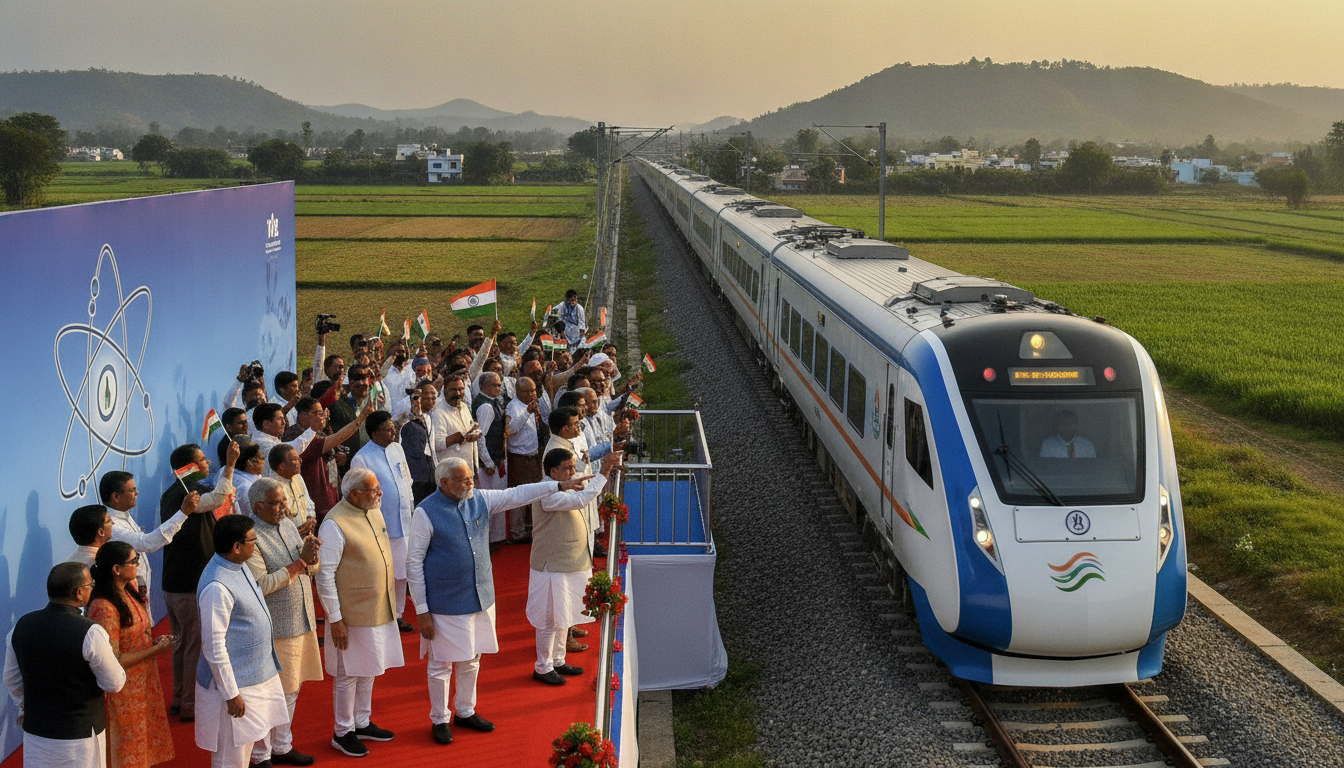
India launches first hydrogen-powered train as Modi flags off Namo Green Rail
India debuts its first hydrogen-powered train, Namo Green Rail, on July 17, 2026 — a domestically made step toward cleaner rail mobility and energy security.
India’s first hydrogen-powered train, named Namo Green Rail, was flagged off by Prime Minister Narendra Modi in Jind, Haryana, on July 17, 2026, marking a landmark moment in the country’s push for cleaner rail mobility. The launch underscores New Delhi’s emphasis on domestically made technologies to advance climate goals and strengthen energy security as the nation seeks alternatives to fossil fuels.
Flagging off in Jind
The inauguration took place at a ceremony in Jind in the northern state of Haryana, where government officials and transport authorities attended the event. Prime Minister Modi presided over the departure, drawing attention to the train as a symbol of India’s transition toward low-emission transport options.
The train’s rollout is being positioned as a pilot phase aimed at demonstrating feasibility on regional routes before broader deployment. Officials framed the initiative as consistent with broader national plans to decarbonize heavy transport and reduce dependence on imported fuels.
Technology and fuel approach
The hydrogen-powered train operates using hydrogen as an energy carrier, producing electricity through fuel cells that emit water vapor instead of combustion exhaust. This propulsion method is being promoted as a complement to electrification where overhead lines are costly or technically challenging to install.
Authorities highlighted the importance of pairing hydrogen traction with low-carbon hydrogen production to secure genuine emission reductions. The government said that aligning hydrogen supply with renewable electricity will be critical to maximizing the environmental benefits of hydrogen trains.
Domestic manufacturing and industry gains
Namo Green Rail was described by officials as domestically made, reflecting efforts to leverage India’s manufacturing base for new mobility technologies. Local production of vehicle components and assembly work is being used to support jobs and build industrial capacity in the green transport sector.
Planners see domestic manufacturing as a way to strengthen supply chains and reduce reliance on foreign imports for critical components. The move also aims to stimulate ancillary industries, including hydrogen storage, fuel-cell assembly, and maintenance services.
Operational plans and pilot scope
Railway authorities said the launch will be followed by test runs and limited passenger services to evaluate performance, maintenance needs, and fuel logistics. The pilot is expected to gather operational data on range, refueling cycles, and reliability under real-world conditions.
Scaling beyond pilot routes will depend on the train’s technical performance as well as the development of hydrogen refueling infrastructure along targeted corridors. Officials have indicated that integration with existing services will be gradual to ensure safety and cost-effectiveness.
Policy context and energy security
The hydrogen train comes amid a broader push by New Delhi to diversify energy sources and reduce exposure to international fuel markets. By developing domestic hydrogen capabilities, policymakers aim to build resilience against supply shocks and volatile fossil-fuel prices.
Transport ministers and energy planners have framed hydrogen as a strategic complement to battery electrification, particularly for longer-distance and heavier rail services. The government’s emphasis on domestic production also ties into industrial policy goals to create exportable expertise and equipment.
Environmental ambitions and practical challenges
Advocates say hydrogen trains can deliver local air quality benefits and lower lifecycle emissions when hydrogen is produced from renewable electricity. However, experts caution that the carbon advantage depends heavily on how hydrogen is manufactured and transported to refueling sites.
Practical hurdles include the cost of hydrogen production, the need for refueling networks, and the capital expense of converting or building suitable rolling stock. Addressing these challenges will require coordinated investment and clear regulatory frameworks to attract private and public funding.
The introduction of Namo Green Rail represents a tangible step in India’s experimentation with low-carbon rail technologies, combining a domestic manufacturing focus with efforts to reduce transport emissions. As the pilot phase proceeds, authorities will assess technical performance, infrastructure needs, and the potential for wider rollout across the national network.

