
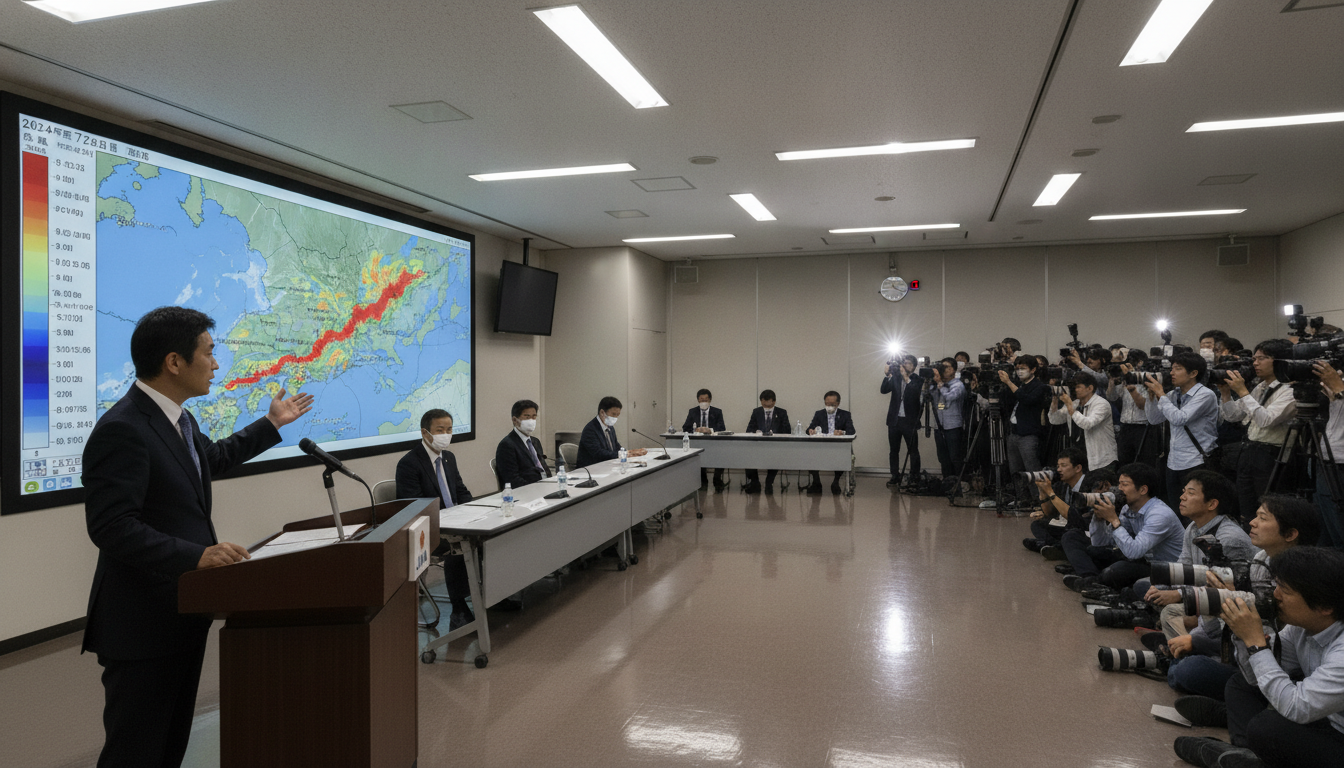
JMA Issues Pre-Linear Rainband Forecast for Southern Tochigi and Gunma
JMA issued a pre-linear rainband forecast at 9:48 p.m. JST for southern Tochigi and southern Gunma, warning that a linear rainband could bring life-threatening heavy rain within three hours.
The Japan Meteorological Agency (JMA) issued a "pre-linear rainband forecast" meteorological disaster bulletin at 9:48 p.m. JST on July 17, 2026, signaling a high probability that a linear rainband will form within three hours. The agency said the developing line of cumulonimbus clouds could produce prolonged, very heavy rainfall and sharply elevated risks of floods and landslides. Residents in the affected areas were urged to monitor local government evacuation information and to prepare to move to safer locations if instructed.
JMA Bulletin Details and Terminology
The JMA described the notice as a pre-event forecast intended to forewarn communities of imminent line-shaped heavy rainfall, commonly called a linear rainband. This phenomenon involves several intense cumulonimbus clouds aligning and propagating, which can sustain concentrated downpours over the same area for an extended period. The bulletin emphasizes the speed and intensity with which hazards such as debris flows and rapid river rises can develop under these conditions.
Areas Most Immediately at Risk
The forecast specifically names southern Tochigi Prefecture and southern Gunma Prefecture as the zones where a linear rainband is most likely to form within three hours of the bulletin. The agency cautioned that rainfall intensity could become "very heavy" in localized bands, producing conditions that threaten life and property. Officials stressed that proximity to steep slopes, riverbanks and low-lying urban drainage areas increases vulnerability to flooding and landslides.
Expected Hazards and Short-Term Timing
JMA warned that once a linear rainband establishes itself, heavy rainfall can persist and move slowly, allowing large accumulations in a short window of time. The agency highlighted the potential for sudden slope failures, inundation of rivers and urban flooding that can cut off roads or isolate communities. Given the three-hour forecast window, residents were told to assume rapid onset and to act immediately on local advisories.
Advice from JMA and Local Authorities
In its bulletin, JMA urged people near cliffs, rivers and steep slopes to check evacuation information issued by municipal authorities and to confirm the situation around them. Local governments were reminded to be ready to issue evacuation advisories or orders without delay and to use available alert channels such as sirens, broadcasts and mobile alerts. The agency emphasized that taking early protective measures can be decisive when rainfall intensity rises quickly.
Municipal Preparedness and Emergency Services
Municipalities in the affected districts were advised to place emergency response teams on standby and to coordinate shelter availability and route safety checks. Prefectural and municipal disaster management offices typically assess river levels, slope conditions and critical infrastructure vulnerabilities during such bulletins. Emergency services often prioritize rapid reconnaissance and dissemination of clear, actionable guidance to residents at highest risk.
Practical Steps Residents Should Take Now
Residents in southern Tochigi and southern Gunma near waterways or steep terrain should prepare to move to higher, safer locations and to follow local evacuation instructions without delay. Avoid walking or driving through flooded roads, do not approach swollen rivers and secure important documents and necessary supplies if time allows. People should keep mobile devices charged, stay tuned to municipal broadcasts, and help neighbors who may need assistance reaching safety.
Local monitoring of official channels remains essential as conditions can change rapidly when a linear rainband develops. The JMA and municipal governments will continue to update forecasts and advisories as the situation evolves, and residents are urged to act on official orders to reduce the risk of harm.

