
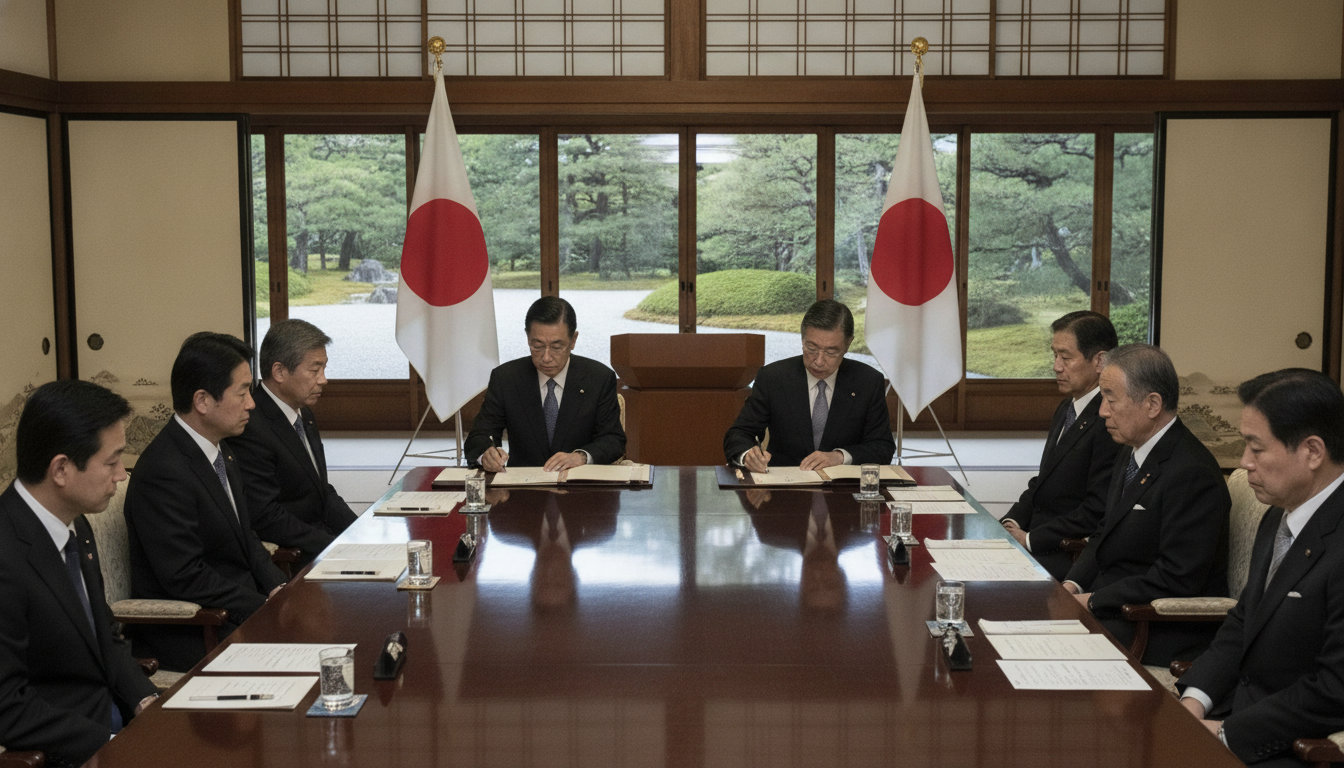
Imperial Household Law revision passed on July 17 prioritizes male-line succession
July 17 revision to Imperial Household Law favors male-line succession by adopting heirs from former branches, passed amid doubts; long-term stability remains.
The Diet on July 17 approved a revision to the Imperial Household Law that places clear emphasis on maintaining male-line succession, including provisions to bring male descendants of former imperial branches into the imperial family by adoption. The change, driven by Prime Minister Sanae Takaichi’s administration and its coalition partners, formalizes a route by which adopted sons and their male offspring can hold succession rights. The move closes a legislative chapter for the government but leaves unresolved questions about whether the measure will secure a durable line of succession.
Diet Passage and Government Strategy
The ruling coalition, led by the Liberal Democratic Party and the Japan Innovation Party, framed the revision as an urgent response to the dwindling number of imperial family members. Lawmakers pushed the bill through the Diet amid tense debate over the timing and the breadth of consultation. Government officials argued that the measure was necessary to prevent a future succession crisis and to act without further delay.
Opposition parties criticized the process as rushed and questioned whether a broad national consensus had been achieved. Some critics pointed to the absence of extended public deliberation and warned that the legislation risked deepening public division. The session calendar was extended to allow final votes, underscoring the political priority attached to the bill.
Adoption Clause and Male-Line Emphasis
A central element of the revision is a legal mechanism to adopt male-line descendants from former imperial branches—often referred to as the collateral or former princely houses—into the imperial household. The text explicitly spells out that male children born to such adopted men will be eligible in the line of succession. That provision signals a deliberate policy choice to preserve a patrilineal line.
Supporters say the adoption pathway restores options that existed historically while remaining consistent with traditional interpretations of imperial descent. Detractors counter that the change reaffirms a restrictive, male-only succession framework and forecloses alternative models such as allowing female succession. The legal clarifications aim to prevent ambiguity over status and eligibility in future generations.
Prime Minister’s Rationale and Official Comments
Prime Minister Takaichi described the revision as the product of long deliberation and called the enactment an emotionally significant achievement for her administration. She portrayed the measure as a necessary and timely response to demographic realities affecting the imperial household. Government statements emphasized the urgency of legislating before a more acute shortage of eligible imperial members emerges.
Officials stressed that the law reflects the will of the legislative majority and sought to present the outcome as a stabilization measure. At the same time, government aides acknowledged that the bill represents a policy choice that carries broader social and constitutional implications, which may require ongoing dialogue beyond the statutes themselves.
Reactions from the Imperial Household and Public Sentiment
Reports emerging during debate suggested mixed reactions among members of the imperial household and those close to it, with some expressing surprise or unease at the sudden emergence of the adoption proposal. Palace sources and commentators noted that proposals affecting imperial status carry deep symbolic weight and can leave individuals concerned about precedent and propriety. The law’s passage does not automatically alter personal statuses until adoptions or other administrative steps are proposed and accepted.
Public opinion surveys and commentary have shown a range of views, from relief that a legal pathway to continuity has been created to unease about the exclusion of female succession or the perceived hastiness of the process. Analysts say sustaining public trust will require careful, transparent application of the new rules and sensitivity to the imperial family’s private sentiments.
Legal Experts and Long-Term Challenges
Legal scholars and constitutional experts point out that while the revision clarifies succession mechanics, it does not resolve deeper structural issues such as demographic trends and broader questions about the monarchy’s role. Some observers emphasize that adoption from former branches addresses a symptom but not the underlying problem of a shrinking pool of imperial members over successive generations. Others warn that future controversies could arise over the criteria for selecting adoptive candidates and the social impacts of reviving ties with former branches.
Experts also note potential challenges in implementation, including administrative procedures, ceremonial protocols, and international perceptions of Japan’s monarchy. The law creates possibilities, but the practical steps that follow—if and when adoptions are initiated—will be decisive in determining whether the change achieves the government’s stated aim of stable succession.
As lawmakers declared the legislative process complete and the government signaled a desire to move forward, many stakeholders warned that securing durable succession will demand more than statutory fixes. The political consensus that carried the revision through the Diet may not be sufficient to settle a debate that touches on tradition, gender, and national identity.
The law’s passage marks a significant policy turn, but whether it produces the long-term certainty its backers promise depends on how the provisions are put into practice and whether Japanese society accepts the choices lawmakers have made.

