
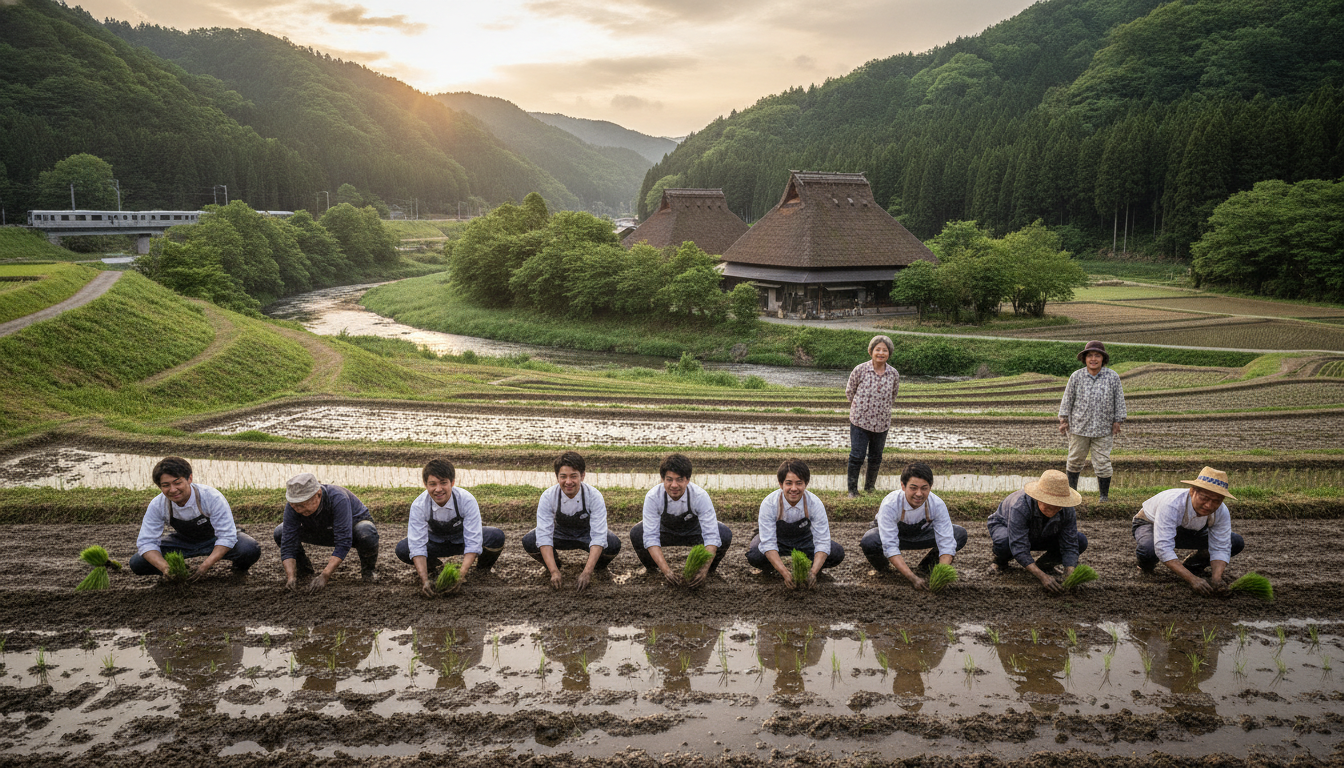
Satoyama Jujo Retreat Spurs Revival of Satoyama Traditions Through Foraging and Seasonal Cuisine
At Satoyama Jujo, chefs, farmers and urban transplants are reviving satoyama traditions through foraging, Michelin-level seasonal cuisine and renewed stewardship of rural land.
Keiko Kuwakino, head chef of the Michelin-starred Sanaburi restaurant at the Satoyama Jujo retreat, spends early mornings foraging wild vegetables in the forests of Minami-Uonuma, Niigata prefecture. Her menus are built around the changing seasons and the immediate landscape, reflecting a wider movement that links haute cuisine with local stewardship. The retreat has become a focal point for efforts to preserve the centuries-old satoyama relationship between people and managed forestland.
Chef Forages in Minami-Uonuma Forests
Keiko Kuwakino’s work exemplifies how professional kitchens are rediscovering local ecosystems for ingredients and inspiration. She selects wild greens, mushrooms and river herbs by hand, translating them into refined seasonal dishes that highlight provenance and texture. This practice ties the restaurant’s offerings directly to the surrounding satoyama, reinforcing the culinary value of regional biodiversity.
Her foraging is purposeful rather than exploitative; she sources selectively to avoid depleting fragile populations. By integrating wild foraged items into a Michelin-level tasting menu, Sanaburi creates economic incentives for preserving natural habitats around the retreat. Guests who taste these seasonal plates are offered a narrative that connects flavor with conservation.
Sanaburi at Satoyama Jujo Crafts Menus from the Land
Sanaburi’s menu structure follows the rhythm of local seasons and traditional knowledge, with each course framed by where and when ingredients are harvested. The head chef collaborates closely with local producers to ensure that the restaurant’s needs align with sustainable harvesting practices. This collaboration helps maintain a consistent supply of high-quality, locally sourced produce for the retreat’s clientele.
At Satoyama Jujo, culinary storytelling is part of the guest experience; menus are presented with explanations about origin and method. That approach strengthens the economic link between luxury hospitality and rural land use, creating a model where high-end dining supports rural livelihoods. The retreat’s emphasis on seasonal cuisine also serves as a platform for cultural transmission about satoyama customs.
Local Farmers and Suppliers Reconnect with the Land
Farmers in and around Minami-Uonuma are adapting traditional practices to meet new markets created by high-end hospitality. Small-scale growers supply vegetables, rice and artisanal products to the retreat, often reviving heirloom varieties and time-honored cultivation methods. These contracts provide reliable income streams that encourage care for terraced fields and managed woodlands.
Community markets and direct-supply arrangements reduce intermediaries and increase transparency about origin. For many producers, aligning with Satoyama Jujo means balancing production for luxury guests with obligations to local consumption. The result has been a partial revaluation of rural work, where knowledge of seasonal cycles regains economic as well as cultural importance.
Urban Transplants Bring Skills and Renew Rural Life
Increasingly, former city residents are relocating to satoyama regions to pursue agricultural, culinary and conservation projects. These urban transplants bring new skills in hospitality, marketing and product development while learning traditional techniques from older generations. The infusion of human capital has helped launch farm-to-table initiatives and small-scale agritourism tied to the retreat.
This demographic shift is not uniform; newcomers often face steep learning curves and logistical hurdles. Yet their presence has injected fresh energy into communities that previously experienced decline. By working alongside longtime residents, they help bridge contemporary market demands with local environmental knowledge.
Conservation Pressures and Economic Risks in Satoyama Areas
Despite renewed interest, satoyama landscapes face persistent threats from aging populations, shrinking labor pools and climate variability. Maintaining managed woodlands, terraced rice paddies and riparian systems requires regular human intervention, and fewer people remain to carry out those tasks. Changes in rainfall patterns and temperature also affect the growth cycles of wild plants relied on by chefs like Kuwakino.
The luxury-market model offers some mitigation but creates dependency on tourism and high-end consumption. If visitor numbers fall or economic conditions change, the fragile web of supply chains and stewardship practices could unravel. Sustainable conservation strategies must therefore combine economic incentives with long-term ecological planning.
Education and Cultural Transmission at the Retreat
Satoyama Jujo has positioned itself as a site of learning as well as hospitality, hosting workshops, foraging tours and cooking demonstrations. These programs aim to pass practical knowledge about plant identification, seasonal harvesting and land management to guests and aspiring cooks. Such educational offerings amplify the retreat’s role in preserving intangible cultural heritage linked to satoyama landscapes.
By documenting practices and encouraging hands-on participation, the retreat helps create new custodians of local ecosystems. Training programs also create pathways for younger residents to enter food and conservation careers without leaving the region. This transfer of knowledge is essential to keep adaptive management practices alive across generations.
The resurgence of satoyama practices around Satoyama Jujo illustrates a broader rethinking of Japan’s rural future, where culinary prestige, local economies and environmental stewardship converge. As chefs, farmers and newcomers align around seasonal cycles and shared responsibility for the land, the satoyama landscape gains renewed purpose and attention.

