
Where to Buy Cheap Yukata in Tokyo: A Practical Summer Shopping Guide
Find cheap yukata in Tokyo this summer — where to shop, typical prices, top thrift and flea markets, rentals, and local tips for wearing them at festivals.
Tokyo’s summer ushers in festivals, fireworks and a surge in lightweight traditional dress, and for anyone hunting cheap yukata in Tokyo there are reliable options across the city. From supermarket displays to specialist secondhand shops and weekend flea markets, affordable yukata sets — often including an obi — are widely available for visitors and residents alike. This guide maps the practical choices, expected costs and simple tips for buying, renting and wearing yukata during the hot months.
Yukata basics and summer tradition
Yukata are unlined, casual kimonos designed for warm weather and festival use, and they remain a visible part of Tokyo’s summer culture. They are commonly worn between June and September when matsuri and hanabi events are most frequent. Simple accessories such as an obi belt and wooden geta sandals complete the outfit, and many wearers also carry small handbags or use practical pockets.
Traditionally derived from bathrobes used centuries ago, yukata have evolved into both everyday festival attire and fashion items with modern prints. Contemporary designs range from classic floral motifs to modern geometric patterns and character prints that appeal to younger shoppers. The garment’s simplicity makes it a good first step for non-Japanese buyers who want an authentic seasonal look without the cost and complexity of formal kimono.
Practical dressing conventions matter: women typically tie the obi tight at the waist with a decorative bow at the back, while men wear a narrower obi around the hips. Geta are usually worn without socks to keep feet cool, and lightweight cotton or hemp fabrics are preferred for breathability. For first-time wearers, staff at rental or specialist stores often provide quick assistance to ensure a tidy fit.
Price ranges and what to expect when shopping
When shopping for a budget yukata, expect a wide price range reflecting new versus used condition, fabric quality and whether the purchase includes an obi. At the lowest end you can find sets starting from a few hundred to a few thousand yen, typically secondhand or clearance items from the previous season. Mid-range purchases — often new, simple cotton sets — commonly fall in the low thousands of yen, while boutique or designer yukata move into the tens of thousands.
A basic strategy is to decide whether you want a full set, which includes the yukata, an obi and sometimes small accessories, or whether you will mix and match a purchased yukata with secondhand obi pieces. Buying a complete inexpensive set is convenient for festival-goers who need a ready-to-wear outfit. Those seeking higher quality cotton, unique patterns, or authentic vintage kimono should allocate a larger budget and more time for browsing.
Size and fit are also considerations. Yukata are relatively forgiving in size because they wrap across the body, but sleeve length and overall pattern placement can affect how the garment looks on different body types. Inspect seams, fabric condition and odor when buying secondhand, and ask about returns or exchanges when purchasing from chains or online stores. Simple alterations or a different obi can transform an economical yukata into a well-styled outfit.
Supermarkets, chain stores and convenient buys
Large supermarket chains are often overlooked but are reliable places to find affordable yukata as summer begins. Stores such as general merchandise supermarkets typically put out seasonal clothing lines from late May and into June, with discounted items arriving later in the summer. These displays are aimed at practical shoppers and offer new sets at accessible prices, particularly late in the season when stores clear inventory.
Chain apparel retailers sometimes release limited yukata lines, and these can sell out quickly when offered. When a major retailer does carry yukata, the pieces tend to be straightforward, contemporary and sized for convenience rather than bespoke fit. Thrift chains and nationwide resale stores also provide an unpredictable but fruitful source of bargains for those willing to sift through inventory.
For shoppers who want convenience and variety in one place, discount department stores and large discount chains frequently stock seasonal yukata and related accessories. These locations are useful for quick purchases and for travelers who need a ready outfit before an event. Keep in mind that mass-market options prioritize affordability and availability over uniqueness, so they are best for practical festival wear rather than collector-quality garments.
Specialist shops, Nakano and Harajuku secondhand finds
Tokyo’s specialist kimono and yukata stores are where buyers can find both budget and higher-end options with knowledgeable staff support. Established kimono shops typically offer new and used garments, and many can assist with dressing and basic alterations. These stores are useful for buyers who want guidance on coordinating obi, choosing the right fabric, or renting for a day.
Secondhand districts and specialist resale outlets concentrated around neighborhoods such as Nakano and Harajuku are particularly productive for bargain hunters. Basement-level stalls and compact shops can carry large selections of pre-owned yukata at very low prices, but shoppers should expect to spend time searching through racks and boxes. These venues reward patience: a well-priced find is often waiting for customers who take the time to look carefully.
Smaller family-run stores also remain an important resource, sometimes selling well-maintained secondhand pieces for a fraction of the new price. These shops may operate by appointment or on a limited schedule, so checking opening hours before visiting can save time. Many specialists will offer optional dressing assistance for a small fee, which is a useful service for first-time wearers or those preparing for festival photographs.
Flea markets, shopping streets and festival stalls
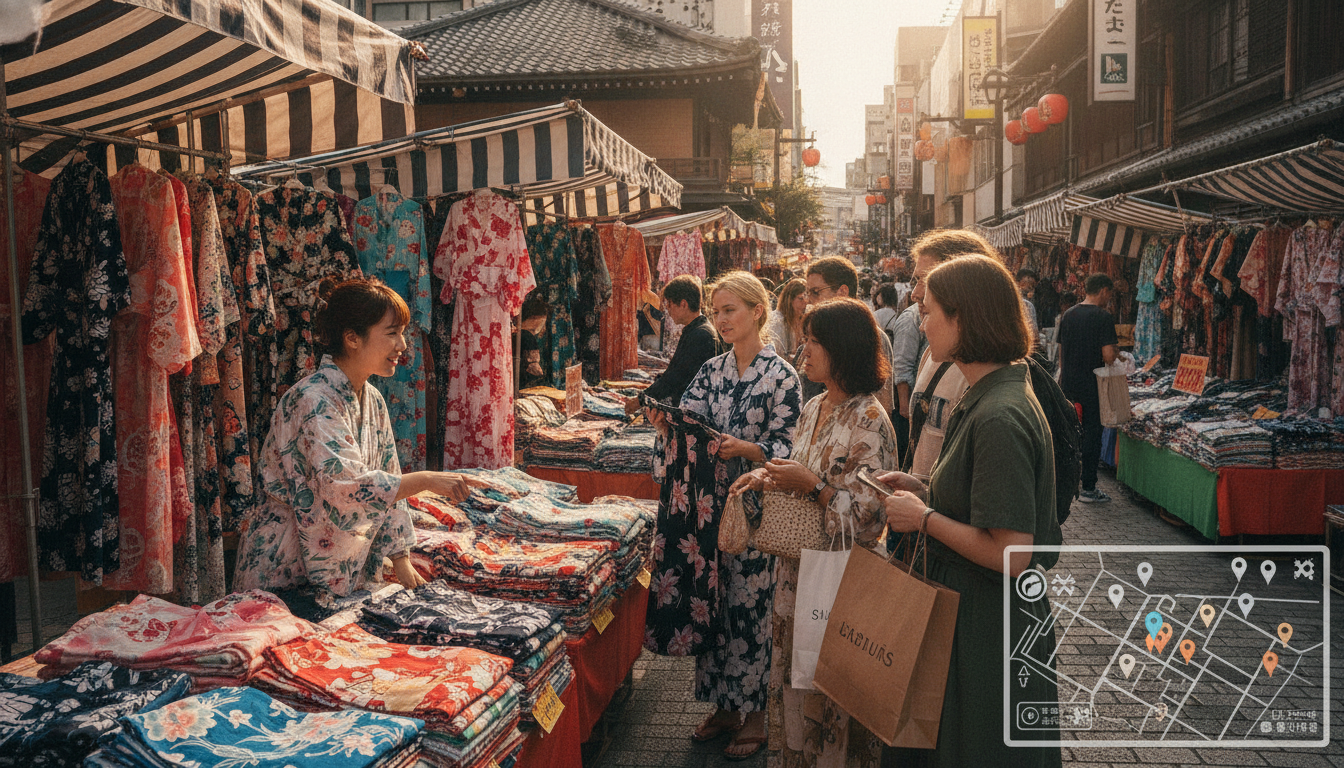
Weekend flea markets and city shopping streets provide a seasonal and atmospheric way to find cheap yukata in Tokyo, often paired with local street food and lively crowds. Markets held in parks and community spaces attract a rotating mix of sellers, and they can yield surprising bargains on both yukata and obi. Busy shōtengai and temple approaches also host stalls during festival periods where sellers display inexpensive seasonal garments.
Popular shopping streets and temple approaches are well suited for shoppers who want a combined cultural and shopping experience. These streets often feature a mix of new tourist-oriented stalls and long-standing local shops that carry seasonal clothing. Visiting these areas during festival season not only improves the chances of finding a yukata but also provides an immediate opportunity to wear it amid traditional music, food stalls and dance.
Flea markets and weekend bazaars tend to be unpredictable in stock and pricing, so flexibility is important. For better odds, target larger recurring markets and known event days when more vendors gather. When buying at a market stall, inspect the garment closely and negotiate politely; many sellers expect some bargaining, especially for secondhand pieces or bundled purchases.
Online shopping and rental options
Online retail platforms offer the broadest selection of styles, sizes and price points for anyone unable or unwilling to search in person, but careful selection is essential. E-commerce listings allow buyers to compare multiple sellers quickly and to filter by size, color and set composition, which is convenient for planning ahead. When ordering online, confirm return policies and shipping timelines, particularly if the yukata is needed for an upcoming event.
Many rental services provide day or half-day yukata packages that include dressing assistance and optional photography, which can be an economical alternative to purchasing for a single occasion. Rental shops often maintain a wide range of patterns and sizes and can handle dressing, hair styling and basic photo shoots. Rentals are a practical choice for visitors who want an authentic experience without transporting a garment back home.
Whether buying or renting online, look for clear product photos and measurements, read customer reviews, and contact the seller with any questions about fabric, included accessories or care instructions. If you choose to purchase a secondhand set online, request additional images of any stains, repairs or labeling to avoid surprises. For rentals, make a reservation in advance during peak festival months, as slots for desired dates and time windows fill quickly.
Jinbei as an alternative for hot-weather style
For those who prefer a simpler, even cooler option than yukata, jinbei offer a practical alternative suited to hot and humid conditions. Jinbei are two-piece garments typically made from cotton or hemp, consisting of a short-sleeved jacket and matching shorts or trousers. They were traditionally housewear but have become more common across genders and age groups as a comfortable, informal choice for summer events.
Jinbei are widely available in the same retail channels as yukata, including department stores, discount chains and specialty shops, and they are often priced lower than full yukata sets. Their loose fit and breathable fabrics make them an attractive option for people who want a traditional look without the time or skill required to tie an obi. For festival-goers who prioritize comfort, jinbei paired with casual sandals provide an authentic and relaxed summer aesthetic.
Whether selecting a yukata or jinbei, consider the event and personal comfort. Yukata convey a more formal festival presence and photograph distinctly, while jinbei emphasize ease of movement and coolness in intense heat. Both garments offer a way to participate in Tokyo’s seasonal culture with respect and style.
Tokyo’s summer shopping landscape contains practical routes to find cheap yukata, and a little planning will improve results. Decide upfront whether you want new or used, a complete set or a single garment, and whether you need dressing assistance or rental services. Visit supermarkets and chain stores for convenience, specialist shops and secondhand districts for variety and value, and local flea markets for seasonal bargains and atmosphere.
When inspecting secondhand yukata, check for fabric wear, repaired seams and faint stains, and ask about cleaning options before purchase. For online buys, measure carefully and verify return policies to avoid fit problems. If you plan to rent, book early and confirm what the rental includes so you are not surprised by additional fees on the day.
Respect local customs when wearing traditional dress: left side over right is the correct wrapping for living wear, and simple gestures such as walking carefully in geta will help maintain a tidy silhouette. Enjoying a yukata or jinbei at a summer festival is as much about participating in shared cultural moments as it is about the garment itself, and affordable choices across Tokyo make that experience accessible to many.
With a clear budget, a sense of where to look and a few practical tips, finding cheap yukata in Tokyo is both feasible and enjoyable. Whether you pick up a discounted set at a supermarket, unearth a gem at a secondhand shop, or rent for a day of photographs, the city offers multiple paths to join summer’s seasonal traditions.

