
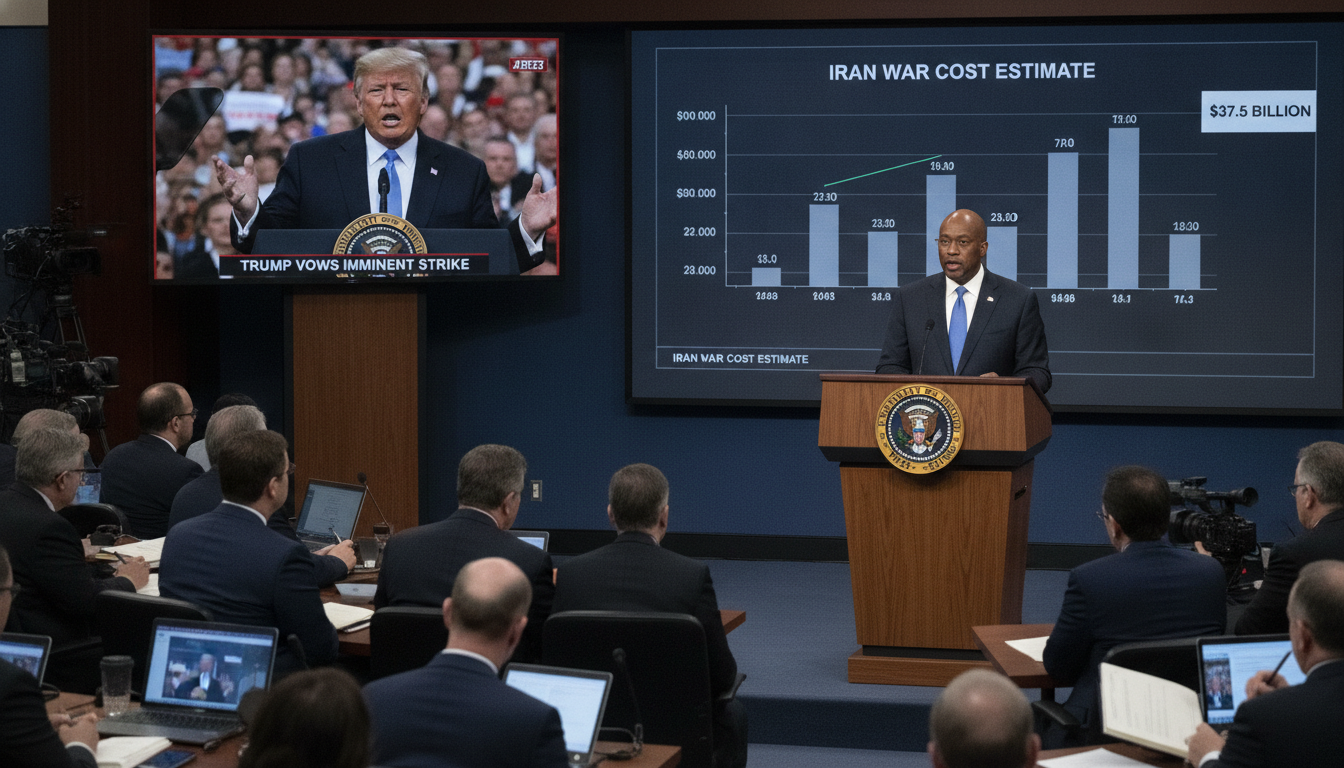
U.S. war costs against Iran top $37.5 billion as Trump warns of strikes near Natanz
Defense Secretary Hegges told senators on July 21, 2026 that U.S. war costs against Iran have reached $37.5 billion, while President Trump warned of imminent strikes on a site near Natanz.
Defense Secretary Testifies to $37.5 Billion War Cost
Defense Secretary Hegges testified before the Senate Appropriations Committee on July 21, 2026 that cumulative U.S. war costs tied to operations against Iran have risen to $37.5 billion. He told senators the figure covers projected expenses through the end of September and reflects an increase of roughly $8 billion since a May estimate.
Hegges framed the number as an operational estimate driven by sustained strikes, logistics and force posture adjustments in the region. He urged lawmakers to consider the multiyear implications for procurement and readiness as the campaign continues.
President Trump Signals Strikes on Pickaxe Mountain near Natanz
President Trump told reporters after a meeting with Lebanese President Michel Aoun that the area around Pickaxe Mountain, near the Natanz nuclear complex, “is a place where there’s movement” and suggested the United States would strike soon. He described the site as a suitable target and said the strikes would be “very intense,” remarks that heightened tensions over U.S. intentions toward Iranian nuclear infrastructure.
Trump had earlier hinted at the same location in a radio interview on July 13, describing it as “a target to be hit,” language that analysts said signals a willingness to escalate kinetic pressure on Iran’s nuclear program. The White House has not released an operational timeline, but the president’s public statements have been interpreted by allies and adversaries as a signal that military options remain on the table.
U.S. Central Command Reports 11 Consecutive Days of Strikes
U.S. Central Command announced on July 21 that strikes attributed to U.S. forces had continued for an 11th consecutive day, part of a campaign of retaliatory and preventive actions across the region. CENTCOM described the operations as targeted engagements intended to degrade capabilities that threaten U.S. personnel and interests.
Military officials have declined to disclose detailed locations or the full scope of targets, citing operational security and the fluidity of the battlefield. Observers say persistent strikes complicate diplomatic de-escalation efforts and increase the likelihood of miscalculation between the parties involved.
Congressional Review and Budget Outlook Through September
Lawmakers on the Appropriations Committee pressed Hegges for a breakdown of the $37.5 billion figure and sought assurances that the Pentagon could account for the costs of prolonged operations. Several senators emphasized the need for transparency and for assessing the impact on other defense priorities, including equipment modernization and support for allies.
Hegges told the panel the estimate was based on current operational tempo and planning assumptions through Sept. 30, 2026, and warned that additional contingencies could raise the total. The testimony sets the stage for potential supplemental funding requests and a renewed debate on the financial burden of the campaign.
Regional Reactions and Diplomatic Tensions
Officials across the Middle East reacted with concern to both the rising U.S. expenditure and the president’s public threats against Natanz-area targets. Regional governments and multilateral actors called for restraint and emphasized that further military escalation could destabilize an already fraught security environment.
European and Gulf partners have privately urged Washington to couple military measures with diplomatic outreach to reduce the risk of a wider conflict. Tehran has repeatedly vowed to respond to attacks on its facilities and has underscored that its nuclear program will be defended against foreign strikes.
Market Impact and Wider Security Risks
Financial markets reflected rising risk perceptions after the announcements, with safe-haven assets and energy prices showing increased volatility on July 21. Economists cautioned that sustained conflict in the Gulf region could further disrupt supply chains and drive up costs for global consumers.
Analysts also warned that an extended campaign would strain U.S. military logistics and readiness, particularly if forces are required to maintain high operational tempo for months. Cyber and asymmetric responses from Iran or proxy actors remain a distinct concern for regional security and global commerce.
The coming weeks will test whether public warnings and sustained strikes lead to a rapid resolution, a broader military escalation, or renewed diplomatic efforts. Continued congressional scrutiny of the $37.5 billion war cost and the administration’s strategy will shape both funding decisions and the international response.

