
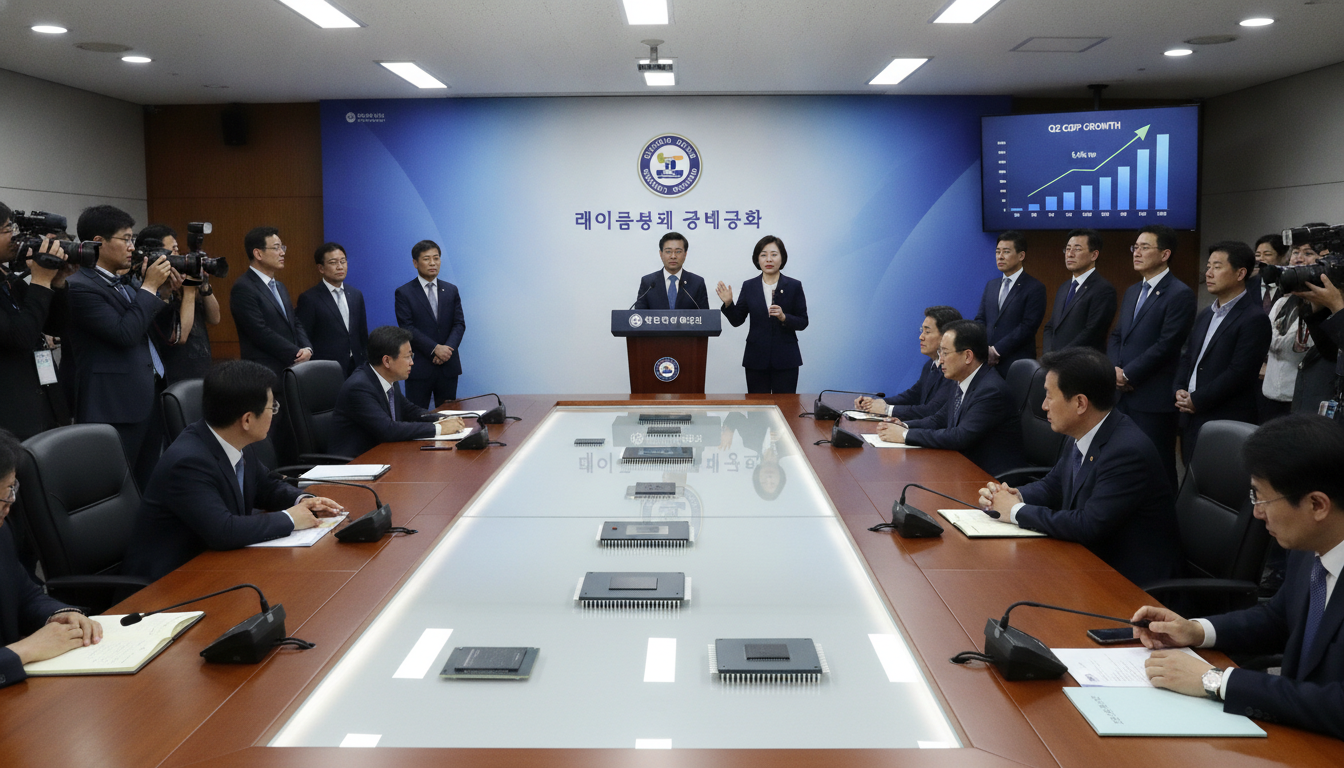
South Korea GDP Rises 0.6% in Q2 as Record Semiconductor Shipments Power Growth
South Korea GDP rose 0.6% in the second quarter as unprecedented semiconductor exports and robust IT shipments boosted output, even as domestic demand and services lagged. The tempo of chip shipments underpinned factory production and net exports, offsetting weaker household consumption. Policymakers and analysts caution that the gains are concentrated and may leave parts of the economy exposed to external shocks.
Semiconductor Exports Drive Q2 Growth
Record outbound shipments of memory and logic chips were the principal engine behind the quarter’s expansion, supporting a marked uptick in manufacturing output. Firms reported large orders and improved global demand for data-center and consumer electronics components. The concentration of growth in the semiconductor complex amplified export revenues and narrowed the drag from other trade categories.
Manufacturing Sector Recovery and IT Strength
Beyond chips, broader IT goods contributed to the rebound, with electronics assembly and system exports rising alongside semiconductor deliveries. Several major exporters signaled inventory restocking and new contracts in cloud and AI-related hardware markets. The manufacturing rebound, however, was uneven, with capital goods and some machinery segments still below pre-pandemic levels.
Household Spending and Services Remain Soft
Despite the export windfall, private consumption showed only modest improvement, and service-sector activity slowed relative to manufacturing gains. Retail spending and leisure services have not kept pace with factory output, reflecting cautious household sentiment and uneven wage growth. The gap between tradable-goods gains and domestic-focused services highlights lingering structural weaknesses in the recovery.
Regional and Global Demand Factors
Demand from major markets, particularly for data-centre equipment and smartphones, supported exporters in the quarter, while supply-chain normalisation reduced bottlenecks. South Korea’s position in global chip supply chains amplified the domestic benefit from a cyclical upswing in technology investment. Analysts warn, however, that any abrupt cooling in overseas tech investment or renewed geopolitical tensions could quickly reverse momentum.
Policy Response and Monetary Considerations
Authorities face a balancing act as strong exports alleviate growth concerns but leave inflation and employment uneven across sectors. The central bank will weigh the export-driven boost against subdued domestic spending when setting rates, while fiscal authorities may target support to lagging households and services firms. Policymakers have signalled readiness to tailor measures if growth increasingly depends on a single industry.
Corporate Investment and Labour Market Implications
Companies in the semiconductor and IT supply chain are stepping up capital expenditure plans to expand capacity and secure long-term contracts. Investment promises to raise productivity and employment in high-tech manufacturing, yet skills and regional mismatches may limit how quickly hiring cushions softer service industries. Workforce retraining and regional development measures are likely to gain prominence if the divergence between sectors endures.
Looking ahead, the durability of South Korea’s expansion will hinge on sustained global demand for semiconductors and the extent to which export gains translate into broader domestic momentum. Closing the gap between manufacturing strength and household-led activity remains central to a stable, inclusive recovery.

