
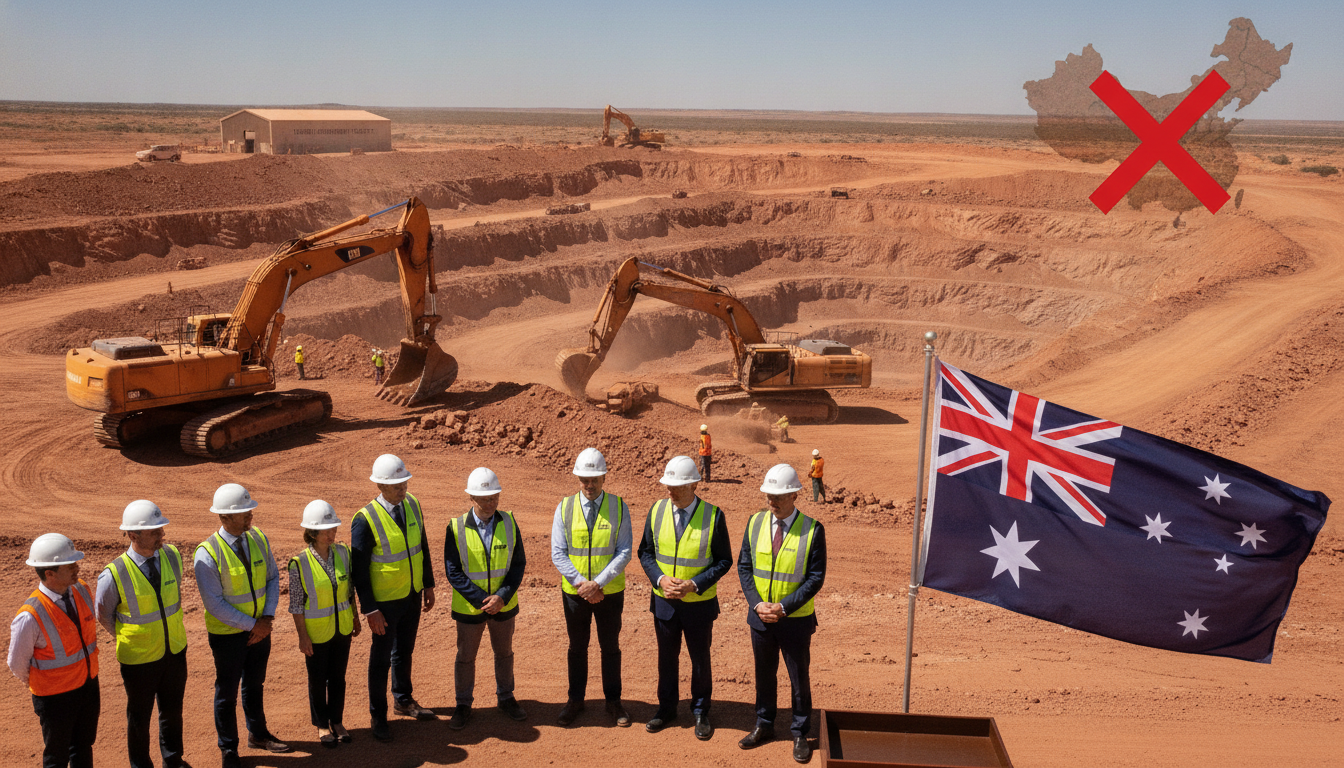
China’s Tungsten Export Controls Spur Global Rush for Supply, Australia Expands Output
China’s tungsten export curbs are pushing prices up and prompting Australia to boost mining and processing, raising concerns for semiconductors and defense.
China tightens tungsten controls
China’s recent restrictions on tungsten exports have tightened an already strained global market for the critical metal. Tungsten, essential to a range of industrial applications from machine tools to semiconductor manufacturing, has seen prices climb sharply since last year. The move has amplified worries among governments and manufacturers about reliable access to raw and processed tungsten. Industry watchers say the controls are part of a broader trend of strategic resource management by major producers.
Australian mining and processing response
In Australia, miners and processors are accelerating plans to expand tungsten output and downstream refining capacity. Companies are re-evaluating investment timetables and speeding permitting and development work to capture higher prices and reduce import dependence. Several new projects are being promoted to add both concentrate production and value-added processing, with a focus on creating stable domestic supply chains. Officials and business leaders in Australia describe the push as an urgent response to shifts in global trade and resource security.
Impact on semiconductor and defense sectors
Semiconductor manufacturers rely on tungsten for electrodes, contacts and components in chipmaking equipment, while defense applications include armor-piercing munitions and specialized alloys. Reduced availability and rising costs threaten production timelines and increase input-price volatility across both sectors. Suppliers of advanced materials are warning customers to build longer-term contracts or seek alternative suppliers to avoid disruption. Governments are also taking note, given the strategic importance of semiconductors and defense readiness to national security.
Market reaction and price dynamics
Tungsten spot and concentrate prices have reacted quickly to the export curbs, prompting inventory draws and speculative buying in several commodity hubs. Traders report a scramble for available material, pushing premiums for processed tungsten and certain alloy grades. Analysts warn that short-term price spikes could be followed by greater market volatility if new processing capacity does not come online swiftly. Market participants are watching shipping schedules and stock levels closely as indicators of near-term tightness.
Supply chain diversification and processing investment
The disruption has underscored the need for greater geographic diversification of tungsten supply and more domestic processing capability outside China. Investments are increasingly oriented toward building integrated supply chains that include ore extraction, refining and tungsten carbide production. Some manufacturers are exploring substitution where technically feasible, but alternatives often entail performance compromises or require requalification. Policy incentives and private capital are being discussed to underwrite higher-cost, lower-risk supply options in allied countries.
Policy debate and international responses
Policymakers in affected economies are grappling with how to balance market access, national security and industrial competitiveness. Proposals include targeted subsidies for processing plants, streamlined approvals for critical-mineral projects, and strategic stockpiling to smooth supply shocks. Diplomatic channels are also being used to seek greater transparency around export measures and to coordinate potential responses among trading partners. Observers caution that any policy shift should aim to strengthen long-term resilience without unduly distorting markets.
The immediate outlook for tungsten depends on how quickly non-China processing capacity can scale and whether demand from chipmakers and defense contractors eases or accelerates. If Australia and other producers can bring new refining and downstream facilities online, some supply pressure could abate in the medium term. However, the combination of export restrictions and strong industrial demand implies elevated price risks and supply-chain strain for the foreseeable future.

