
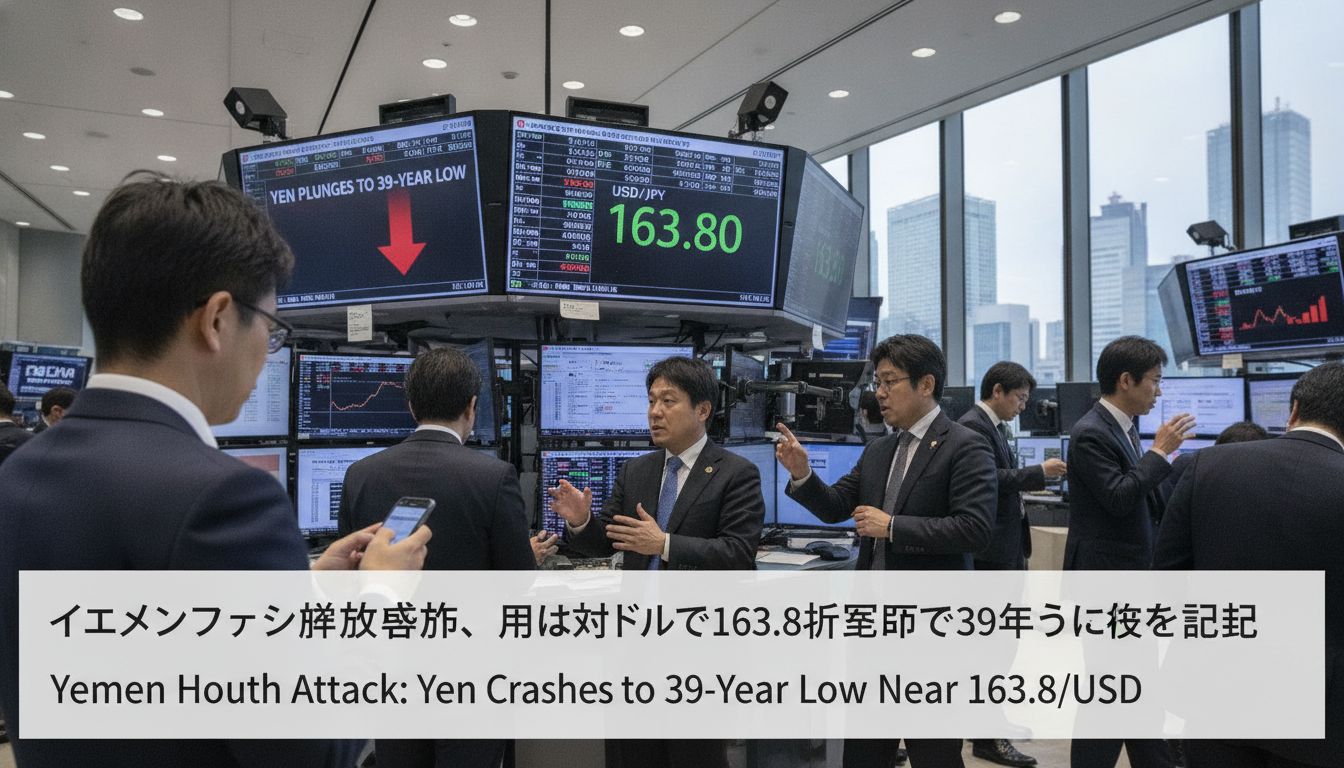
Yen Weakness Accelerates as Dollar Climbs into Mid-163s on Geopolitical and Fed Rate Concerns
Yen weakens to mid-163 per dollar on July 23 as Houthi attacks lift oil prices and traders bet on further Fed rate hikes, prompting dollar buying swiftly
The yen registered a sharp decline in New York trading on July 23, with the dollar climbing into the mid-163 per-yen range as investors sold yen amid growing concerns over Middle East tensions. The move, which brought the currency to levels not seen since December 1986, reflected a combination of rising oil futures after reported Houthi attacks and renewed market expectations that the U.S. Federal Reserve may tighten policy further. Yen weakness accelerated as traders favored dollar assets, citing both geopolitical risk and the prospect of higher U.S. interest rates.
Intraday move pushes dollar to the mid-163 range
The dollar reached the mid-163s against the yen during New York session trade, marking a significant intraday depreciation for the Japanese currency. Market participants attributed the move to an abrupt shift in risk sentiment after reports of an attack on a Saudi oil tanker by Houthi forces based in Yemen. The level represents the weakest point for the yen since December 1986 and underscores a rapid repricing by currency traders in response to new geopolitical developments.
Houthi attack drives oil futures higher
Reports that Yemen’s Houthi rebels struck a Saudi oil tanker lifted crude and refined fuel futures, tightening a market already sensitive to supply disruptions. The Houthi movement, which is widely reported to receive backing from Iran, has in recent months increased attacks on commercial shipping and regional oil infrastructure, prompting fresh concern among energy traders. The jump in oil prices added an additional pressure point for global markets, pushing investors toward liquid dollar assets amid fears of wider regional escalation.
Dollar buying intensifies as investors sell yen
Traders rapidly sold yen to buy dollars, a pattern that amplified the currency’s decline through the session. Analysts said the flows reflected both tactical responses to the oil-price shock and strategic positioning ahead of anticipated U.S. monetary policy moves. The combination of risk-related flows and carry-related dynamics—where higher-yielding dollar assets become more attractive—helped sustain demand for the greenback into the close of New York trading.
Fed policy outlook compounds pressure on the yen
Market expectations that the U.S. Federal Reserve may maintain or raise rates to contain inflation added another layer of upward pressure on the dollar. Investors have been increasingly pricing the possibility of further Fed tightening, which tends to support the currency by widening yield differentials with lower-rate peers. That outlook runs counter to Japan’s extended period of very loose monetary policy, widening the interest-rate gap and reinforcing the trend of yen selling.
Potential impact on Japan’s economy and markets
A weaker yen raises immediate concerns for Japan’s import bill, particularly for energy and fuel purchases priced in dollars, which could add to domestic inflationary pressures. Exporters typically benefit from a lower yen through improved competitiveness abroad, but the overall macroeconomic effect depends on the balance between higher import costs and trade gains. The pronounced move has also prompted market and policy watchers to monitor for any signals from Japanese authorities about possible FX intervention or shifts in monetary policy stance.
Market volatility likely to persist as events unfold
With geopolitics and monetary policy both in focus, currency markets may see elevated volatility in the near term. Traders will be watching developments in the Middle East for signs of escalation or de-escalation, while closely following incoming U.S. inflation data and Federal Reserve commentary for indications of the policy path. The interplay between these factors could produce rapid repricing episodes and cross-asset effects if oil prices remain elevated or if central-bank outlooks change suddenly.
Heightened uncertainty at the intersection of geopolitics and central-bank policy left markets on edge following the July 23 session, and the yen’s slide into the mid-163s highlighted how quickly currency valuations can shift when multiple risk drivers converge.

